Proboscis

Definition and stakes

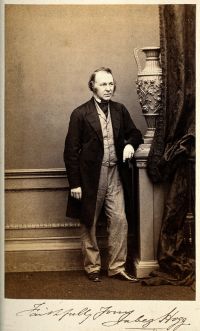
Portrait of Sir James Emerson Tennent Sir James Emerson Tennent,  Sketches of the Natural History of Ceylon

“ One twisted his proboscis into such fantastic shapes, that it resembled the writhings of a gigantic worm; he coiled it and uncoiled it with restless rapidity, curling it up like a watch-spring, and suddenly unfolding it again to its full length. Another, which lay otherwise motionless in all the stupor of hopeless anguish, slowly beat the ground with the extremity of his trunk, as a man in despair beats his knee with the palm of his hand. ”
Source: Gutenberg

A. H. Cooke,  The Cambridge natural history, Vol… (1895)

“ From the retractile snout has doubtless been [210] derived the long proboscis which is so prominent a feature of many genera (compare Figs. 1, B, and 99) , and in some (e.g. Mitra, Dolium) attains a length exceeding that of the whole body. As a rule, Mollusca provided with a proboscis are carnivorous, while those whose mouth is on the surface of the head are Vegetable feeders, but this rule is by no means invariable. The mouth is thickened round the aperture into ‘lips,’ which are often extensile, and appear capable of closing upon and grasping the food. ”
Source: Gutenberg

Frank E. Beddard,  The Cambridge natural history, Vol… (1901)

“ The proboscis thus broken off retains its power of movement and contractility for a considerable time, and has been more than once mistaken for a worm. This great vital power is probably due to the great development of nervous tissue, the proboscis being usually richly supplied with nerve plexuses.
One large form, Lineus sanguineus, seems to possess great recuperative powers. It shows a marked tendency to break up into pieces, when not only the head end, but also the other portions develop into perfect animals, each one growing a head and all the organs belonging to it.
”
Source: Gutenberg

Get perspective with Kwize: daily news enlightened by great literature