Hugo de Vries’s Species and Varieties, Their Origin by Mutation (1903) is a foundational treatise in evolutionary biology that investigates the mechanisms underlying species formation, emphasizing mutation as a key source of variation in plants. Drawing on extensive experimental work involving hybridization, selection, and hereditary characteristics, de Vries differentiates between stable "true varieties" and mutable forms, contending that new species arise through sudden genetic alterations rather than through gradual natural selection alone.
His examination of seeds, hybrids, and morphological irregularities highlights the influence of both artificial and natural selection in shaping botanical diversity, while critiques of hybrid ambiguity and the "average" phenotype underscore the intricacies of hereditary consistency. By combining empirical evidence with theoretical precision, de Vries challenges established ideas, maintaining that mutation, rather than simple environmental adaptation, drives evolutionary innovation.
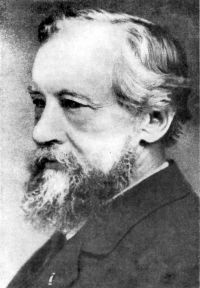 Hugo de Vries,
Species and Varieties, Their Origin by Mutation
Hugo de Vries,
Species and Varieties, Their Origin by Mutation
