Neutron

Definition and stakes

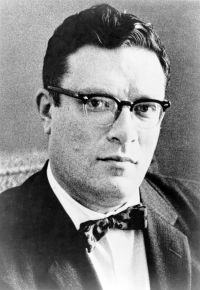
Portrait of Isaac Asimov Isaac Asimov,  Worlds Within Worlds: The Story of Nuclear Energy…

“ If the nucleus struck by the neutron is many times as massive as the neutron, the neutron bounced off with all its speed practically intact. On the other hand, if the neutron hits a nucleus not very much more massive than itself, the nucleus rebounds and absorbs some of the energy, so that the neutron bounces away with less energy than it had. If the neutron rebounds from a number of comparatively light nuclei, it eventually loses virtually all its energy and finally moves about quite slowly, possessing no more energy than the atoms that surround it. ”

Source: Gutenberg

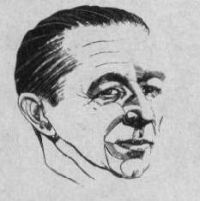
Portrait of Albert L. Latter Albert L. Latter,  Our Nuclear Future: Facts, Dangers and Opportunities

“ If the neutron hits a heavy nucleus, it loses only a small fraction of its energy in the impact. [9] After colliding with hydrogen or a heavier nucleus, the neutron continues on to other such collisions. The nucleus, however, being charged and energetic, now causes excitation and ionization of atomic electrons. Thus, like gamma rays, energetic neutrons are exceedingly dangerous, because they can first penetrate and then cause ionization.
Neutrons are dangerous even when they are not energetic.
”
Source: Gutenberg

Get perspective with Kwize: daily news enlightened by great literature