Alloy

Definition and stakes

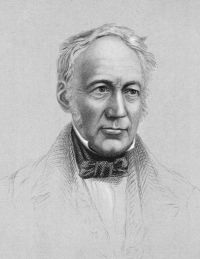
Portrait of Andrew Ure Andrew Ure,  A Dictionary of Arts, Manufactures and Mines

“ The metallic alloy should also be occasionally stirred up with a rod of pottery ware.
The most direct evidence of a chemical change having been effected in alloys is, when the compound melts at a lower temperature than the mean of its ingredients. Iron, which is nearly infusible, acquires almost the fusibility of gold when alloyed with this precious metal. The analogy is here strong with the increase of solubility which salts acquire by mixture, as is exemplified in the difficulty of crystallising residuums of saline solutions, or mother waters, as they are called.
”
Source: Gutenberg

Portrait of Andrew Ure Andrew Ure,  A Dictionary of Arts, Manufactures and Mines

“ Such alloys serve to take casts of anatomical preparations. An alloy of 1 bismuth, 2 tin, and 1 lead, is employed as a soft solder by the pewterers; and the same has been proposed as a bath for tempering steel instruments. Cake-moulds, for the manufacturers of toilet soaps are made of the same metal; as also excellent clichés for stereotype, of 3 lead, 2 tin, and 5 bismuth; an alloy which melts at 199° F. This compound should be allowed to cool upon a piece of pasteboard, till it becomes of a doughy consistence, before it is applied to the mould, to receive the impress of the stamp. ”
Source: Gutenberg

la Verne W. Spring,  Non-technical chats on iron and steel and their application to modern industry (1917)

“ THE ALLOY STEELS We have learned that steel, fundamentally, is an alloy of iron with carbon, i.e., carbon is the characteristic element. We are now to note what often seem to be exceptions to this rule. While in reality steel is just this iron-carbon alloy, there are alloys known as steels to which such strong characteristics are given by elements other than carbon, that carbon seems not to be the defining constituent at all. ”
Source: Gutenberg

Get perspective with Kwize: daily news enlightened by great literature