Alembic

Definition and stakes

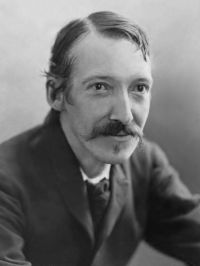
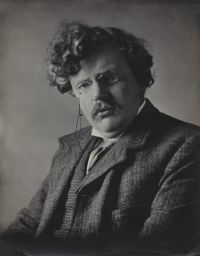
Portrait of Eric Rücker Eddison Eric Rücker Eddison,  The Worm Ouroboros: A Romance (1922)

“ A furnace glowing in the big hearth threw fitful gleams into the recesses of the chamber, lighting up strange shapes of glass and earthenware, flasks and retorts, balances, hour-glasses, crucibles and astrolabes, a monstrous three-necked alembic of phosphorescent glass supported on a bain-marie, and other instruments of doubtful and unlawful aspect. ”
Source: Gutenberg

Christina Blackie,  Geographical etymology: a dictionary of place-names giving their derivations (1887)

“ WALSCH) , as in Deutsch-steinach and Walsh-steinach (the German and foreign towns on the Steinach, or stony water) . The Romans employed the word Germania for Deutsch, which Professor Leo traces to a Celtic root gair-mean (one who cries out or shouts) ; e.g. Deutschen, in the Tyrol; Deutz, in Rhenish Prussia; Deutschendorf, in Hungary; Deutschenhausen, in Moravia, i.e. the dwellings of the Germans. The earliest name by which the Germans designated themselves seems to have been Tungri (the speakers) . It was not till the seventeenth century that the word Dutch was restricted to the Low Germans. ”
Source: Gutenberg

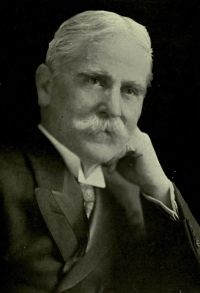
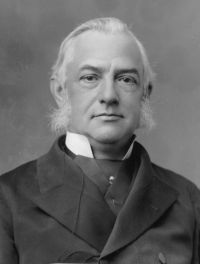
Portrait of F. Max Müller F. Max Müller,  Chips from a German Workshop, Volume 3

“ There are here and there a few enthusiastic champions of dialects, particularly of Low-German, who still cherish a hope that High-German may be thrown back, and Low-German restored to its rights and former dominion. Yet, whatever may be thought of the relative excellences of High and Low German,—and in several points, no doubt, Low-German has the advantage of High-German,—yet, practically, the battle between the two is decided, and cannot now be renewed. The national language of Germany, whether in the South or the North, will always be the German of Luther, Lessing, Schiller, and Goethe. ”
Source: Gutenberg

Get perspective with Kwize: daily news enlightened by great literature