“ Building up inside the hundreds of thousands of layers of crystallized plastic came a reddish, three-dimensional landscape, as if viewed from a height. Orange dust swirled across a gaunt, clawed plain under a transparent pink haze. ”
Plastic
Definition and stakes
Plastic, defined as any material capable of deformation without losing coherence, has been examined across literature, science, and art. From Charles Saphro’s vivid depiction of a crystallized plastic landscape to Albert dePina’s imagined city of Plastica, writers have explored its flexibility and symbolic significance. Scientific works, such as those from the U.S.
Tariff Commission, focus on its physical characteristics, while historical records, like those in The International Monthly, emphasize its potential for transformation in craftsmanship. These diverse viewpoints highlight plastic’s dual function as both a functional substance and a symbol of adaptability, connecting the concrete and the imaginative.
Quotes about “plastic”
Various, The International Monthly, Volume 3…
“ Here the hardest and heaviest materials, wood, iron, and stone, become plastic under the workman's hand, assuming the most brilliant polish, the lightest and most elegant forms; grates, fire-irons, and kitchen-ranges, rival, in lustre and beauty, the attractions of diamonds, goldsmiths' work, and flowers. ”
Albert dePina, Minions of the Crystal Sphere
“ Above the ocean's shoreline, set amidst low hills, rose Plastica, entirely enclosed in a shell of the same transparent plastic, and rising tier on tier—each one a small world unto itself, and each barred from communication with other tiers. ”
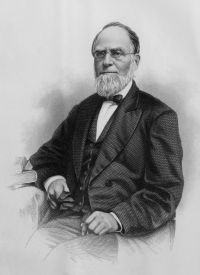 John S. C. Abbott,
The Wonders of the World
(1856)
John S. C. Abbott,
The Wonders of the World
(1856)
“ We have nothing in America that can convey a full impression of these superb productions of the plastic art. They are modeled after the forms of the most beautiful Etruscan vases; the most perfect purity of the porcelain material is contrasted with the finest efforts of the pencil, in the pictures, which being incorporated by the fire, are indissolubly wedded to the basis on which they are delineated, and they are resplendent with gold and blue enamel of cobalt. One is at a loss which most to admire, the productions of the Gobelin looms or those of the Sèvres furnaces. ”
Roscoe R. Rau, Selling Home Furnishings: A Training Program
“ The plastic used for furniture is neither a finish nor a protection for a finish. It is a hard-surfacing substance said to be "many times as strong as wood."2. Tests show that it is not affected by hot dishes up to 200° F. Liquids of all types and unusual temperatures harm plastics not in the least. ”
United States Tariff Commission, Synthetic resins and their raw materials (1938)
“ A plastic is anything possessing plasticity; that is, anything which can be deformed under mechanical stress without losing its coherence or its ability to keep its new form. According to this definition the term includes such materials as putty, cement, clay, glass, and metals, as well as certain modified natural or semisynthetic products, such as cellulose acetate, cellulose nitrate, and casein more commonly so designated. ”
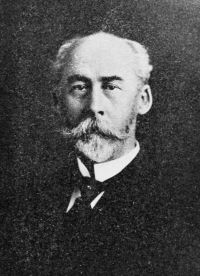 William Henry Holmes,
Ancient art of the province of Chiriqui…
William Henry Holmes,
Ancient art of the province of Chiriqui…
“ We find that the plastic features are gradually reduced until mere nodes appear where the head and the tail should be, and finally in the lower forms there remains but a blank panel or a painted device, as already shown in a preceding section. The painted devices are also reduced by degrees until all resemblance to nature is lost and geometric devices alone remain. I observe in this association of plastic and painted features a lack of the perfect consistency I had learned to expect in the work of primitive peoples. ”
Harold L. Goodwin, The Caves of Fear: A Rick Brant Science-Adventure Story
“ They don't want evaporation. Also, the plastic guarantees the water's purity."Sing said no more, but he was obviously puzzled. Nor could the Americans tell him what had excited them, that they had found the means by which the substance they sought was carried to the coast.Rick had a quick vision of Chinese coolies making their slow way through the countryside, unnoticed because water-bearers were so commonplace. But the coolies in this case carried bags lined with plastic, and the stuff that made the legs thrust out stiffly and that swelled the bag was not ordinary water! ”
Various, Popular Science Monthly (1894)
“ To the manufacturer it is the material he molds and bakes, which may be the natural plastic material of the popular mind, or a mixture of many ingredients either natural or artificial, according to the refinement of the ultimate product; this product varies as to simplicity of processes from the ordinary brick clays, which are natural mixtures of the essential sand and clay with iron and other accessories, to the washed, ground, screened, and compressed mixture of kaolin, feldspar, flint, and plastic clay from which the potter shapes china and porcelain into works of art. ”
 T. O'Conor Sloane,
Rubber Hand Stamps and the Manipulation of Rubber
(1890)
T. O'Conor Sloane,
Rubber Hand Stamps and the Manipulation of Rubber
(1890)
“ While thus intractable by the usual methods, it is the most plastic of materials when properly treated. Its power of reproducing the finest details of a mould, of entering all the intricacies and undercuttings of a design, cause one to feel a peculiar pleasure in working with so responsive a material. ”
Edmund Knecht, 1911 Encyclopædia Britannica, Volume 10… (1911)
“ The principle of the process depends upon the fact that at elevated temperatures moist wool becomes plastic, and then easily assumes the shape imparted to it by the great tension under which the pieces are wound. ”
Louis Nizer, What To Do With Germany (1944)
“ It is not yet clear to what extent plastics will replace iron, steel, cement and wood. But many have predicted that we are about to emerge industrially into the "plastic" era. Certain it is that plastics have in many instances qualities superior to wood, glass, porcelain, and other materials. Moreover, it becomes possible to replace complicated machine-tool work with simplified casting. Germany held basic patents for plastics of strategic military importance and issued licenses in such a manner as to limit foreign production. ”
Marie Lebert, A Short History of EBooks
“ In 2000, Plastic Logic was spun out of Cavendish Laboratory to develop a broad range of products using the plastic electronics technology. (...) Plastic Logic has raised over $200M in financing from top-tier venture funding sources in Asia, Europe and the U.S. We are using the funds to complete product development in England and the USA, build a specialized, scalable production facility in Germany, and build our go-to-market teams. ”
Jan Koula, A Selection of Bohemian National Embroidery from Náprstek’s Bohemian Industrial Museum (1893)
“ Still the study of national manufactures is able to modify our plastic works, just as it has been successfully done in our music, or as in the goldsmiths’ art of Italy, which by preserving the remains of ancient shapes and forms of working, has raised this branch of modern industry. ”
Steve Solomon, Organic Gardener's Composting
“ Manufactured solid-sided bins are usually constructed of sheet steel or recycled plastic. In cool climates there is an advantage to tightly constructed plastic walls that retain heat and facilitate decomposition of smaller thermal masses. Precise construction also prevents access by larger vermin and pets. Mice, on the other hand, are capable of squeezing through amazingly small openings. ”
 Earl Warren,
Arnold v. Ben Kanowsky, Inc. — Opinion of the Court
Earl Warren,
Arnold v. Ben Kanowsky, Inc. — Opinion of the Court
“ Respondent conducts an interior decorating and custom furniture business in Dallas, Texas. On the same premises he fabricates aircraft parts from phenolic, a cloth-impregnated phenol resin. This plastic is widely used in aircraft and automotive parts and can be machined on the woodworking equipment respondent has available in his furniture shop. Petitioner was employed by respondent from October 17, 1954, through September 2, 1955, primarily in the fabrication of phenolic parts. ”
Edward W. Byrn, The Progress of Invention in the Nineteenth Century
“ These contain usually nitro-cellulose (gun cotton) , or nitro-glycerine, or both, made up into a plastic, coherent, and homogeneous compound of a gluey nature, and fashioned into horn-like sticks or rods by being forced under pressure through a die plate having small holes, through which the plastic material is strained into strings like macaroni, or else is molded into tablets, pellets, or grains of cubical shape. Prominent among those who have contributed to this art are the names of Turpin, Abel and Dewar, Nobel, Maxim, Munroe, Du Pont, Bernadou and others. ”
Steven David Justin Sills, Tokyo to Tijuana: Gabriele Departing America
“ They also found mother and son bonding activities when lugging plastic containers into an environmentally friendly grocery store. From her example she wanted to nudge onto him a respect of Mother Earth, or at least a reluctance to be reckless with her. She wanted him to gain the habit of being the least environmentally destructive that was humanly possible. One of the bins had animal crackers and she would fill a small plastic container with these dead carcasses. ”
C. B. Radcliffe, Popular Science Monthly (1883)
“ Moreover, the comparatively small portion of nitrogenous food which is actually wanted for plastic purposes is, there is reason to believe, eventually disposed of in the same way as the portion which is not used for plastic purposes, a little more than one third being wasted as urea, and a little more than two thirds being utilized as fuel. ”
Roscoe R. Rau, Selling Home Furnishings: A Training Program
“ For years plastics have been of major importance in the industrial field. Now the chemist's test tubes are revealing new and outstanding uses for plastics in architecture, lighting, decorator's accessories, furniture novelties, and miscellaneous items. The records show that 160,000,000 pounds of plastics are produced in a single year in the United States alone, and that new plastics are being developed at the rate of one a year. ”
Theodore Sturgeon, Memory (1948)
“ The inner pipe is a condensed plastic—a patented process, by the way. This plastic, while undergoing the 'memorizing' phenomenon so beautifully explained by Miss Exeter, restores its original density as well as its original form. The inner pipe, then, is simply condensed more than the one which surrounds it, and so on until the six are nested. Then the whole is compression, molded into rods of precisely the dimensions of those admirably compact ones produced by General Export. ”
Sir Charles Alexander Cameron, The Stock-Feeder's Manual
“ The general opinion which prevails amongst scientific men as to its physiological functions was originated by the celebrated Liebig. According to his theory, the food of animals includes two distinct kinds of substances—plastic4 and non-plastic. The plastic materials are composed of carbon, hydrogen, oxygen, nitrogen, and a little sulphur and phosphorus. Albumen, fibrine, and casein are plastic elements of nutrition; they form the lean flesh, or muscles, the membranes, and cartilages, the gelatine of the bones, the skin, the hair, and, in short, every part of the body which contains nitrogen. ”
Charles James Sprague, The Atlantic Monthly (1866)
“ The plastic nature undergoes an alteration correspondent to the new state of existence. In a few generations these varieties are indefinitely multiplied; and then, by crossing these varieties, new ones are again produced. ”
Albert A. Hopkins, Magic, Stage Illusions and Scientific Diversions…
“ For preparing the mold, which consists of two parts put together with their concave surfaces, the workman first powders a kind of rough plastic clay, and mixes this with levigated powder of a blackish ‘tuff-stone’ and a little charcoal powder and water, till the paste is plastic and suitable for being molded. ”
Walter Rosenhain, Glass Manufacture
“ For not only the chemical composition, but also the physical condition and properties of the material are of importance in glass manufacture. Thus it is essential that materials to be used for glass-melting should be obtainable in a reasonably fine state of division, and in this connection it must be remembered that both exceedingly hard bodies and soft plastic substances can only be ground with very great difficulty. ”
Charles Henry Hart, Browere's Life Masks of Great Americans
“ Yet the influence of both these eminent devotees of the plastic art left, without doubt, a strong impression upon the minds of the people—an impression constantly refreshed by the sight of their works, which helped to create a healthy atmosphere for the development of a taste among us for the plastic art. ”
H. L. Nichols, Yesterday's Revenge
“ Your Excellency, I am pleased to report that I have developed some new plastics in the beryl-nickeloid series, which can be charged with the Ronferth-Madderhern dissonances so heavily that the rays form a tangible structure in themselves, which takes the shape of the plastic, and can be forced into the next loop of time and drawn back again. A cage or cell so composed and charged can be used to entrap your desire, and transport her to us, but the apparatus is still primitive, and has proved fatal to life and destructive to material, that has been tested. ”
Léon Arnoux, British Manufacturing Industries…
“ But supposing that this was not so, it must strike everybody that, after providing himself with those rude instruments wherewith to obtain his food and protect his life, man must have taken advantage of his power of observation to notice the property of plastic clay to retain water, and to find out to what useful purpose it might be brought for making vessels better suited to his wants, than the skins of animals or pieces of wood roughly hollowed out. ”
William Henry Holmes,
Ancient art of the province of Chiriqui…
“ The presence of life forms in relief has produced important modifications in the appearance and the arrangement of the painted devices, and in many cases there is a manifest correlation between the plastic and the painted forms: as, for example, when the body of the vase was thought of as the body of the animal, the extremities of which were placed upon its sides, the colored figures carried out the idea of the creature by imitating in a more or less conventional way the markings of the body. ”
 Kurt Vonnegut,
Breakfast of Champions
(1973)
Kurt Vonnegut,
Breakfast of Champions
(1973)
“ His situation, insofar as he was a machine, was complex, tragic, and laughable. But the sacred part of him, his awareness, remained an unwavering band of light.And this book is being written by a meat machine in cooperation with a machine made of metal and plastic. The plastic, incidentally, is a close relative of the gunk in Sugar Creek. And at the core of the writing meat machine is something sacred, which is an unwavering band of light.At the core of each person who reads this book is a band of unwavering light.My doorbell has just rung in my New York apartment. ”
United States. National Aeronautics and Space Administration, Significant Achievements in Space Bioscience 1958-1964
“ In the design of equipment for photosynthetic studies, careful consideration should be given to the material used in the construction of the unit. Most plastic materials are subject to photo-oxidative degradation, with CO as one of the products. ”
William Henry Holmes,
Origin and Development of Form and Ornament in Ceramic Art
“ These decorative features, though not essential to the utensil, are nevertheless inseparable parts of it, and are cast or unconsciously copied by a very primitive people when similar articles are artificially produced in plastic material. ”
 Charles Horton Cooley,
Social organization
(1909)
Charles Horton Cooley,
Social organization
(1909)
“ The pity of the matter, which may well move every one who thinks of it to work for better homes, schools and playgrounds, is simply that we are about to make so poor a use of a plastic material, that he might be so much better and happier if we would prepare a better place for him. ”
 George Santayana,
Reason in Common Sense
(1920, 1905)
George Santayana,
Reason in Common Sense
(1920, 1905)
“ We may impress any number of forms successively on the same water, and the identity of the substance will not help those forms to survive and accumulate their effects. But if we have a surface that retains our successive stampings we may change the substance from wax to plaster and from plaster to bronze, and the effects of our labour will survive and be superimposed upon one another. It is the actual plastic form in both mind and body, not any unchanging substance or agent, that is efficacious in perpetuating thought and gathering experience. ”
Edmund Knecht, 1911 Encyclopædia Britannica, Volume 10… (1911)
“ All processes of finishing are purely mechanical in character, and the most important of them depend upon the fact that in their ordinary condition (i.e. containing their normal amount of moisture) , or better still in a damp state, the textile fibres are plastic, and consequently yield to pressure or tension, ultimately assuming the shape imparted to them. The old-fashioned box press, formerly largely used for household linen, owed its efficacy to this principle. ”
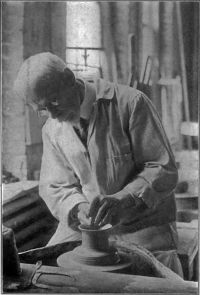 Charles Fergus Binns,
The Potter's Craft: A Practical Guide for the Studio and Workshop
Charles Fergus Binns,
The Potter's Craft: A Practical Guide for the Studio and Workshop
“ It improves greatly with age. This is the material which is used for casting as will be described later but for plastic work it must be still further thickened. A shallow box may be procured and made water-tight and the slip, when poured into it, will thicken much more rapidly than in the barrel, but it is better to have some shallow plaster dishes as the plaster itself absorbs the water and thickens the clay. ”
 George W. Bush,
Proclamation 7734
George W. Bush,
Proclamation 7734
“ Many of the products used every day, including aluminum cans, appliances, office paper, cardboard boxes, furniture, and clothing contain recycled materials. We also recycle motor oil, tires, plastic, glass, batteries, and building materials, and we are developing new ways to recycle electronic products - the fastest growing portion of America's municipal waste. ”
Related terms
Authors who wrote about “plastic”
Theodore SturgeonAlbert dePinaH. L. NicholsWilliam Henry Holmes Thomas Henry HuxleyEdmund KnechtVariousCharles SaphroHarold L. GoodwinT. O'Conor SloaneLouis NizerJohn S. C. AbbottRoscoe R. RauJan KoulaEarl WarrenSteve SolomonEdward W. ByrnSteven David Justin SillsC. B. RadcliffeUnited States Tariff Commission
William Henry HolmesThomas Henry HuxleyEdmund KnechtVariousCharles SaphroHarold L. GoodwinT. O'Conor SloaneLouis NizerJohn S. C. AbbottRoscoe R. RauJan KoulaEarl WarrenSteve SolomonEdward W. ByrnSteven David Justin SillsC. B. RadcliffeUnited States Tariff CommissionRelated articles
The Crafted Face, Identity Between Reflection and Creation
From ancient rituals to modern cosmetic surgery, humanity has consistently sculpted its face. This deep-seated drive challenges the notion of the face as a mere
Frederick Strange Kolle, Winifred H. Mills, Max Beerbohm
The paradox of the dancing body: spontaneity, technique, and the laws of beauty
Dance must reconcile spontaneous expression with rigorous technique. True freedom is found not in a lack of restraint, but in the disciplined mastery that transforms the body into a perfectly unified conduit for the soul. The resulting 'second nature' makes physical law the transparent language of emotional truth.
Anna Pavlova, J. E. Crawford Flitch, Friedrich Nietzsche
