AI-generated from sources
The Crafted Face, Identity Between Reflection and Creation
In Brief
- The human face has historically served as an active canvas for identity construction, challenging the notion of it being merely a passive mirror of the self.
- Ancient societies widely employed facial modifications, such as scarification and masks, for ritualistic purposes, social communication, and the embodiment of spiritual or theatrical roles.
- Modern cosmetic surgery, spurred by innovations in reconstructive techniques during the First World War, transformed facial intervention into a field capable of both repairing damage and aesthetically enhancing appearance.
- The increasing capacity to alter the face intensifies philosophical debates about authenticity, pitting the traditional view of the face as a
- mirror of the soul
- against the perspective of it as a malleable, consciously curated mask.
Main authors
The human face is popularly conceived as an authentic window to the self, a surface where emotion, character, and identity are naturally and legibly expressed. This long-held assumption, however, belies a history replete with conscious acts of facial alteration. From the earliest forms of social organization, humanity has engaged in a continuous project of shaping, decorating, and transforming the face. This persistent drive suggests that the face is not merely a passive mirror reflecting an internal state, but an active canvas upon which identity is constructed, negotiated, and performed.
This impulse to modify one’s appearance manifests across cultures and epochs, utilizing an ever-expanding toolkit of methods. The motivations are as varied as the techniques, ranging from the symbolic inscription of tribal affiliation and religious belief to the theatrical demands of performance and the modern pursuit of aesthetic ideals. By examining the evolution of these practices—from ritualistic markings and masks to sophisticated cosmetics and surgical interventions—it becomes clear that the tension between the 'natural' face and the 'crafted' face is a fundamental aspect of the human condition. The history of facial transformation is ultimately a history of how we define and present ourselves to the world.
The Original Canvas, Ritual, Adornment, and Disguise
The practice of facial manipulation appears to be one of humanity's oldest forms of artistic and social expression [1]. Before other media were widely used, the human body served as the primary canvas for conveying meaning. Through practices like scarification or painting, early societies inscribed complex ideas directly onto the skin . These markings were not solely for aesthetic appeal; they communicated a range of emotions and social allegiances related to war, love, or religious devotion . In some cultures, such alterations were a foundational and often brutal rite of passage, as seen in the facial scarring of male infants, a practice that literally etched collective identity onto the individual before they could even form their own [2].
Alongside permanent markings, the mask represents another ancient and universal tool for transforming facial identity [3]. The origins of masking may lie in humanity's earliest attempts to embody supernatural forces or gods as a means of controlling the natural world, suggesting a deep-seated desire to transcend the limitations of the self . Masks function as a powerful instrument of disguise, allowing an individual to set aside their personal identity and adopt another, whether for the sake of ritual or theatrical performance [6, 7]. This act of concealment and impersonation highlights the face's role not just as a site of identity, but as a potential barrier to it.
The design of theatrical masks demonstrates a sophisticated understanding of how facial features can be manipulated to communicate character. A mask maker might exaggerate certain features—a high forehead for nobility, hollowed cheeks for age—to instantly convey a specific archetype to an audience [4]. Some traditions, such as Japanese Noh theater, developed masks capable of displaying multiple expressions based on the angle of the actor's head and the play of light, a technique rooted in suggestion rather than explicit depiction [5]. This principle of performative construction extends beyond the mask itself, requiring actors to use makeup and other artificial aids to build a character's appearance, an artifice accepted on stage but often judged differently in everyday life . In a more modern context, some have even equated face coverings with a pragmatic alternative to the daily, time-consuming labor of applying cosmetics .
Engineering Appearance, The Rise of Modern Facial Intervention
The 20th century marked a profound shift in the methods of facial transformation, as scientific and medical advancements began to supplant traditional cultural practices. The First World War served as a crucial catalyst, with unprecedented facial injuries driving the development of modern reconstructive surgery [8, 9]. Surgeons pioneered techniques to rebuild shattered jaws, transplant skin, and craft artificial facial parts to restore function and a semblance of a human countenance to disfigured soldiers [10]. In extreme cases where reconstruction was impossible, custom-made copper masks were fitted, creating a modern, prosthetic parallel to the ritual masks of antiquity .
The skills honed on the battlefield soon found applications in a civilian context, giving rise to the field of cosmetic surgery [11]. Even before the war, medical pioneers like Frederick Strange Kolle saw the potential for plastic surgery not only to repair defects from injury or disease but also to aesthetically enhance or alter features for purely cosmetic reasons . The explicit goal became an imitation of natural beauty, with the surgeon positioned as an artist capable of perfecting the human form through medical intervention [12]. This new approach represented a move from restoring a damaged face to actively re-engineering a healthy one.
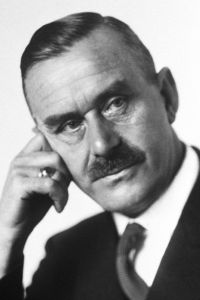
This era of medicalized beauty was fueled by technological innovation. New methods, such as the subcutaneous injection of paraffin compounds, offered less invasive ways to restore facial contours, replacing older procedures that relied on metal or ivory implants [13]. The development of such protheses revolutionized procedures like rhinoplasty . At the same time, the use of cosmetics also became more scientifically informed and culturally defended. Thinkers like Thomas Mann argued that altering one's appearance with makeup was no more untruthful than dental care, but rather a way to align one's external look with an internal sense of vitality [14]. Concurrently, as noted by Max Beerbohm, science made cosmetics safer by removing harmful ingredients, thus mitigating the health risks once associated with the pursuit of beauty [15].
The Contested Surface, Authenticity in the Age of Artifice
The growing capacity to alter the face has intensified an enduring philosophical debate about its fundamental nature. One perspective, rooted in the tradition of physiognomy, holds that the face is an unbetraying index of a person's inner life [16, 24, 25]. In this view, character traits and life experiences are etched onto our features, making a series of portraits a veritable
Human Document
that charts a person's moral and personal development . This framework presumes an unbreakable link between the inner and outer self, where a noble disposition is a prerequisite for true beauty and negative emotions like jealousy or anger will inevitably mar the most attractive features [18, 26].
This belief in the face as a transparent record of the soul has significant social implications. It can lead to visceral reactions of disgust toward faces deemed to reflect vulgarity or baseness, prompting the thought that such individuals ought to wear a mask in public [21]. It also created professional despair for artists like Auguste Rodin, who found that his patrons rejected truthful portrayals of their features, preferring instead to be rendered with an idealized, insignificant physiognomy [19]. For Rodin, to soften the realities of age or character in a portrait was an artistic lie, a concession to public taste that created ugliness by shying away from truth [20].
A contrasting school of thought contends that the face is an unreliable, if not entirely misleading, guide to a person's character [23]. Abraham Myerson, for instance, argued that our interpretations of faces are hopelessly biased by factors like race, sex, and conventional standards of beauty, and that physical appearance is more shaped by diet and genetics than by morality . From this perspective, the face is less a window and more a mask that can be worn to conceal one's true feelings and intentions [22]. In a society focused primarily on superficial impressions, as depicted by George Barr McCutcheon, this performative mask becomes the de facto reality [17]. Indeed, Max Beerbohm, writing in 1894, saw the rise of cosmetics as a positive development that would finally sever the
damnable confusion
between surface and soul, allowing the face to be appreciated as a beautiful object in its own right .
These competing views are complicated by powerful societal pressures that promote specific aesthetic ideals. A clear, healthy-looking complexion, for example, is often presented as a prerequisite for success in professional and social life [28]. This can foster a drive toward conformity, potentially leading to a homogenization of appearance where individual distinctiveness is erased in favor of a
stereotyped expression
, as one dystopian critique warned [27]. The very definition of beauty can become tied to a statistical average—the idea that a composite of many faces would yield the most beautiful ideal—which privileges racial typicality and health above all else [29]. This creates a paradox in which the tools of individual expression are used to pursue a standardized and impersonal ideal of the perfect face.
The human face has always existed at the intersection of biology and culture, serving as both an innate marker of selfhood and a canvas for deliberate creation. From the ritualistic markings of ancient societies to the precise interventions of modern surgery, the impulse to shape, adorn, and redefine our features is a defining characteristic of human history . This long trajectory reveals a clear evolution in both motive and method, shifting from transformations guided by collective symbolism and social cohesion to an ethos centered on scientific capability and the pursuit of individualized aesthetic ideals . Whether treated as a site for spiritual expression, a theatrical tool, a medical challenge, or a surface for beautification, the face has consistently been an object of active construction.
This enduring history of artifice fundamentally challenges any simplistic notion of the face as a pure 'mirror of the soul' . While the belief that our inner character is written on our features persists, the increasing sophistication of our transformative tools lends weight to the view of the face as a malleable surface—a mask that can be consciously controlled and curated . In an age where technology offers unprecedented power to reshape our appearance, we are confronted with profound questions about authenticity, identity, and the powerful social currents that define our ideals. The crafted face, therefore, is not a modern aberration but the contemporary expression of a timeless human drive to determine how we are seen.