AI-generated from sources
The Architecture of Liberation, How Structure Cultivates Freedom
In Brief
- Genuine liberation—intellectual, spiritual, and social—emerges from deliberate structure and purposeful constraint, not from an absence of rules or chaos.
- Solitude and discipline are essential for cultivating profound thought and creative genius, enabling the mind to transcend narrow impulses and perceive reality with heightened intensity.
- An unstructured environment, characterized by sensory overload or social pressure, can be profoundly oppressive, leading to psychological fragmentation and a desperate longing for order and privacy.
- Art serves as the quintessential model for how deliberate structure fosters freedom, training individuals to impose form on chaos and achieve an objective distance from the sensory world.
Main authors


In the contemporary pursuit of freedom, the dominant impulse is often to dismantle boundaries, erase constraints, and celebrate boundless spontaneity. This perspective champions a vision of liberty as an absence of rules, a rejection of discipline, and an escape from the perceived confines of order. The underlying assumption is that human potential, particularly creativity and authentic self-expression, can only flourish in an environment of absolute, unstructured possibility. Any imposition of form, whether from external authority or internal discipline, is viewed with suspicion as a potential agent of repression, stifling the very imaginative spirit it ought to protect.
However, a countervailing intellectual tradition suggests that this popular conception of freedom is fundamentally flawed. It posits that genuine liberation—intellectual, spiritual, and social—does not arise from chaos but is instead a product of deliberate structure and purposeful constraint. From this viewpoint, boundaries are not cages but trellises upon which creativity can grow, and discipline is not a burden but the very tool that hones the mind for profound insight. This framework argues that the thoughtful organization of our sensory, social, and internal worlds is the essential precondition for transcending our limitations and engaging with reality in a more meaningful and coherent way.
The Stern Friendship of Solitude and Structure
The notion that creative genius requires isolation and discipline is a recurring theme in philosophical thought. Ralph Waldo Emerson, writing in the 19th century, conceived of solitude not as a form of deprivation but as a 'stern friend' necessary for the development of world-changing ideas [1]. This perspective suggests that profound thought requires a deliberate retreat from the daily influence and opinions of others, creating a space where a unique vision can take shape. Similarly, the physical discomforts and challenges of an inconvenient environment, far from being mere hindrances, can actually sharpen and deepen an experience, making it more memorable and stimulating than a more comfortable alternative [2]. These inconveniences act as a form of natural discipline, forcing a heightened state of awareness and engagement.
This process of embracing difficulty and constraint can be seen as a pathway to a more profound form of freedom. It mirrors the ascetic practices of mystics who, through rigorous self-discipline, aim to defeat the tyranny of the ego and achieve a more expansive consciousness [3]. The goal is not to eliminate the self but to liberate it from its narrowest impulses, thereby gaining a more intensified perception of reality. This liberation, however, is contingent upon recognizing the difference between arbitrary, man-made rules and the fundamental, underlying laws of nature [4]. While obsolete theories and systems should be challenged, there is a 'Beautiful Necessity' in the inherent order of the universe, a coherence that provides the very foundation for life and thought [5].
From this understanding emerges a more nuanced definition of freedom, one rooted in acceptance and contemplation rather than sheer willpower. Bertrand Russell argued that true freedom comes not from satisfying our personal desires, which are subject to the whims of time, but from an 'unfettered contemplation' of the world [6]. By resigning our immediate wishes, we free our minds to engage with art, philosophy, and beauty. This ascension to a higher perspective allows the human spirit to perceive its own liberty beyond the immediate constraints of its physical existence [7]. It is through this willed submission to a higher order or a chosen path—a form of 'self-imposed thraldom'—that the most tenacious and creative achievements are born [8].
Ultimately, this vision unites freedom and order as interdependent forces. The universe, as Alfred North Whitehead proposed, exhibits both infinite creative freedom and a realm of infinite forms, but neither can achieve actual substance without an underlying harmony [9]. The liberation and discipline of a community's creative instincts do not lead to chaos but instead can give rise to new and unanticipated forms of art and social organization [10]. Structure, whether embraced in solitude or discovered in the laws of nature, becomes the essential conduit through which imaginative potential is realized.
The Tyranny of the Unbounded and the Need for Sanctuary
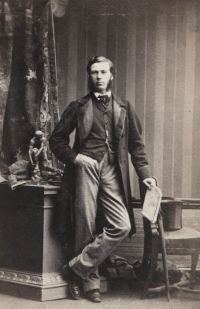
While structure can be liberating, its absence can be profoundly oppressive, particularly within sensory and social environments. An overabundance of stimuli, without clear boundaries or order, can lead to a sense of psychological disintegration. This experience is captured in an account by William Michael Rossetti, describing how being in a room with other people can cause one's own identity to be so overwhelmed by others that it feels 'annihilated' [12]. This feeling of being consumed by the environment reflects a broader human vulnerability to sensory overload, where the mind, lacking a clear organizing principle, becomes fragmented and confused, akin to a solar system reduced to a 'confused mass of asteroids' [11].
This form of sensory oppression is a common feature of modern life, where individuals are often forced into social situations that are fundamentally at odds with their internal state. The obligation to engage in social pleasantries while in physical discomfort, or the forced exposure to loud music when the nervous system craves silence, highlights a profound disrespect for personal sensory boundaries [13, 15]. The ear, in particular, is vulnerable, as sound can inflict a unique form of inescapable torture from which the eyes, which can simply look away, are largely spared . In such environments, the imagination is stifled, and social interaction becomes a performance rather than a genuine connection, leading to a desperate longing for retreat and solitude.
The restoration of order, therefore, becomes an act of psychological preservation. A simple, authoritative signal, like the call of a night-watch, can instantly disperse a chaotic crowd, re-establishing privacy and tranquility [14]. This principle is central to the educational philosophy of Maria Montessori, who observed that a peaceful and productive community requires the conscious cultivation of a tranquil environment. A single disruptive individual can shatter the collective harmony, demonstrating that shared freedom depends on mutual respect for established boundaries [18]. This reflects a deep-seated human need, as noted by Graham Wallas, to maintain a healthy balance between social intercourse and privacy, a balance often threatened by the density of modern urban life [19].
Deliberate environmental and perceptual structuring is thus essential for both mental resilience and authentic social connection. Our sense of external reality is strengthened by the coherent integration of multiple sensory systems [16]. For individuals with sensory limitations, like Helen Keller, connection to the wider world is achieved by actively accessing the perceptual abilities of others, creating a shared reality that transcends individual deficits [20]. Furthermore, escaping the 'prison of subjectivity' may require shifting our modes of perception to a more holistic state, offsetting the limitations of purely logical thinking [17]. Our minds are most free when our bodies can operate on autopilot in a predictable environment; it is the sudden disruption of this order that forces our conscious attention, reminding us that a stable sensory foundation is the silent precondition for higher thought [21].
The Artful Order of a Liberated Life
Art provides the quintessential model for how deliberate structure can cultivate freedom. According to Friedrich Schiller, the ultimate purpose of art is not to provide a momentary escape but to make us 'absolutely free' [24]. It accomplishes this by training our capacity to view the sensory world with objective distance, transforming it from an overwhelming force into an object of contemplation. Art that fails in this mission, merely reproducing the raw material of the world without the stamp of a creative, free spirit, does not emancipate but instead pushes us back into the narrow confines of reality [25]. This aesthetic elevation is not an innate response but a sophisticated cognitive achievement, requiring years of training and the development of complex neural pathways to produce a reflective, rather than a merely reactive, emotion [26].
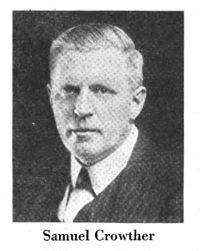
This concept of 'artful order' extends far beyond traditional creative pursuits. Thinkers like Samuel Crowther have argued for a radical expansion of our understanding of artistry, applying it to the complex challenges of industrial, social, and political life [28]. Instead of limiting creativity to galleries and concert halls, this view calls for 'artists in industrial relationship' who can shape the very fabric of society into a 'sound and shapely whole' [29]. This reframes the act of organizing human life and work as a high creative endeavor, one that deals with laws more vital than those of sound or color.
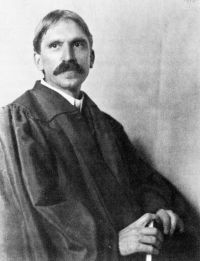
When this broader vision of art is embraced, it ceases to be a luxury and becomes, as John Dewey envisioned, a socially creative force integral to the act of living [27]. If the liberation of human capacity is channeled through purposeful design, the distinction between making a living and making a life worth living begins to dissolve. The aesthetic state, even when imperfectly realized, serves as a necessary stage in the development of a more robust and resilient freedom [30]. It is a training ground for the will, teaching individuals how to impose form on chaos, a skill essential for both personal integrity and collective progress.
The creation of this artful order often requires a strategic retreat into solitude, a space shielded from external pressures where new designs for life can be conceived [22]. Yet, this solitude is not an end in itself; it is the workshop from which the artist emerges to serve the multitude. The power of art, whether in the form of music that soothes a tired mind or a well-designed social system that fosters community, lies in its ability to bring harmony to our internal and external worlds [23]. It demonstrates that the most profound and lasting freedom is not found but made, through the disciplined and intentional application of creative order.
The prevailing narrative that equates freedom with the absence of constraint overlooks a crucial insight: that meaningful liberty is often the product of intentional structure. Analysis across philosophical, psychological, and artistic domains reveals that discipline, from the self-imposed solitude of the thinker to the shared etiquette of a peaceful community , serves not to repress but to channel human potential. The mind finds its greatest imaginative power not in boundless chaos but within a framework of coherent laws and accepted forms . Similarly, emotional and social well-being depends on the establishment of clear sensory boundaries that protect the individual from the annihilating force of an unstructured environment .
Ultimately, art emerges as the most powerful paradigm for this productive relationship between order and freedom . By extending the principles of aesthetic design—harmony, intention, and form—beyond the canvas or the concert hall, it becomes possible to envision the craft of life itself as a creative act . This perspective challenges us to move beyond a passive desire for liberation and toward the active, deliberate construction of a world where human capacity is nurtured and expressed. The task is not to break down all walls, but to become the architects of environments that are artfully ordered to set us free.