Summary

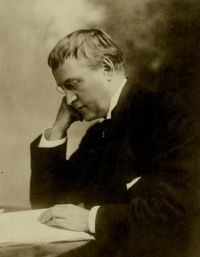
Portrait of Henry T. Finck Henry T. Finck Chopin and Other Musical Essays

Hundreds of times I have found that, however much I may be fatigued by a day's brain work, I can play all the evening, or attend a concert or opera, without in the least adding to my fatigue. On the contrary, in most cases it disappears altogether, the music acting on the mind as a surf bath does on the body. Like many others, I have found that the best way to cure a headache is to attend an orchestral concert. It works like a charm. It stirs up the circulation in the brain as a brisk walk does in the body.
Source: Gutenberg

Portrait of Henry T. Finck Henry T. Finck Chopin and Other Musical Essays

Here we find a striking originality and boldness of modulation that has no parallel in music, except in Wagner's last music-dramas. Now we have seen that Moscheles, and other contemporaries of Chopin, found his modulations harsh and disagreeable; and doubtless there are amateurs to-day who regard them in the same way. It seems, indeed, as if musical people must be divided into two classes—those who find their chief delight in melody pure and simple, and those who think that rich and varied harmony is the soul of music.
Source: Gutenberg

Portrait of Henry T. Finck Henry T. Finck Chopin and Other Musical Essays

I am convinced that no one who really appreciates the poetic beauty of a Schubert song or a Chopin nocturne can read these columns of our newspapers without feelings of utter disgust. And I am as much convinced as I am of my own existence, that a man who derives more pleasure from good music than from these vulgar columns in the newspapers, is morally more trustworthy than those who gloat over them. Music can impart only good impulses
Source: Gutenberg

Get perspective with Kwize: daily news enlightened by great literature