Summary

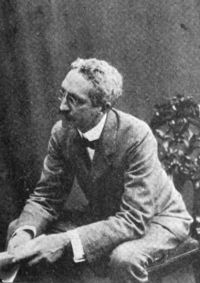
Portrait of Gustav Kobbé Gustav Kobbé How to Appreciate Music

But as music has become more and more an intimate phase of life, and as our most intimate instrument, the instrument of the household, is the pianoforte, we understand its capacity for the intimate expression of moods and fancies, the lights and shadows of life, as it never was understood before. The modern lover of music, if I may judge his standpoint from my own, feels that while the sonatas of the masters I have named were written for the pianoforte, they were thought out for orchestra, and that even a Beethoven sonata is an engraving for pianoforte of a symphony for orchestra.
Source: Gutenberg

Portrait of Gustav Kobbé Gustav Kobbé How to Appreciate Music

While I have no desire, in writing as above, to exalt unduly the virtuoso, the interpreter of music, at the expense of the composer, I must insist that the great player also is creative, in the sense that every time he plays a work he creates it over again from his own point of view, and thus has at least a share in its parentage. Indeed, it seems more difficult to attain exalted rank as a virtuoso than to gain immortality as a composer. The world has produced two epoch-making virtuosos—Paganini on the violin, Liszt on the piano.
Source: Gutenberg

Portrait of Gustav Kobbé Gustav Kobbé How to Appreciate Music

We often hear it said of the greatest contemporary pianist that he is a great Chopin player, but not a great Bach player. He could not be, and at the same time be the greatest living virtuoso. It is the worshiper of tradition, the reserved, continent, scholarly player, the player who converts a Chopin nocturne into an icicle and a Schubert impromptu into a snowball, who revels in counterpoint—the player who always is slavishly subordinating himself to what he is pleased to call the “composer’s intentions” and forgets that the truly great virtuoso creates when he interprets.
Source: Gutenberg

Get perspective with Kwize: daily news enlightened by great literature