“ Not even a Richard Strauss score gives the idea of vertical and horizontal music—heard at every point of the compass, issuing from the bowels of the earth, pouring down upon one's head like a Tyrolean thunderstorm. ”
Richard Strauss
Definition and stakes
Richard Strauss (1864–1949), a German composer and conductor, epitomized the late Romantic and early modern eras through his innovative tone poems and operas, such as Also sprach Zarathustra and Der Rosenkavalier. His mastery of orchestration, merging Wagnerian grandeur with Brahmsian precision, earned praise from critics like James Huneker, who praised his "vertical and horizontal music," while Romain Rolland highlighted his combination of poetic vision and technical skill.
Despite controversies surrounding his affiliations during the Nazi era, Strauss’s works remain central to orchestral and operatic traditions, reflecting both artistic brilliance and complex historical entanglements.
Quotes about “Richard Strauss”
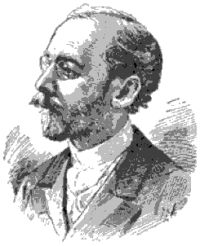
Louis Adolphe Coerne,
The Evolution of Modern Orchestration
“ The titanic achievements of Richard Strauss have caused him to appear as the most conspicuous living musician, and in the arrangement of a modern program, his works are at present the accepted companions to those of his models in rich and massive orchestration, Wagner and Liszt; to those of Brahms, conservator of classic models and loftiest ideals; to Saint-Saëns' scintillating and unrivalled tableaux; to Tschaikowsky's sombre tone-pictures, to Dvořák's brilliant and vivacious portrayals, to Grieg's poetic and popular conceptions. ”
Maxime Provost, My Austrian Love
“ You have made of my sublime music dramas a means of propaganda, of Pan-German propaganda. And you have done worse. You have accepted that rubbish by Richard Strauss as equal to my own immortal work. Some call him Richard the Second, and some Strauss the Second; Second he may be, but never First. And you have abandoned my poor family when you refused to prolong the Copyright of my works, my poor wife who had been so heroically unfaithful to her husband for my sake, my poor son who in spite of my undeniable [137] paternity has not the slightest musical talent. ”
The art of music, Vol. 03 (of 14… (1915)
“ The Richard Strauss of to-day is an insoluble mystery.Something excessive or unruly appears to be inseparable from everything he does. A consistent development is impossible for him; he oscillates violently like some sensitive electrical instrument in a storm. But, while only partisanship could blind anyone to the too palpable evidences of degeneration that his genius shows at many points, it is beyond question that in the best of his later stage works he dwarfs [Pg 254] every other composer of his day. We may like or dislike the subject of Salome, according to our temperament ”
James Huneker,
Ivory, Apes and Peacocks
“ He is not a second Richard Wagner, not yet has he the charm of the Lizst personality, but he bulks too large in contemporary history to be called a decadent, although in the precise meaning of the word, without its stupid misinterpretation, he is a decadent inasmuch as he dwells with emphasis on the technique of his composition, sacrificing the whole for the page, putting the phrase above the page, and the single note in equal competition with the phrase. In a word, Richard Strauss is a romantic, and flies the red flag of his faith. ”
Romain Rolland,
Musicians of To-Day
“ Richard Strauss is both a poet and a musician. These two natures live together in him, and each strives to get the better of the other. The balance is not always well maintained; but when he does succeed in keeping it by sheer force of will the union of these two talents, directed to the same end, produces an effect more powerful than any known since Wagner's time. ”
Paul Rosenfeld, Musical Portraits : Interpretations of Twenty Modern Composers
“ Had the new time produced no musical art, had no Debussy nor Scriabine, no Strawinsky nor Bloch, put in appearance, one might possibly have found oneself compelled to believe the mournful decadence of Richard Strauss the inevitable development awaiting musical genius in the modern world. There exists a group, international in composition, which, above all other contemporary bodies, arrogates to itself the style of modernity. ”
James Huneker,
Ivory, Apes and Peacocks
“ But if you have attained the age of discretion you will not ask too much, forget such childish and sinister play, [Pg 156] and enjoy to the full the man's extraordinary gift of music-making.For Richard Strauss is an extraordinary musician. To begin with, he doesn't look like a disorderly genius with rumpled hair, but is the mildest-mannered man who ever scuttled another's score and smoked Munich cigars or played "skat." And then he loves money! What other composer, besides Handel, Haydn, Mozart—yes, and also Beethoven—Gluck, Meyerbeer, Verdi, Puccini, so doted on the box-office? ”
W. J. Henderson, Modern Musical Drift
“ Strauss's tone poem in about thirty minutes. A benefactor of mankind indeed is this philanthropist, who has not sought to write philosophical music. He has invented for us a kind of sugar-coated knowledge tablet. Abolish dry books and listen to the tone poems of Richard Strauss, and you will have the wisdom of the ages poured into your ears by trumpets and trombones.And yet how refreshing to the spirit it is to hear after a Strauss tone preachment some such work of pure feeling as Schumann's Spring symphony! Here is no fugued fuddle of the fulminations of science. ”
Gustav Kobbé,
How to Appreciate Music
“ Richard Strauss’s songs, from having been regarded as so bristling with difficulties as to be impossible, have become favorites in the song repertoire. When it is a genius who creates difficulties these are sure to be overcome by ambitious players and singers, and music advances technically by just so much. Strauss’s “Ständchen,” with its deliciously delicate accompaniment, so difficult to play with the requisite grace, was the first of Strauss’s songs to become popular here, and it was the art of our great singer, Madame Nordica, that made it so. ”
James Huneker,
Overtones, a book of temperaments
(1904)
“ The Strauss tone-poems are dramas without words. What Tschaïkowsky so eloquently executed [Pg 58] as single figures in the character studies of Romeo and Juliet, Francesca da Rimini, Hamlet, and Manfred, Richard Strauss expands to the compass of a psychical tonal drama, dispensing with words, with actions, with the machinery of the stage, just as the great masters of fiction supplanted the makers of epics and their supernatural furniture by a synthesis in which action, dialogue, description, comment, are melted into homogeneous narrative. ”
Herbert F. Peyser, Richard Strauss
“ His Munich friend, the tenor Heinrich Zeller, who had coached Wagner roles with him, had settled there, and a young soprano, Pauline de Ahna, the daughter of a Bavarian general with strong musical 18 enthusiasms, soon followed him. In proper course she was to become Richard Strauss’s wife. A high-spirited, outspoken lady, never disposed to mince words, a source of innumerable yarns and witticisms, and who saw to it that her celebrated husband carefully toed the mark, Pauline Strauss was in every way a chapter by herself. ”
Romain Rolland,
Musicians of To-Day
“ The victorious hero perceives that he has conquered in vain: the baseness and stupidity of men have remained unaltered. He stifles his anger, and scornfully accepts the situation. Then he seeks refuge in the peace of Nature. The creative force within him flows out in imaginative works; and here Richard Strauss, with a daring warranted only by his genius, represents these works by reminiscences of his own compositions, and Don Juan, Macbeth, Tod und Verklärung, Till, Zarathustra, Don Quixote, Guntram, and even his Lieder, associate themselves with the hero whose story he is telling. ”
Gustav Kobbé,
How to Appreciate Music
“ Nor does Richard Strauss require such tactics. He has made three excursions into music-drama and he may make others. But his fame, at present, rests mainly upon what he has accomplished as an instrumental composer, 209 and in the self-created realm of the Tone Poem. Tone poem is a new term in music. It stands for something that outstrips the symphonic poem of Liszt, something larger both in its boundaries and in its intellectual and musical scope. Strauss does not limit himself by the word symphonic. He leaves himself free to give full range to his ideas. ”
Various, Famous composers and their works…
“ By far the most interesting and the most promising of this class of modern composers is Richard Strauss. He is not related to the Vienna Strauss family. Young Strauss is now Lassen’s assistant director at the Weimar theatre, and has shown remarkable ability both as an opera and concert conductor. Although not yet thirty years old, he has produced a considerable number of large works and numerous smaller ones. His earlier efforts show the influence of Brahms, but for the last few years he has adopted the Wagner-Liszt manner. ”
Henry Edward Krehbiel,
The Mentor: Makers of Modern Opera…
“ Many music students, however, find much to interest them in his work, and declare that Richard Strauss will come into his own in future years. His operas, for other reasons than their music, are not likely to be set in the regular repertoire of an opera season. His songs and tone poems, however, are already an accepted part of concert programs. In richness of orchestration, tremendous climaxes, vivid flashes of color, and frequent outbursts of dramatic power, there is nothing in modern music to place beside the tone poems of Richard Strauss. ”
Herbert F. Peyser, Richard Strauss
“ How many of the masters of music has not had at one time or another to endure this reproach? If “Salome” and “Elektra”, “Ein Heldenleben” and “Till Eulenspiegel” were in their day scandalously “sensational” did not the whirligig of time reveal them as incontestable products of genius, irrespective of inequalities and flaws? However Richard Strauss compares in the last analysis with this or that master he contributed to the language of music idioms, procedures and technical accomplishments typical of the confused years and conflicting ideals out of which they were born. ”
W. J. Baltzell, A Complete History of Music
“ Richard Strauss (b. 1864) is the leading composer of today, and has used in his songs the principles that distinguish his large works. These songs are very difficult, both for voice and accompaniment, and are full of tonal coloring, for Strauss has adapted to the miniature form of the song the means of harmonic and rhythmic effects which he uses so powerfully in his orchestral scores. When well sung and well played, the hearer cannot but be absorbed by the wealth of musical effects of the highest emotional and picturesque quality displayed in Richard Strauss’ songs. ”
Donald Francis Tovey,
1911 Encyclopædia Britannica
(1911)
“ Both in breadth of design and in organization and flow, the works of Richard Strauss are as great an advance on Liszt as they are more complex in musical, realistic and autobiographical content. Being, with the exception of the latest French orchestral developments, incomparably the most important works illustrating the present state of musical transition, they have given rise to endless discussions as to the legitimacy of programme music. ”
N. Kilburn, The story of chamber music (1904)
“ All the same it must be admitted that Richard Strauss is one of the most interesting personalities among contemporary composers, a position which is also occupied by our own countryman Edward Elgar, and the only thing which may with certainty be said is that they both baffle the prophets, for, judged by what they have already done, we know not what a day may bring forth. ”
James Huneker,
Overtones, a book of temperaments
(1904)
“ Irish mystic poet is writing of magic, and I cannot help applying his words to Richard Strauss, who is the initiator of new art. After hearing his Till Eulenspiegel conducted by the composer, I was more than ever impressed by the idea that Strauss is diverting music into psychologic channels, moulding its plastic forms into shapes that are really vital, so intense is their personal appeal. Since primitive man howled his lays to the moon, the art of music has become in every age more and more definitive ”
Gustav Kobbé,
The Complete Opera Book
“ Strauss calls the work a drama. As many as forty motifs have been enumerated in it. But they lack the compact, pregnant qualities of the motifs in the Wagner music-dramas which are so individual, so melodically eloquent that their significance is readily recognized not only when they are first heard, but also when they recur. Nevertheless, the "Salome" of Richard Strauss is an effective work—so effective in the setting forth of its offensive theme that it was banished from the Metropolitan Opera House, although-804- Olive Fremstad lavished her art upon the title rôle ”
James Huneker,
Old Fogy: His Musical Opinions and Grotesques
“ No longer the wheezings, gaspings, and short-breathed phrases of Liszt; no longer the evil sensuality, loose construction, formlessness, and drunken peasant dances of Tchaikovsky; but a blending of Wagner, Brahms, Liszt—and the classics. Oh, Strauss, Richard, knows his business! He is a skilled writer. He has his chamber-music moments, his lyric outbursts; his early songs are sometimes singable; it is his perverse, vile orgies of orchestral music that I speak of. No sane man ever erected such a mad architectural scheme. He should be penned behind the bars of his own mad music. ”
Herbert F. Peyser, Richard Strauss
“ The libretto which occupied his attention was that of his opera, Guntram, the first and least known of his productions for the lyric stage.Guntram is without question a “Stiefkind” among Richard Strauss’s operas. The average Strauss enthusiast’s acquaintance with its music may be said to be confined to the brief phrase from it cited in the section called The Hero’s Works of Peace in the tone poem Ein Heldenleben. Nevertheless, the opera cost the composer six long years of his time. It received a performance in Weimar, July 12, 1894. ”
Herbert F. Peyser, Richard Strauss
“ The composer was later to explain that a new song might be dashed off at any half-way idle moment—might even be scribbled down in the twinkling of an eye between the acts of an opera performance or during a concert intermission. And as spontaneously as Schubert, Richard Strauss busied himself with poems of the most varied character.* * *On the young man’s twenty-first birthday Hans von Bülow recommended to Duke George of Meiningen “an uncommonly gifted” musician as substitute while he himself went on a journey for his shattered 12 health. ”
Carl Van Vechten,
Music after the great war, and other studies
(1915)
“ Strawinsky sweeps away this vague atmosphere with one gesture; his idea of movement is Dionysian; he overwhelms us with his speed. One critic has referred to him as the “whirling dervish of his art.” His gifts to future composers are his conciseness, his development of the complexities of rhythm, and his invention of chord-formation. His use of dissonance is an art in itself. Richard Strauss has employed dissonance in obvious development of Richard Wagner’s polyphonic and [116] chromatic style. Pushed to its furthest, his system is one of inversion. ”
Henry Edward Krehbiel,
The Mentor: Makers of Modern Opera…
“ Notwithstanding that he was thus hewing to a line drawn by another, the opera has a melodic fluency and freshness which have scarcely a parallel in modern opera. A later work “Königskinder” (Royal Children) , though full of beauty, lacks the spontaneity and charm of its predecessor largely because its book is stilted in language, its symbolism too much in evidence and not sufficiently sympathetic, and its construction faulty.RICHARD STRAUSS RICHARD STRAUSSRichard Strauss reflects the tendency of the times away from all ideal things. ”
Paul Rosenfeld, Musical Portraits : Interpretations of Twenty Modern Composers
“ Op. 9, are full of a fervent lyricism, a romantic effusiveness. "Gurrelieder," indeed, opens wide the floodgates of romanticism. But these compositions are somewhat uncharacteristic and derivative. The early songs, for instance, might have proceeded from the facile pen of Richard Strauss. They have much of the Straussian sleepy warmth and sweet harmonic color, much of the Straussian exuberance which at times so readily degenerates into the windy pride of the young bourgeois deeming himself a superman. It was only by accident that "Freihold" was not written by the Munich tone-poet. ”
Herbert F. Peyser, Richard Strauss
“ The songs of Strauss, the earliest specimens of which date from 1882, and which span (though in steadily diminishing numbers) , the most fruitful years of his life, aggregate something like 150. If the better known ones are with piano accompaniment, not a few are scored for an orchestral one. A large number long ago became musical household words, along with the Lieder of Schubert, Schumann and Brahms, though having a physiognomy quite their own. ”