Donald Francis Tovey

Donald Francis Tovey

Summary

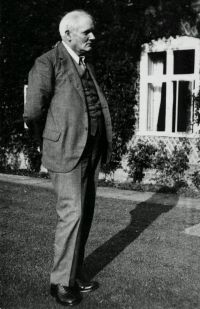
Portrait of Donald Francis Tovey Donald Francis Tovey 1911 Encyclopædia Britannica (1910)

The indirect influence no one could escape, for whatever in modern music is not traceable to Sebastian Bach is traceable to his sons, who were encouraged by their father in the cultivation of those infant art-forms which were so soon to dazzle the world into the belief that his own work was obsolete.
Bach’s place in music is thus far higher than that of a reformer, or even of an inventor of new forms. He is a spectator of all musical time and existence, to whom it is not of the smallest importance whether a thing be new or old, so long as it is true.
Source: Wikisource

Portrait of Donald Francis Tovey Donald Francis Tovey 1911 Encyclopædia Britannica (1910)

As our range of investigation widens, and thoroughness of analysis and study increases, so we shall surely find in ourselves an ever-deepening conviction that Beethoven, whether in range, depth and truth of thought, perfect sense of beauty, or absolute conscientiousness of execution, is the greatest musician, perhaps the greatest artist, that ever lived. There is no means of measuring Beethoven’s influence upon subsequent music. Every composer of every school claims it.
Source: Wikisource

Portrait of Donald Francis Tovey Donald Francis Tovey 1911 Encyclopædia Britannica (1910)

No amount of “Umarbeitung” could, for instance, turn the aria of Hercules into the Virgin’s cradle-song, or Wollust’s aria into the exhortation of Zion to prepare for the Bridegroom. In short, Bach’s melodies are characteristic, not like a mask with a set expression, but like a living face that is the more individual for the mobility of its features. Within these limits, that is, short of dramatic expression in just so far as “the end of drama is not character but action,” there is nothing good that Bach’s art does not express.
Source: Wikisource

Get perspective with Kwize: daily news enlightened by great literature