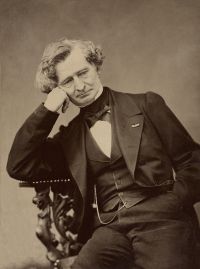
Hector Berlioz (1803–1869) was a French Romantic composer and conductor whose groundbreaking orchestration and dramatic power redefined symphonic and operatic forms. His works, such as the Symphonie fantastique and Roméo et Juliette, combined narrative storytelling with striking harmonic innovation, while his operas, including Les Troyens, questioned traditional structures. Berlioz’s life, characterized by intense dedication to his muse Harriet Smithson and persistent struggles against Parisian musical conservatism, influenced his creative output, as reflected in his memoirs and letters.
Contemporary evaluations, such as Herbert F. Peyser’s commentary on Berlioz’s unfulfilled connection with Wagner, highlight his unique brilliance, while his own writings reveal a man caught between artistic ambition and personal turmoil. His legacy lies in introducing new orchestral timbres and expanding the scope of Romantic expression, despite facing mixed critical reception during his lifetime.