“ M. de la Marche, therefore, was very much surprised when, on the eve of his departure, Marcasse presented himself, and proposed to accompany him to America as his valet. In vain did M. de la Marche remind him that he was very old to abandon his calling and run the risks of a new kind of life. Marcasse displayed so much firmness that in the end he gained his point. Various reasons led M. de la Marche to consent to the strange request. He had resolved to take with him a servant older still than the weasel-hunter, a man who was accompanying him only with great reluctance. ”
Marche
Definition and stakes
The theme of “Marche” has been addressed by authors such as George Sand, Sir James Emerson Tennent, Robert W. Service, Axel Munthe and Robert W. Chambers. It is often associated with terms like march, military, marching, soldier and troop.
Quotes about “Marche”
Albert Barrère, Argot and Slang
“ Marchef, m. (military) , abbreviation of maréchal-des-logis chef, quartermaster sergeant.Marcher (popular) , dans les souliers d’un mort, to inherit a man’s property; —— plan plan, to walk slowly; —— sur une affaire, to make a mull of some business. (Printers’) Marcher, to be of another’s opinion. Qu’en pensez-vous? Je marche. What do you think of it? I am of your opinion. (Thieves’) Marcher dessus, to prepare a robbery, or “lay a plant.” ”
 Robert W. Chambers,
Blue-Bird Weather
Robert W. Chambers,
Blue-Bird Weather
“ Marche was that kind of a friendly young man who is naturally gay-hearted and also a little curious—sometimes to the verge of indiscretion. For his curiosity and inquiring interest in his fellow-men was easily aroused—particularly when they were less fortunately situated than he in a world where it is a favorite fiction that all are created equal. ”
“ Not one of the fashionable beauties of the Magasin du Louvre has ever made my heart beat one whit the faster; not one of the charming coquettes of the Bon Marché has succeeded in catching me in the net of her blond tresses; but I admit the tender sympathy with which my eyes rest upon the coarse features of the doll à treize sous. Every one to his taste—I think she is handsome; I cannot help it. And we have often met; chance leads me frequently across her path. ”
 Sir James Emerson Tennent,
Belgium, Vol. 2 (of 2)
(1841)
Sir James Emerson Tennent,
Belgium, Vol. 2 (of 2)
(1841)
“ Nous partageons notre marché intérieur avec nos voisins, nous ne pouvons pas aller partager le marché de nos voisins avec eux. Ils viennent chez nous, nous n’allons pas chez eux. Il y a là une [270] cause constante d’inégalité, car nos concurrents commencent par réaliser chez eux des bénéfices qui les mettent à même de vendre à plus bas prix en Belgique. ”
Sir James Emerson Tennent,
Belgium, Vol. 2 (of 2)
(1841)
“ A ceux qui leur reprochent de ne pas s’occuper assez d’exportation, tout ce qui précède peut déjà répondre; mais qui donc pourrait méconnaître que, pour exporter avec fruit, il faut être assuré d’abord d’un certain débit sur le marché intérieur? Le marché intérieur est donc indispensable, et pour les fabricants belges, c’est justement ce qui leur manque. ”
 William Dean Howells,
A Hazard of New Fortunes — Volume 4
William Dean Howells,
A Hazard of New Fortunes — Volume 4
“ March returned, lightly. "It's one of what Lindau calls his 'brincibles' to say what he thinks."II. The Marches had no longer the gross appetite for novelty which urges youth to a surfeit of strange scenes, experiences, ideas; and makes travel, with all its annoyances and fatigues, an inexhaustible delight. ”
A Dictionary of Music and Musicians (1900)
“ The following are the names of the several airs in order as they occur: 'The Marche before the battell, The Souldiers Sommons, The Marche of foote-men, The Marche of horse-men: Now folowethe the Trumpets, the Bagpipe and the Drone, the Flute and the Drome, the Marche to the Fighte, Here the battells be joyned, The Retreate, Now folowethe a Galliarde for the victory. ”
William Dean Howells,
The Entire March Family Trilogy
“ In fact it was a very comfortable living for all concerned, and the Marches had the conditions, almost dismayingly perfect, in which they had often promised themselves to go and be young again in Europe, when they rebelled at finding themselves elderly in America. ”
Sir James Emerson Tennent,
Belgium, Vol. 2 (of 2)
(1841)
“ Le marché intérieur venait-il à être surchargé de marchandises, soit par un excès de production, soit par une introduction surabondante de fabricants étrangers, le fabricant cessant de produire pour la consommation indigène, allait écouler à Java ce qu’il avait en magasin, sans être obligé de suspendre ses travaux. ”
 George Sand,
Mauprat
(1837)
George Sand,
Mauprat
(1837)
“ I have yet another reason for wishing you to marry Edmée." "What is that, good Monsieur Patience?" "This La Marche is not the right man for her. I have told her so—yes, I have; and himself too, and the abbé, and everybody. He is not a man, that thing. He smells as sweet as a whole flower-garden; but I prefer the tiniest sprig of wild thyme." "Faith! I have but little love for him myself. But if my cousin likes him, what then, Patience?" "Your cousin does not like him. She thinks he is a good man; she thinks him genuine. She is mistaken; he deceives her, as he deceives everybody. ”
“ Well, that being so, my honour is safe; it is only my life, which hangs by a thread, which is at the mercy of a glass of wine, more or less, that M. Bernard may happen to drink one of these evenings; of some change meeting, or some exchange of looks between De la Marche and myself that he may fancy he has detected; a breath of air perhaps! What is to be done? Were I to grieve, would my tears wash away the past? We cannot tear out a single page of our lives; but we can throw the book into the fire. ”
William Dean Howells,
The Entire March Family Trilogy
“ People seemed to come there to write their letters and make up their accounts, as well as to eat their suppers; they called for stationery like characters in old comedy, and the clatter of crockery and the scratching of pens went on together; and fortune offered the Marches a delicate reparation for their exclusion from their own hotel in the cold popular reception of the prince which they got back just in time to witness. ”
George Sand,
Mauprat
(1837)
“ I was still in bed when I heard the hoofs of M. de la Marche's horse on the stones of the courtyard. Every day he used to come at this hour; every day he used to see Edmée at the same time as myself; and now, on this very day, this day when she had tried to persuade me to reckon on her hand, he was going to see her before me, and to give his soulless kiss to this hand that had been promised to myself. The thought of it stirred up all my doubts again. How could Edmée endure his attentions if she really meant to marry another man? ”
Henry James, The Better Sort (1903)
“ What it presently came to in truth was that poor Marcher waded through his beaten grass, where no life stirred, where no breath sounded, where no evil eye seemed to gleam from a possible lair, very much as if vaguely looking for the Beast, and still more as if missing it. ”
George Sand,
Mauprat
(1837)
“ When at last France openly declared herself an ally of America, I received a piece of news from the abbé that entirely set my mind at ease on one point. He wrote to me that I should probably meet an old friend again in the New World; the Count de la Marche had been given command of a regiment, and was setting out for the United States. "And between ourselves," added the abbé, "it is quite time that he made a position for himself. This young man, though modest and steady, has always been weak enough to yield to the prejudices of noble birth. ”
 Robert W. Service,
The pretender: A story of the Latin Quarter
(1914)
Robert W. Service,
The pretender: A story of the Latin Quarter
(1914)
“ Often I wonder how a woman who is tired if she walks a mile in the open air can walk ten in a close, heated department store without fatigue. As I walk in the street Anastasia lags hopelessly in the rear, but the moment we enter the Louvre or the Bon Marché there is a mighty change. The enthusiasm of the bargain stalker gleams in her eyes; she becomes alert, a creature of fierce and predatory activity. It is I who am helpless now, I who try in vain to keep up, as in some marvellous way she threads in and out that packed mob of sister bargain-stalkers. ”

“ Not by the marching lines of figures, fluttering banners, booming bands, nor just by the fact that these marchers were women, and women quite frankly dressed for effect, so that the whole rhythmic mass had a feminine color and dash that made it all gay and delightful. ”
William Dean Howells,
The Entire March Family Trilogy
“ March arbitrarily distinguished those with the drooping faces as tipsy and ashamed to confront the public. The small Italian children raced up and down the asphalt paths, playing American games of tag and hide-and-whoop; larger boys passed ball, in training for potential championships. The Marches sat and mused, or quarrelled fitfully about where they should spend the summer, like sparrows, he once said, till the electric lights began to show distinctly among the leaves, and they looked round and found the infants and dotards gone and the benches filled with lovers. ”
Robert W. Service,
The pretender: A story of the Latin Quarter
(1914)
“ It is the choking odour of an ash-bin, an ash-bin that is very old and is almost eaten away by its own putridity.Then on a Sunday morning when the rue Mouffetard is such a carnival of sordid satisfactions the snake-like head of the rue Saint-Médard is devoted to the marché pouilleux. Here come the chiffoniers and spread out the treasures they have discovered during the week. Over a great array of his wares, all spread out on mildewed sheets of newspaper, stands an old chiffonier in a stove-pipe hat. He also wears a rusty frock coat, and with a cane points temptingly to his stock. ”
 Augustus J. C. Hare,
The Story of My Life, volumes 4-6
Augustus J. C. Hare,
The Story of My Life, volumes 4-6
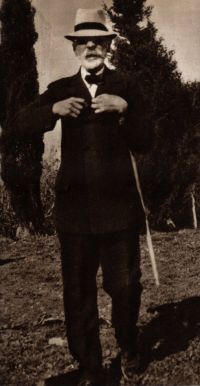
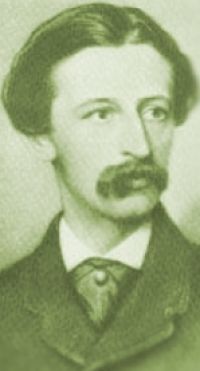
“ The Marchese is charming, living in the hearts of his people, sharing all their interests, working with them—taking off his coat and tucking up his sleeves to join in the sheep-shearing, gathering the grapes in the vintage, &c. ”
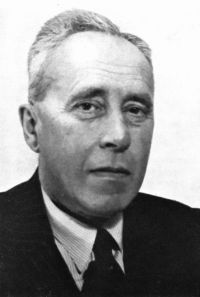 Johan Huizinga,
The Waning of the Middle Ages
(1924)
Johan Huizinga,
The Waning of the Middle Ages
(1924)
“ Who are the true moderns in the French literature of the fifteenth century? Those, no doubt, whose works approach nearest to what the following century produced of beauty. Assuredly it is not, whatever their merits may have been, the grave and pompous representatives of the Burgundian style: not Chastellain, La Marche, Molinet. The novelties of form which they affected were too superficial, the foundation of their thought too essentially medieval, their classical whimsies to naive. Should one look for the modern element in the refinement of form? ”
William Dean Howells,
The Entire March Family Trilogy
“ At lunch, in the faded excitement of their first meeting, the people at the Marches' table did not renew the premature intimacy of their breakfast talk. Mrs. March went to lie down in her berth afterwards, and March went on deck without her. He began to walk to and from the barrier between the first and second cabin promenades; lingering near it, and musing pensively, for some of the people beyond it looked as intelligent and as socially acceptable, even to their clothes, as their pecuniary betters of the saloon. ”
“ Despised and ridiculed by us grown-up people, whose eyes have been led astray by the modern demand for realism, it is nevertheless a fact that the doll à treize sous in the freshness of her primitive naïveté approaches nearer the ideal than the costly beauties of the Louvre and Bon Marché, who have reached the highest summit of refinement. We grown-up people have lost the faculty of understanding this from the moment we lost the simplicity of our childhood, but our teacher in this, as in many other things, is the little chap who still crawls about on the floor. ”
Thomas Wilhelm, A Military Dictionary and Gazetteer
“ Marches, Manœuvre. Marches are sometimes made by which an army gains a position, the possession of which compels the enemy to leave the position he is occupying. If these marches are under the observation of the enemy, they are termed “manœuvres”; but if made out of his sight, they are called manœuvre marches.—Prof. J. B. Wheeler.Marches of Concentration. The marches which are made by several bodies of troops, starting from points separated from each other, for the purpose of bringing these troops together at some stated place, are termed marches of concentration. ”
William Dean Howells,
The Entire March Family Trilogy
“ In my zeal for truth I did not distinguish between reality and actuality in this or other matters—that is, one was as precious to me as the other. But the types here portrayed are as true as ever they were, though the world in which they were finding their habitat is wonderfully, almost incredibly different. Yet it is not wholly different, for a young literary pair now adventuring in New York might easily parallel the experience of the Marches with their own, if not for so little money; many phases of New York housing are better, but all are dearer. ”
Donald Walker, Walker's manly exercises (1855)
“ Double March.—On the word Double March, the whole step off together with the left feet, keeping the head erect, and the shoulders square to the front; the knees are a little bent; the body is more advanced than in the other marches; the arms hang with ease down the outside of the thighs. The person marching is carefully habituated to the full pace of thirty-six inches, otherwise he gets into the habit of a short trot, which defeats the obvious advantages of this degree of march. ”
William Duane, A military dictionary
“ Marches and movements constitute so essential a branch in military tactics, that on them almost wholly depends the issue of a campaign. It is consequently expected, that every officer belonging to the senior department, should be able to calculate the march of a column under all the various and desultory circumstances which are attendant on the movements of troops. ”
Robert Emmett Rodes, Southern Historical Society Papers (1876)
“ Its marches had been admirable up to the time of reaching Front Royal, but for some days after that the men were broken down, and therefore straggled. Fortunately the marches during this period were quite short. ”
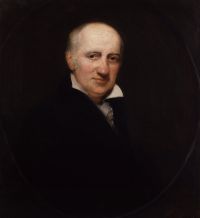 William Godwin,
St. Leon: A Tale of the Sixteenth Century
William Godwin,
St. Leon: A Tale of the Sixteenth Century
“ They were as light and variable as a feather, driven with every breath; and nothing could argue greater obliquity of intellect than to suppose, because they [286] were in a certain temper and sentiment to-day, that they would be found in a similar temper and sentiment to-morrow. The marchese however wished, he said, to relieve me from the apprehension of this imaginary danger, and therefore offered me the whole suite of his servants for the defence of my house. ”
Leander Stillwell, The Story of a Common Soldier of Army Life in the Civil War…
“ We should have marched only about ten miles the first day, with a halt of about ten minutes every hour, to let the men rest a little, and get their wind. Had that course been pursued, we would have reached our destination in good shape, with the ranks full, and the men would have been benefited by the march. ”
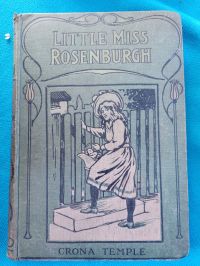 Crona Temple,
The Glorious Return: A Story of the Vaudois in 1689
Crona Temple,
The Glorious Return: A Story of the Vaudois in 1689
“ Fearful of losing the chance of liberty, these unfortunate persons, wasted by sickness, set out on their march that very night. There were old men amongst them, worn down by sufferings as well as by years, besides women and children of the tenderest age. That night they marched three or four leagues through the snow, in the most intense frost.’This first march cost the lives of a hundred and fifty of them. ”
Thomas Wilhelm, A Military Dictionary and Gazetteer
“ Ordinary route marches are those made along ordinary roads and where the length of the march in any one day is not greater than 20 miles. Twenty miles is a long march, especially if the body of troops is large, and this distance is taken as the limit for an ordinary march. If the distance marched in any one day is greater than 20 miles, the march is forced. ”
William Duane, A military dictionary
“ In order to avoid being discovered in the object of the march, a different road must be taken from the one which you really propose to march through; and a fit opportunity must afterwards be embraced to get into the real track. Before you march out of a town or fortified place, the utmost care must be observed to prevent your intended [391] route from being conveyed to the enemy. On this account the troops must be first marched out, and the gates immediately shut upon the rear, so that no stranger, &c. may be able to slip out with the men. ”
A Dictionary of Music and Musicians (1900)
“ March, about 75 steps go to the minute; with the Quick March (Germ. Geschwind Marsch; Fr. Pas redoublé) about 108; while the Storming March (Germ. Sturm Marsch; Fr. Pas de charge) implies about 120 steps per minute, these being measured by rapid beats of the drum. Military Marches, intended of course to stimulate hopeful enthusiasm, are generally written in a bright major key, trumpets, drums, and other instruments of percussion being prominently used ”
