Percussion

Definition and stakes

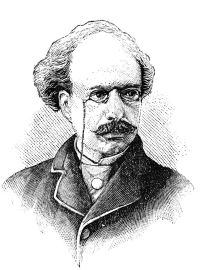
Portrait of Aristotle Aristotle,  On the Vital Principle (1855)

“ But there can be no percussion without movement, and sound is not produced by the percussion of any kind of substance, as we have said, (since wool, however percussed, does not, while brass and smooth and hollow bodies—brass because it is smooth—do give out sound,) and hollow bodies create, by reflexion, many percussions after the first, owing to the medium within them having been set in motion and being unable to make its escape. ”
Source: Wikisource

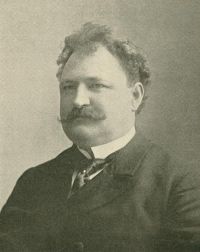
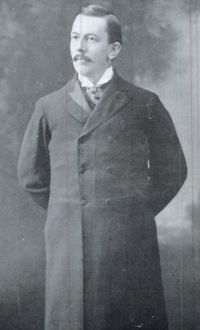
Portrait of Thomas Hobbes Thomas Hobbes,  The English Works of Thomas Hobbes… (1839)

“ The effects of percussion not to be compared with those of weight. 15. In percussion, therefore, when one hard body is in some small part of it stricken by another with great force, it is not necessary that the whole body should yield to the stroke with the same celerity with which the stricken part yields. For the rest of the parts receive their motion from the motion of the part stricken and yielding, which motion is less propagated every way towards the sides, than it is directly forwards. ”
Source: Gutenberg

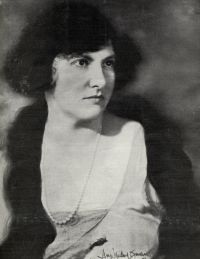
Paul Rosenfeld,  Musical Portraits : Interpretations of Twenty Modern Composers

“ He increased the variety and usefulness of the instruments of percussion, forming out of them a new family of instruments to balance the families of the strings, brass, and wood-wind. In the score of the Second Symphony he calls for six timpani, bass and snare-drums, a high and a low tam-tam, cymbals, a triangle, glockenspiel, three deep-toned bells, in the chief orchestra; besides a bass-drum, triangle and cymbals in the supplementary. In the Eighth Symphony, the instruments of percussion form a little band by themselves. ”
Source: Gutenberg

Get perspective with Kwize: daily news enlightened by great literature