“ Then the German, who was a professional musician, tuned an old mandolin with which a Venetian lover some star-lit night centuries ago, may have serenaded his loved one from his gondola; and to its trembling accompaniment sang a quaint chansonette, his Teutonic accent making havoc among its liquid Italian syllables. Then Rangely possessed himself of a strange African instrument, a crooked gourd, hollowed and strung with twisted tree fibers, and joined to the notes of the mandolin, its weird, cicada-like harshness. ”
Mandolin
Definition and stakes
The mandolin, a stringed instrument in the lute family, is distinguished by its four courses of doubled strings and tuning similar to that of the violin. Authors like Arlo Bates capture its romantic tone in Venetian serenades, while John Galsworthy employs it to emphasize melancholic poetry.
Lord Dunsany depicts it as a vessel for human sorrows, and Hildegard G. Frey underscores its significance in communal music. These diverse portrayals reveal the mandolin’s duality as both a symbol of artistic beauty and a medium for emotional expression, linking literary imagination with musical heritage.
Quotes about “mandolin”
John Galsworthy,
The Little Dream: An Allegory in Six Scenes
“ The mandolin twangs out, the doorway for a moment is all glamorous; and they pass through. Illumined by the glimmer of the lamp the Youth of THE WINE Hour is seen again. And slowly to the chords of his mandolin he begins to sing: "The windy hours through darkness fly Canst hear them little heart? New loves are born, and old loves die, And kissing lips must part. "The dusky bees of passing years Canst see them, soul of mine— From flower and flower supping tears, And pale sweet honey wine? [His voice grown strange and passionate] "O flame that treads the marsh of time. Flitting for ever low. ”

Lord Dunsany,
Don Rodriguez: Chronicles of Shadow Valley…
“ Soon out of the depth of that stout old mandolin, in which so many human sorrows had spun tunes out of themselves, as the spiders spin misty grey webs, till it was all haunted with music, soon the old cry went up to the stars again, a thread of supplication spun of the matter which else were distilled in tears, beseeching it knew not what. ”

Hildegard G. Frey, The Camp Fire Girls at Camp Keewaydin…
“ You bring your mandolin, Migs, and tell Hinpoha to bring her guitar. Hurry, we'll have to do it fast to get back for lights out."Miss Amesbury, wearily finishing her evening's work, was suddenly greeted by a burst of song from beneath her balcony; a surpassing deep, rich alto, beautifully blended with a number of clear, pure sopranos, accompanied by mandolin and guitar. ”
Josephine Daskam Bacon,
Smith College Stories
“ Then, as the faces on the steps grew indistinct and the little night noises grew plainer, just as the Club turned to go in somebody called, "Mandalay!" The crowd took it up and "Mandalay!" sounded from all the groups. Three or four girls with guitars turned up from somewhere, and a mandolin was produced from the Hubbard; a tall, slender girl stepped out a little from the rest and turned upon the waiting audience the kind of soft, rich voice that sounds rough and strained indoors, but only a little thrilled and anxious in the open air. ”
Various, Blackwood's Edinburgh Magazine…
“ Does any one need to be told what a mandolin is? It is something very different, let me assure him, from the ideal instrument of Moore's Melodies. Not even the lovely maidens that Moore paints could render tolerable a performance upon it; whereas it is made to resound by some especially ugly fellow, whose rascality of appearance, is relieved by no touch of the poetic. I did once hear a Turco-Greek lady perform, and on a more civilised instrument—a lady of high reputation as a performer on the guitar and a vocalist. ”
Fredrika Bremer,
Life in the Old World
(1860)
“ But agreeable and accomplished people, and music, considerably decrease the difficulty. Two skillful mandolin players, that I engaged for one of these evenings, and who came in their national costume, entertained me greatly. The soul and the overflowing life which they know how to put into the little quill with which they play upon the strings of the guitar, is something inconceivable. ”
Bertha May Clark, General Science
“ It has been shown that a piano string when struck by a hammer, or a violin string when bowed, or a mandolin string when plucked, vibrates not only as a whole, but also in segments, and as a result gives forth not a simple tone, as we are accustomed to think, but a very complex tone consisting of the fundamental and one or more overtones. ”
Carl Engel, Musical Instruments [1908]
“ The mandolino is now often strung with catgut strings. It resembles a diminutive lute; but its fingerboard has metal frets, and its strings are fastened to little ivory pins at the end of the body, instead of being looped through holes in the bridge. The convex back of the mandoline is deeper than that of the lute. It is one of the handsomest musical instruments. ”
Kathleen Schlesinger, 1911 Encyclopædia Britannica, Volume 17… (1911)
“ The strings are twanged by means of a plectrum or pick, held between the thumb and first finger of the right hand. In order to strike a string the pick is given a gliding motion over the string combined with a down or an up movement, respectively indicated by signs over the notes. In order to sustain notes on the mandoline the effect known as tremolo is employed; it is produced by means of a double movement of the pick up and down over a pair of strings. ”
Ouida,
Wisdom, Wit, and Pathos of Ouida
“ No one can make much music with the mandoline, but there is no other music, perhaps, which sounds so fittingly to time and place, as do its simple sonorous tender chords when heard through the thickets of rose-laurel or the festoons of the vines, vibrating on the stillness of the night under the Tuscan moon. ”
Edward John Payne, A Dictionary of Music and Musicians (1900)
“ The Geige, Crowd, and Rebec were constructed on the principle of the Lute, which still survives in the Mandolin: they consisted of a flat belly and a convex back, joined oyster-fashion by the edges. No improvement as regards resonance was possible in these oyster-shaped instruments: the fiddle of the future required a certain depth in all its parts, which can only be given by sides or ribs. No other instrument was capable of a waist: and as the reader is aware, the body of such an instrument was ready to hand in the small organistrum or hurdy-gurdy. ”
Ruth Ogden, A Little Queen of Hearts: An International Story
“ She used to study with Madame de Coucy in the mornings and go for walks among the flowers out in the garden there in the afternoon, and way beyond it too sometimes, and Richard would often come down from London for a visit, and he taught her English courtly ways and to play the mandolin” (Albert looked significantly toward the quaint mandolin, with a faded blue ribbon attached to it, that was lying among the other treasures on the table) ; “and when the King could not come for a regular visit, he would just ride down for a word and kiss. ”
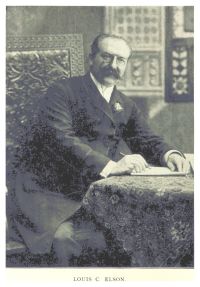
Louis Charles Elson,
Curiosities of Music: A Collection of Facts not generally known…
(1880)
“ Their chief musical instruments are mandolins or small harps of four strings each, drums (mostly of wood,) bells of iron, whistles and pipes. Many of these instruments are very symmetrically formed, and tastily carved, for in wood, iron, and clay designing the Nyam-Nyams are very expert. Schweinfurth thus describes their music, [212] —“They 259 have an instinctive love of art. Music rejoices their very soul. The harmonies they elicit from their favorite instrument, the mandolin, seem almost to thrill through the chords of their inmost nature. ”
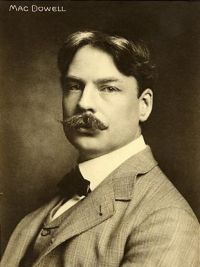
Edward MacDowell,
Critical and Historical Essays
“ The bowed instruments were originally of two types, the first in the form of the lute or mandolin; the second probably derived from the Welsh crwth, consisting of a flat, long box strung with strings (called fidel from fides, “string”) . The combination of these types, which were subjected to the most fantastic changes of shape, led eventually to the modern violin family. We know that the highest plane of perfection in the violin was reached in Italy about 1600. The Cremona makers, Amati, Guarnerius, and Stradivarius, made their most celebrated instruments between 1600 and 1750. ”
The Boy Mechanic, Volume 1: 700 Things for Boys to Do
“ The Music Produced by the Phonograph is Transmitted to the Violin on the Second Floor by the Aid of a Long Stick A very pretty trick, that can be worked in your own parlor, will produce as much sensation as a fake "medium." In all appearance, a violin, mandolin or guitar, placed on a table, will begin to produce music simply through stamping the foot and a few passes of the hand. The music will not sound natural, but weird and distant. ”
Sir Francis Darwin,
Springtime and Other Essays
“ No wonder that a lutenist should have been said to spend three-quarters of his existence in tuning his instrument. The mandore was a small form of lute, and is chiefly of interest because in a yet smaller form it still p. 76survives as the mandoline, which, however, usually has both wire and covered strings, and is played with a plectrum. To return to the lute, its most obvious characteristic is that the head (in which are the pegs for tuning the strings) is bent at right-angles to the general plane of the instrument. ”
J. Cree Fischer, Piano Tuning: A Simple and Accurate Method for Amateurs
“ Also the two-octave system gives a greater compass for testing, thus insuring greater accuracy. If you have access to a piano, it will now be well for you to begin training the ear to perceive the pulsations. If you cannot use a piano, you can train very well by the use of a mandolin, guitar, violin, [Pg 075] zither, or any stringed instrument. An instrument with metal strings, however, is better, as the vibrations are more perfect. ”
Marion Bauer,
How music grew
(1925)
“ Where Stringed Instruments Came From We have seen the stringed instrument developed from the bow when primitive man winged his arrow in the hunt, and heard its twang. Later desiring fuller tone, the sounding board grew, when early peoples sank bow-like instruments and reeds into a gourd which increased and reflected the sound as the metal reflector behind a light intensifies it.308Strings to produce sound, must be rubbed, like the bow drawn across violin strings, plucked as the mandolin or the harp is plucked, or struck with a hammer as was the dulcimer. ”
Alfred James Hipkins and Kathleen Schlesinger, 1911 Encyclopædia Britannica, Volume 17… (1911)
“ Mandolines are partly strung with wire, and are played with a plectrum, indispensable for metal or short strings. Perhaps the earliest lutes were so played, but the large lutes and theorbos strung with catgut have been invariably touched by the fingers only, the length permitting this more sympathetic means of producing the tone. Praetorius, [6] writing when the lute was in universal favour, mentions seven varieties distinguished by size and tuning. The smallest would be larger than a mandoline, and the melody string, the “chanterelle,” often a single string, lower in pitch. ”
P. L. Jacob, The Arts in the Middle Ages and at the Period of the Renaissance
“ A movable bridge, which was shifted up and down between the string and the scale, produced whatever notes the performer wished to bring out. In the eighth century there was a kind of violin or mandolin furnished with a single metallic string played on with a metallic bow. Later still, we find a kind of harp formed of a long sounding-box traversed by a single string, over which the musician moved a small bow handled with a sudden and rapid movement.The instruments we have named do not, however, embrace all those in use in the Middle Ages and the Renaissance. ”
Hamlin Garland,
The Shadow World
“ After seeing a mandolin move and play of itself, after having the metronome set in motion, stopped, and set going again, after having the registrations he most desired, Bottazzi concludes his third sitting by [Pg 209] saying: 'An invisible hand or foot must therefore have forced down the disk, must have leaned on the membrane of the receiving-drum of my apparatus, because I assured myself next day that to obtain the highest lines registered the disk had to be pressed to the extreme point. ”
Angela Brazil,
The Luckiest Girl in the School
“ By the aid of diligent practicing in private, and several rehearsals at Garnet's house, the girls at last got their duet to run smoothly. Garnet was frankly pleased."The two instruments go so nicely together! A mandoline's ever so much better played with a guitar accompaniment than with the piano. ”
Carl Engel, Musical Myths and Facts, Volume 1…
“ An Italian mandoline, ornamented with marquetry, mother-of-pearl, and carving; assigned to Stradiuarius. A French mandoline of the time of Louis XVI., with the arms of the Dauphin inlaid with mother-of-pearl. A small Italian mandoline with three strings. A mandora of the time of Henri II., inlaid with broad strips of ivory, and with fleurs de lys in ebony. A French hurdy-gurdy (or vielle) of the time of Louis XIV., made of box-wood and citron-wood, carved, and ornamented with medallions of mother-of-pearl and with turquoises ”
Albert Smith, The Marchioness of Brinvilliers… (1886)
“ The next moment she seized a mandoline that lay on a console of marble, and burst into a gay and jovial song, keeping time to the measure with graceful and wild movements. The gipsy listened with wide open eyes, and lips apart. ”
A. Mason Clarke, The Violin and Old Violin Makers
“ We will now pass over a few thousand years during which time stringed instruments of great variety and of every conceivable shape had been invented and improved upon in different countries of the world, their gradual development (brought about, no doubt, more by circumstances existing at various periods than by any real aim towards artistic 5 achievement) giving birth to the various families of stringed instruments in use at the present day, e.g., the violin family, the harp, guitar, mandoline and pianoforte. ”
Carl Engel, Musical Myths and Facts, Volume 1…
“ It has twelve wire-strings which are arranged in pairs, and therefore produce six tones; while the more common Neapolitan mandolino has eight strings constituting four pairs. A French mandoline, made by Eulry-Clement, in Mirecourt, Vosges, beginning of the present century; the back inlaid with strips of different woods. Eight strings arranged in four pairs. A mandola; Italian, seventeenth century. This scarce instrument may be most briefly described as a huge Neapolitan mandolino. It has the shape of the mandolino, but the size of a large lute ”
Alfred J. Hipkins, Musical Instruments, Historic, Rare and Unique
“ But the lute, even when diapasons or extra bass strings were added to it, went out, being superseded by the more useful, although less beautifully toned, spinet. The latest lute instruments are the pleasing Mandolines to which fashion may possibly grant a new lease of popularity. These instruments are drawn in Plate XXIII. Both ear and eye are equally gratified in that culmination of qualities attained in a violin, in which the sound and shape are so intimately and inseparably connected that we fail to conceive the one without some mental reference to the other. ”
A. Safroni-Middleton, A Vagabond's Odyssey
“ We went into partnership with our landlady’s daughters, who played the guitar and mandoline, and I conducted the troupe. When the festival carnivals began a week later we had a glorious time and made enough money to enable us to live comfortably. I played my Samoan waltz, arranging it for two violins, guitar and mandolines, and the wild barbarian note of the strain was very popular. Maidens, who looked like Arab girls with shining eyes, whirled and swayed in the arms of their Don Juans, as under the Spanish moon my cheerful troupe tinkled away and I played the violin. ”
Edward W. Naylor, Shakespeare and music
“ Any person of decent education could 'bear a part' in those days, i.e., read at sight the treble, alto, tenor, or bass 'part' of the work presented by the host for the diversion of his guests. [See Introduction.] L. 1140. 'Frets upon an instrument' can still be seen on the modern mandoline, guitar, and banjo. In Shakespeare days, the viol, lute, and cittern all had frets on the fingerboard, but they were then simply bits of string tied round at the right places for [Pg 26] the fingers, and made fast with glue. ”
A Dictionary of Music and Musicians (1900)
“ The French name (said to be of Arabic origin) of that primitive stringed instrument which was in use throughout western Europe in the middle ages, and was the parent of the viol and violin, and is identical with the German 'geige' and the English 'fiddle'; in outline something like the mandoline, of which it was probably the parent. It was shaped like the half of a pear, and was everywhere solid except at the two extremities, the upper of which was formed into a peg-box identical with that still in use, and surmounted by a carved human head. ”
A Popular Handbook to the National Gallery…
“ Five large drone pipes may be recognised, from their being out of scale with the melody pipes. The second instrument in the angelic band is the mediæval harp, the comb holding the wrest, or tuning, pins being held here in an animal's mouth. A third angel is furnished with a cither, also a favourite mediæval instrument. It is ornamented in ebony and ivory, and has a plectrum guard inserted in the belly, as in a modern mandoline. The fourth angel has a viol of a clumsy form ”