Antonio Stradivari

Definition and stakes

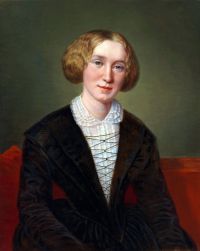
Portrait of George Eliot George Eliot,  Stradivarius (1873)

“ And inward sense that works along with both,
Have hunger that can never feed on coin.
Who draws a line and satisfies his soul,
Making it crooked where it should be straight?
An idiot with an oyster-shell may draw
His lines along the sand, all wavering,
Fixing no point or pathway to a point;
An idiot one remove may choose his line,
Straggle and be content; but God be praised,
Antonio Stradivari has an eye
That winces at false work, and loves the true,
With hand and arm that play upon the tool
As willingly as any singing bird
Sets him to sing his morning roundelay.
”
Source: Wikisource

Horace Petherick,  Antonio Stradivari

“ We are therefore thrown upon our own resources in estimating any connection of Carlo Bergonzi with the late work of Antonio Stradivari. The instruments themselves will be the only guide and, without doubt, in the face of other evidence, had it been present, the best. Stradivari's work during the last ten or more years of his life was showing exactly what we should expect of the man when working at a patriarchal age. ”
Source: Gutenberg

Horace Petherick,  Antonio Stradivari

“ The gouging is deep from the commencement. The aim of the artist in the whole design appears to have been towards perfection of gracefulness.
Fig. b. Antonio Stradivari, 1683, the openness and bold swing of the first turn at once on leaving the "eye" is very striking, it also commences higher up, there is almost an absence of flow or downward tendency. The throat underneath the volute is very massive, although all the edges are finished off with the utmost delicacy and sharp tooling. All the details of scroll carving by Stradivari at this period are marvels of mechanical dexterity of handling.
”
Source: Gutenberg

Get perspective with Kwize: daily news enlightened by great literature