“ Every instrument belonging to the school of Cremona has it, more or less, in all its marvellous beauty, and to these instruments the resolute investigator turns, promising himself the discovery of its constituent parts. The more its lustre penetrates his soul, the more determined become his efforts. As yet, however, all such praiseworthy researches have been futile, and the composition of the Cremonese varnish remains a secret lost to the world—as much so as the glorious ruby lustre of Maestro Giorgio, and the blue so coveted by connoisseurs of china. ”
Cremona
Definition and stakes
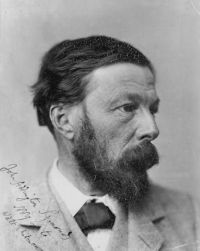
Cremona, a historic city in Lombardy, Italy, is renowned for its medieval architecture, cultural heritage, and connection to violin craftsmanship. Authors such as George Hart marveled at the enigmatic varnish of Cremonese violins, while Mary Wollstonecraft Shelley evoked its tranquil landscapes in Valperga.
Hester Lynch Piozzi noted its fertile surroundings, and Nora Perry tied it to the legacy of Stradivari. Giacomo Casanova referenced its social intrigues, and Luigi Lanzi emphasized its artistic vibrancy. These varied perspectives underscore Cremona’s lasting resonance as a cradle of creativity and intrigue.
Quotes about “Cremona”
1911 Encyclopædia Britannica, Volume 7… (1911)
“ CREMONA, a city and episcopal see of Lombardy, Italy, the capital of the province of Cremona, situated on the N. bank of the Po, 155 ft. above sea-level, 60 m. by rail S.E. of Milan. Pop. (1901) town, 31,655; commune, 39,344. It is oval in shape, and retains its medieval fortifications. The line of the streets is as a rule irregular, but the town as a whole is not very picturesque. The finest building is the cathedral, in the Lombard Romanesque style, begun in 1107 and consecrated in 1190. The wheel window of the main façade dates from 1274. ”
1911 Encyclopædia Britannica, Volume 7… (1911)
“ Landulf, a German to whom the see was granted by Henry II., was driven out in 1022, and his palace destroyed, but other Germans were invested with the see afterwards. The commune of Cremona is first mentioned in a document of 1098, recording its investiture by the countess Matilda with the territory known as Isola Fulcheria. It had to sustain many wars with its neighbours in order to maintain itself in its new possessions. ”
Hester Lynch Piozzi, Observations and Reflections Made in the Course of a Journey through France…
“ The country we came through to Cremona is rich and fertile, the roads deep and miry of course; very few of the Lombardy poplars, of which I expected to see so many: but Phaeton's sisters seem to have danced all away from the odoriferous banks of the Po, to the green sides of the Thames, I think; meantime here is no other timber in the country but a few straggling ash, and willows without end. The old Eridanus, however, makes a majestic figure at Cremona, and frights the inhabitants when it overflows. There are not many to be frighted though, for the town is thinly peopled ”
Louise Closser Hale,
The Romancing of a Square Party
(1910)
“ I grew fond of Cremona, basked in the sunshine, dozed a little perhaps—being a very ancient person—and was just dreaming that I heard the sounds of the far-famed violins, when an amazed signore called my attention to the unpleasant truth that the music—noise, forsooth—was the voice of the Illustrator, deserted by his body-guard, rendered helpless by the throng around him, and calling for assistance. I endeavored to calm him. "All young people are alike." ”
Nora Perry,
Hope Benham: A Story for Girls
“ He lived in Cremona first, then in Venice.""In Cremona! How long ago?""Well, he was a pupil of Stradivari, and he lived in Cremona in the year 1740, and after he had studied for a time with Stradivari, he went to Venice, where the manufacture of violins was very flourishing.""What! this is a real Cremona violin?" cried Dolly. "Why—why, Mr. Andrews, my teacher, said that they were very rare, and when you did succeed in getting hold of one that it took a lot of money to buy it." ”
Giacomo Casanova,
The Memoirs of Jacques Casanova de Seingalt…
“ You need not suppose that I am going to exaggerate, for the adventure is known to everybody in Cremona. The charming woman whom you have just seen is gifted with wit greater even than her beauty, and here is a specimen of it. A young officer, one amongst many military men who were courting her, when Marshal de Richelieu was commanding in Genoa, boasted of being treated by her with more favour than all the others, and one day, in the very coffee-room where we met, he advised a brother officer not to lose his time in courting her, because he had no chance whatever of obtaining any favour. ”
Esther Singleton, The orchestra and its instruments (1917)
“ Soon afterwards the violin repairer offered Zimbalist five thousand dollars for it. The old, black, neglected violin had turned out to be a beautiful Maggini.Not very far away from Brescia is the town of Cremona on the river Po. Cremona! The very name gives us a thrill! The town, though small, was an artistic centre. Its school of painting was nearly as famous as that of Bologna, and in its stately Cathedral just as beautiful music was heard as in the Cathedral of Brescia. The wealthy prelates and learned monks encouraged and trained musicians of the first rank ”
Mary Wollstonecraft Shelley, Valperga (1823)
“ The sky was darkening; but the west was tinged with a deep orange colour, and the wide and dusky plain of Lombardy lay far extended all around: immediately below was the town of Cremona, which to them appeared as silent and peaceful as if the inhabitants were in the enjoyment of perfect security. They continued some minutes gazing silently, Castruccio on the wide extent of scenery before him, Pepi on the thick walls of his tower. At length the former said; "An evil star pursues you, Messer Benedetto, and I am afraid that you were born in the descent of some evil constellation." ”
Luigi Lanzi,
The History of Painting in Italy…
“ To speak frankly what I think, Cremona would never have seen her Campi, nor her Boccaccino rise so high, if Soiaro had not exhibited his talents in that city.The remaining portion of our chapter will be devoted almost wholly to the Campi, a family that filled Cremona, Milan, and other cities of the state, both in private and public, with their paintings. They consisted of four individuals, all of whom devoted themselves indefatigably to the art until they reached an extreme old age. ”
Mary Wollstonecraft Shelley, Valperga (1823)
“ I have seen few of them since you were on the donjon of my palace. Cremona has not yet recovered its cruel siege and storm; many of its palaces still lie in their ashes; and many good and fertile acres have been sold at a low rate, to trim the despoiled apartments in the guise they once were. Yet the Guelphs have again attained the upper hand there; my townsmen are proud and rebellious, and have not acquired through their misfortunes the humility of poverty, which sits better on a subject than the insolence of prosperity. ”
John Addington Symonds,
Sketches and Studies in Italy and Greece…
“ It is a little country town of Lombardy, between Cremona and Treviglio, with no historic memories but very misty ones belonging to the days of the Visconti dynasty. On every side around the city walls stretch smiling vineyards and rich meadows, where the elms are married to the mulberry-trees by long festoons of foliage hiding purple grapes, where the sunflowers droop their heavy golden heads among tall stems of millet and gigantic maize, and here and there a rice-crop ripens in the marshy loam. ”
G. J. Whyte-Melville,
The Gladiators. A Tale of Rome and Judæa
“ It was but yesterday that news reached Rome of the revolt of the whole fleet at Ravenna—and ere this Cremona has perhaps fallen into the power of Antonius, that soldier-orator, with the iron arm and the silver tongue. Well we know, for we have been told by One whose words shall never be forgotten, that a house divided against itself cannot stand; and is this a time, think you, my child, for the worn-out sensualist who wears the purple here, to make conditions with such a man as your father? ”
Robert William Frederick Harrison, 1911 Encyclopædia Britannica (1911)
“ To eyes familiar with the geometrical curves of the later Cremona school, most of the violins of these makers have a rude and uncouth appearance. The height of the model varies; the pattern is attenuated; the f-holes share the general rudeness of design, and are set high in the pattern. Andreas Amati of Cremona, the eldest maker of that name, effected some improvements on this primitive model; but the violin owes most to his sons, Antonio and Geronimo, who were partners. They introduced the substantial improvements which developed the Brescian violin into the modern instrument. ”
James Dennistoun, Memoirs of the Dukes of Urbino…
“ Upon the capitulation of Cremona, Francesco Maria stole a few days for the society of his Duchess, and the affairs of his state, but was speedily recalled to his post by the unsatisfactory aspect of matters in Lombardy. The papal troops had been withdrawn; the garrison of Cremona, whose services the Venetians would not retain at his suggestion, had entered into new engagements with the enemy; fourteen thousand lanznechts, alias lansquenet infantry, under Georg v. Fründesberg, were marching from Germany by the Val di Sabbia to support the imperial cause. ”
A. Mason Clarke, The Violin and Old Violin Makers
“ GUARNERIUS, PIETRO, Cremona, eldest son of Andreas, born 1655, and lived to an advanced age. His first productions, which are of flat model, are dated from Cremona, but later on he established himself at Mantua, where he manufactured a great quantity of instruments of undoubted merit, but have the fault of too high an arching, and some there are wanting in brilliancy of tone. His tickets usually run:This maker had a nephew also called Pietro, who worked at Mantua from about 1725 to 1740, and 59 subsequently in Venice till about 1755. He was a pupil of his uncle, but his work is less esteemed. ”
Giorgio Vasari, Lives of the most Eminent Painters Sculptors and Architects…
“ With that Domenico Benvenuto had been some little time, when, going once to Cremona, he happened to see in the principal chapel of the Duomo in that city, among other works by the hand of Boccaccio Boccaccino, a painter of Cremona, who had painted the tribune there in fresco, a Christ seated on a throne surrounded by four Saints, and giving the Benediction. ”
A Dictionary of Music and Musicians (1900)
“ Peter of Cremona has scarcely a point in common with his father or brother. 'There is,' says Mr. Hart, in his work on the violin, 'increased breadth between the sound-holes: the sound-hole is rounder and more perpendicular; the middle bouts are more contracted, and the model is more raised.' His varnish is often equal to that of his brother. The instruments of Peter of Cremona are valued by connoisseurs, but in a less degree than those of his nephew, 4. Peter Op Venice, son of Joseph filius Andreæ, who adopted his uncle's method, and carried the 'Petrine' make to perfection. ”
“ The citizens of Cremona are, however, not quite singular in this respect. It has been remarked that our American friends show far greater interest in Stratford-upon-Avon and its memories than we ourselves do. I must confess that I have great respect for the genuine enthusiast.The Cremonese have scarcely an idea of the extent of veneration with which we admirers of the art regard their illustrious citizen. They will be astonished to hear that "Stradivari" forms the Christian name of some Englishmen. ”
Luigi Lanzi,
The History of Painting in Italy…
“ In treating of these artists, I shall observe nothing further in reference to the last four, having described those of Cremona in their own place, and not being aware that any thing more than the name of the other two survives at Milan ”
Thomas Ashby, 1911 Encyclopædia Britannica, Volume 22… (1911)
“ From Cremona the road ran eastward to Bedriacum, where it forked, one branch running to the left to Verona and thence to the Brenner, the other to the right to Mantua, Altinum and Aquileia. The military occupation of Liguria depended upon this road, and several of the more important towns owed their origin largely to it. ”
James Harvey Robinson,
An Introduction to the History of Western Europe
“ The government of the towns of Lombardy fell, after Charlemagne's time, into the hands of their respective bishops, who exercised the prerogatives of counts. Under the bishops the towns flourished within their walls and also extended their control over the neighboring districts. As industry and commerce increased, the prosperous citizens, and the poorer classes as well, aspired to some control over the government. Cremona very early expelled its bishop, destroyed his castle, and refused to pay him any dues. ”
1911 Encyclopædia Britannica (1911)
“ In 1848, when Milan and Venice rose against Austria, Cremona, then only a lad of seventeen, joined the ranks of the Italian volunteers, and remained with them, fighting on behalf of his country’s freedom, till, in 1849, the capitulation of Venice put an end to the hopeless campaign. He then returned to Pavia, where he pursued his studies at the university under Francesco Brioschi, and determined to seek a career as teacher of mathematics. His first appointment was as elementary mathematical master at the gymnasium and lyceum of Cremona, and he afterwards obtained a similar post at Milan. ”
Giorgio Vasari, Lives of the Most Excellent Painters… (1850)
“ Cremona likewise, as we have remarked in the Life of Lorenzo di Credi and in other places, has at different times produced men who have performed very commendable works in painting, and we have already related [93] that when Boccaccino Boccacci was occupied with the apsis of the Cathedral of Cremona, and with the Stories from the life of Our Lady in other parts of the church, we have already recorded, I say, that there was then a good painter at Cremona called Bonifazio Bembi ”
Mrs. Hugh Fraser,
More Italian Yesterdays
“ First their admiral, Trevisano, was caught napping at Cremona and his fleet destroyed under Carmagnola’s furious eyes. [193] His remarks to the admiral afterwards and to the Venetian Senate were so mixed and incoherent with rage that the Senate hurriedly sent down special commissioners to assure him of their confidence and love. Piccino wandered about picking up odds and ends, a castle here, a town there, but Carmagnola refused to move. Filippo, wild with delight, hovered in his neighbourhood, sending taunts and insults to him on every opportunity; but the old tiger lay in his lair. ”
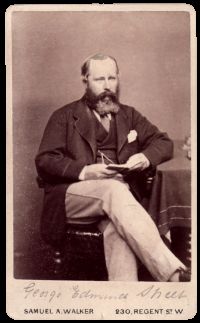
George Edmund Street,
Brick and Marble in the Middle Ages…
“ The building incloses a quadrangle, which is rather small, but arcaded on three sides, and opens from the piazza by open arches under the principal façade, and probably dates from the middle of the thirteenth century, the date 1245 being given in an inscription in the courtyard.There are many churches in Cremona, all more or less appearing to be founded upon the work in the transepts of the cathedral, but generally very inferior to them in merit. ”
James De Mille, Cord and Creese
“ MY SWEETEST LITTLE SISTER,—I send you my diary, as I promised you, my Teresella, and you will see all my adventures. Take care of yourself, be happy, and let us hope that we may see one another soon. I am well, through the mercy of the good God, and hope to continue so. There is no such thing as music in this place, but I have found an organ where I can play. My Cremona is uninjured, though it has passed through hard times—it sends a note of love to my Teresina. Remember your Paolo to the just and upright Thornton, whom you love. ”
“ Pietro Guarneri used some of the finest wood. The bellies are invariably wide in grain and very even.The parish register supplies the information that Pietro was married in the year 1677. He appears to have left Cremona for Mantua soon after the year 1698. He visited Cremona about the period when his father died; in which year he appears to have acted as god-father at the christening of his brother Joseph's son Bartolommeo. Pietro returned to Mantua, and later went to Venice, where he is said to have died at an advanced age. ”
Giorgio Vasari, Lives of the most Eminent Painters Sculptors and Architects…
“ After the death of Bonifazio, who left unfinished the above-mentioned stories of Christ in the Duomo of Cremona, Giovanni Antonio Licinio of Pordenone, called in Cremona De' Sacchi, finished those stories begun by Bonifazio, painting there in fresco five scenes of the Passion of Christ with a grand manner in the figures, bold colouring, and foreshortenings that have vivacity and force ”
Eleanor E. Tremayne, The First Governess of the Netherlands…
“ Meanwhile the league between Charles and the Pope had produced great results in Italy; Lombardy being the chief centre of war. On November the 19th the Papal-Imperialist army entered Milan, and within a fortnight the French held only the town of Cremona, the fortress of Milan, and a few scattered strongholds. ”
John Addington Symonds,
Renaissance in Italy, Volume 3…
“ In many instances the geology of the neighbourhood determined the picturesque features of its architecture. The clay-fields of the valley of the Po produced the brickwork of Cremona, Pavia, Crema, Chiaravalle, and Vercelli. To their quarries of mandorlato the Veronese builders owed the peach-bloom colours of their columned aisles. Carrara provided the Pisans with mellow marble for their Baptistery and Cathedral; Monte Ferrato supplied Pistoja and Prato with green serpentine; while the pietra serena of the Apennines added austerity to the interior of Florentine buildings. ”