Brescia

Definition and stakes

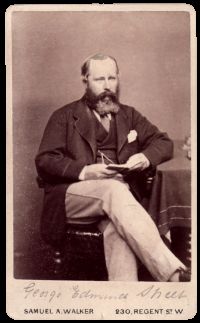
Portrait of George Edmund Street George Edmund Street,  Brick and Marble in the Middle Ages…

“ Palazzuolo—Coccaglio—Brescia: new and old Cathedrals, Broletto—Churches—Donato—Desenzano—Lago di Garda—Riva—Trent—Verona.
OUR drive from Bergamo to Brescia was strikingly unlike what we had hitherto been so much enjoying. Mile after mile of straight roads, between fields so closely planted with fruit-trees that one never sees more than the merest glimpse of anything beyond them, are certainly not pleasant; and the hot sun above us, and the thirsty and dry beds of rivers which we crossed on our way, made us feel glad when evening drew on, and we found ourselves rapidly nearing Brescia.
”
Source: Gutenberg

M. F. Mansfield,  Italian Highways and Byways from a Motor Car

“ Between Brescia and Bergamo is the Lake of Iseo; the fourth in size of the north Italian lakes. The vegetation of its shores is purely Italian and vineyards and olive groves abound. A fringe of old castle towers, of walls, palaces and villas surround it, all blended together with a historic web and woof of mediævalism and romance.
From Brescia to Bergamo runs one of the best national highroads in Italy. The automobilist will appreciate this and will want to push on to the end.
”
Source: Gutenberg

Thomas Ashby,  1911 Encyclopædia Britannica (1911)

“ BRESCIA (anc. Brixia) , a city and episcopal see of Lombardy, Italy, the capital of the province of Brescia, finely situated at the foot of the Alps, 52 m. E. of Milan and 40 m. W. of Verona by rail. Pop. (1901) town, 42,495; commune, 72,731. The plan of the city is rectangular, and the streets intersect at right angles, a peculiarity handed down from Roman times, though the area enclosed by the medieval walls is larger than that of the Roman town, which occupied the eastern portion of the present one. ”
Source: Wikisource

Get perspective with Kwize: daily news enlightened by great literature