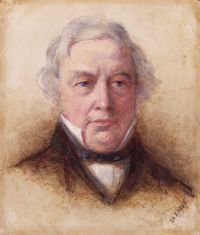
Legitimacy, the foundational principle supporting political or social authority, has been examined by thinkers across centuries as the cornerstone of governance and moral order. Joseph de Maistre framed it through divine providence, asserting that time clarifies legitimacy’s origins, while John Taylor contrasted legitimate rule—rooted in divine law—with systems based on deceit. Thomas Hill Green, conversely, grounded legitimacy in the general will, portraying laws as manifestations of collective self-determination.
Sarah E. Wall questioned divine governance, emphasizing individual rights over institutional power, and Mary Platt Parmele challenged the lack of consent in authority. Plato linked legitimacy to justice, defining rulers as arbiters of rightful ownership, whereas Ross Winn critiqued it as a mask for domination. These perspectives reveal legitimacy as a contested yet crucial concept, shaping how power is justified, resisted, or redefined.
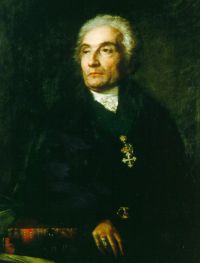 Joseph de Maistre,
Essay on the Generative Principle of Political Constitutions
(1847)
Joseph de Maistre,
Essay on the Generative Principle of Political Constitutions
(1847)