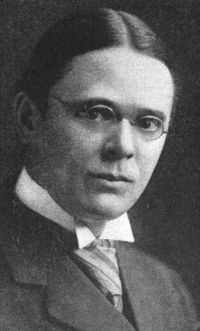
Roscoe Pound

Roscoe Pound

Summary

Portrait of Roscoe Pound Roscoe Pound The Harvard Classics Vol. 51 (1914)

To-day the social-philosophical school has given us a new conception of the end of the legal order. Instead of the maximum of individual self-assertion consistent with a like self-assertion by all others, we are now putting as the end the maximum satisfaction of human wants, of which self-assertion is only one, even if a very important one. Hence juristic and political theory to-day thinks of interests, that is of claims which a human being may make, and of securing or protecting the greatest number of these interests possible with the least sacrifice of other interests.
Source: Wikisource

Portrait of Roscoe Pound Roscoe Pound The Harvard Classics Vol. 51 (1914)

The Roman lawyers turned this idea of political philosophy into law. In the great institutional book of Roman law, the Institutes of Justinian, we are told that the precepts of law come to three; to live honorably, not to injure another, and to give to everyone his due. The idea here is that the state and the law exist to maintain harmoniously the existing social order. What the interests of another are, which one is not to injure, what makes anything another's due, so that it is to be given him, are matters which are left wholly to the traditional social organization.
Source: Wikisource

Get perspective with Kwize: daily news enlightened by great literature