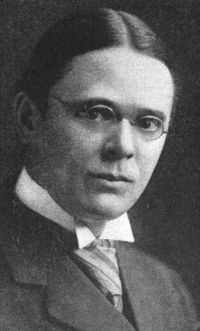
Roscoe Pound

Biographical details

Portrait of Roscoe Pound Roscoe Pound,  An Introduction to the Philosophy of Law

“ For one thing, each shows us a picture of some ultimate basis, beyond reach of the individual human will, that stands fast in the whirl of change of which life is made up. This steadfast ultimate basis may be thought of as the divine pleasure or will or reason, revealed immediately or mediately through a divinely ordained immutable moral code. It may be put in the form of some ultimate metaphysical datum which is so given us that we may rest in it forever. It may be portrayed as certain ultimate laws which inexorably determine the phenomena of human conduct. ”
Source: Gutenberg

Portrait of Roscoe Pound Roscoe Pound,  The Harvard Classics Vol. 51 (1914)

“ To-day the social-philosophical school has given us a new conception of the end of the legal order. Instead of the maximum of individual self-assertion consistent with a like self-assertion by all others, we are now putting as the end the maximum satisfaction of human wants, of which self-assertion is only one, even if a very important one. Hence juristic and political theory to-day thinks of interests, that is of claims which a human being may make, and of securing or protecting the greatest number of these interests possible with the least sacrifice of other interests. ”
Source: Wikisource

Portrait of Roscoe Pound Roscoe Pound,  An Introduction to the Philosophy of Law

“ It has been easy to accept a political theory, proceeding on the dogma of separation of powers, and to lay down that courts only interpret and apply, that all making of law must come from the legislature, that courts must "take the law as they find it," as if they could always find it ready-made for every case. It has been easy also to accept a juristic theory that law cannot be made ”
Source: Gutenberg

Get perspective with Kwize: daily news enlightened by great literature