Formalism

Definition and stakes

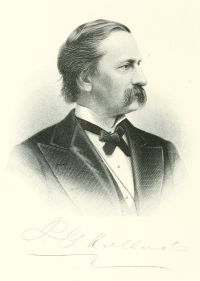
Portrait of Georg Wilhelm Friedrich Hegel Georg Wilhelm Friedrich Hegel,  Hegel's Philosophy of Mind

“ The truth of these particularities and the concrete unity of their formalism is the content of the universal, essential and actual, will,—the law and underlying essence of every phase of volition, the essential and actual good. It is thus the absolute final aim of the world, and duty for the agent who ought [pg 116] to have insight into the good, make it his intention and bring it about by his activity. ”
Source: Gutenberg

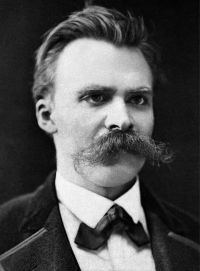
Portrait of Johann Gottlieb Fichte Johann Gottlieb Fichte,  Sun-Clear Statement — Introduction (1868)

“ My reader, does a philosophical system, such as I have just now described, appear to you to be honorable to common sense and its interests—a system which insists of common sense that it should be cured of its inborn blindness in the school of the philosopher, and should there get an artificial light to replace its own natural light? ”
Source: Wikisource

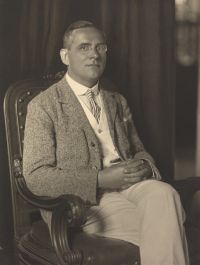
Portrait of Josiah Royce Josiah Royce,  The Religious Aspect of Philosophy (1885)

“ Let us see how, in these special classes of cases, we shall succeed in verifying the natural presupposition of common sense, which regards error as possible only when our object is not wholly present to mind, and which assumes that a judgment can have an object that is yet only partially present to mind. In choosing the classes of cases, we shall first follow common sense as to their definition. We shall take just the assumptions of daily life, and shall show that they lead us into difficulty. We are not for the first bound to explain why these assumptions are made. ”
Source: Wikisource

Get perspective with Kwize: daily news enlightened by great literature