AI-generated from sources
Executive authority: when personal will undermines constitutional duty
In Brief
- The presidency operates under a fundamental tension, serving both as an agent of the people’s collective will and an agent strictly bound by the constitutional framework and statutes.
- The determination of policy through unaccountable personal agents or private lobbying dismantles the concept of legal responsibility, threatening to replace a government of laws with personal whims.
- The constitutional office demands that the president act as the head of state for the entire nation, requiring political neutrality rather than using the office to promote partisan or personal schemes.
- When a president disrespects the law or questions its legitimacy, they deny the very source of their own power and risk betrayal of public trust, which the Constitution counters with the ultimate check of impeachment.
Main authors

The foundation of a constitutional republic rests on a fundamental tension embodied by its chief executive. The president is at once a powerful leader, expected to act decisively as a symbol of the collective national will, and a public servant, strictly bound by the laws and the constitutional framework from which all legitimate authority derives [1, 2]. In this system, sovereignty resides with the people, who delegate power to governmental departments; the executive is an agent of this power, not its source [3]. The American presidency, therefore, perpetually navigates the delicate balance between wielding the immense power of the office and adhering to the principle that it is part of a government of laws, not of individuals.
This inherent tension becomes most acute when executive power is channeled through the informal influence of personal relationships and private agents, challenging the separation between the president's individual will and their constitutional duties [4, 5]. The central conflict that emerges is whether the president's responsibility is to faithfully execute the laws as written, or if the office possesses an inherent authority that allows its holder to interpret the Constitution and the law according to their own private judgment [6, 7]. This question probes the very nature of executive power: is the president an agent of the Constitution, or is the Constitution a tool to be wielded by an agent of personal ambition?
The Constitutional Framework of Executive Power
The original design of American governance sought to prevent the abuse of delegated power through constitutional restraints and frequent elections [8]. Under this framework, the president is not a sovereign but an agent tasked with executing the laws originating from the legislature [9]. Congress determines what shall be done, and the president is bound in duty to render unquestioning obedience, creating a clear hierarchy where the executive implements the legislative will . This structure was intended to guard against the concentration of power in a single individual, who, if given control over both military and financial resources, could threaten the liberty of the nation [10].
Conversely, a different conception of presidential power posits an inherent executive authority, particularly in matters of national security and in times of emergency [11, 12]. This view argues that the president, as a co-equal branch of government, possesses powers that may not be explicitly detailed in statutes but are derived from the constitutional vesting of executive power . Proponents of this view suggest that the American people expect the president to take necessary actions to protect them, even if those actions are not specifically authorized by Congress, framing such actions as a core constitutional function .
This doctrinal clash creates a perpetual debate over the legitimacy of presidential actions. Actions seen by one side as the fulfillment of a core constitutional duty can be viewed by the other as a wanton disregard for the law and an abuse of power for personal ends [13]. The conflict becomes critical when the president's will begins to supersede the legislative process, shifting the central question of governance from 'what laws will Congress pass' to 'what will the executive not veto' [14]. At its extreme, this dynamic threatens to replace a government of laws with the whims of a single individual, placing the peace and stability of the republic at risk .
The Ambiguous Role of the President's Agent
The executive branch cannot function without a vast network of officials and agents to administer the law. The legal framework provides for the appointment of such agents to carry out specific duties, often with formal constraints such as requiring them to give bond to ensure the faithful discharge of their trust [15]. These agents are empowered to gather information and assist in the application of statutes, operating as official instruments of the state [16]. In principle, these are agents of the law, not of the person holding the presidential office.
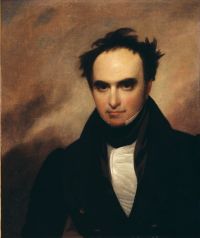
The distinction between an agent of the state and an instrument of personal will is, however, fraught with peril. Daniel Webster articulated this danger with force, arguing against the doctrine that a president has the right to employ agents of his own choice to aid him in the performance of his personal duties . Such a premise, he contended, dismantles the concept of legal responsibility, creating an executive who is, for all practical purposes, completely irresponsible. If the president can act through unaccountable personal agents, the government ceases to be one of laws .
The potential for this danger to manifest is evident when the president's intimate associates and aides become embroiled in corruption [17, 18]. The use of public office for personal enrichment by those close to the president blurs the line between legitimate governance and graft. Even if a president is not directly involved in or aware of such illegal activities, the actions of their inner circle can severely damage public trust and call into question the integrity of the entire executive branch [19]. This highlights how informal networks of power, operating in the president's name, can subvert constitutional principles of accountability.
Partisanship Versus the Presidential Duty of Neutrality
While the president is inevitably a political figure who comes to power through a partisan process, the constitutional office itself demands a higher duty. The president is not merely the leader of a political faction but the head of state for the entire national community, obligated to serve and realize the public interest as a whole [20]. This role necessitates a degree of political neutrality, especially concerning elections, to ensure the fair functioning of the democratic process [21, 22]. A distinction must be made between the president's permitted activities as a party member and their constitutional status as an institution that must serve all citizens equally [23].
When a president uses the platform of their office to repeatedly and actively express support for a particular political party, especially in the run-up to an election, they risk intervening in and distorting the free competition among parties [24]. Such actions leverage the immense influence of the presidency to sway the independent formation of public opinion, potentially perverting the outcome of an election [25]. This one-sided intervention can cause deep divisions within the country and foster public distrust in the administration's ability to govern impartially [26].
The most profound assertion of personal will over constitutional duty occurs when a president publicly questions the legitimacy of existing laws or attempts to use constitutional mechanisms for personal political gain [27, 28]. By challenging the normative power of statutes, the president attacks the principle of the rule of law. This is a self-defeating act, as the president's own power and authority are vested by the very Constitution they have a sworn duty to protect [29]. When the president fails to respect and abide by the law, they forfeit the moral authority to demand that any other official or citizen do so .
Accountability and the Constitutional Last Resort
To counter the threat of an executive who violates the law, the Constitution provides for accountability, with impeachment serving as the ultimate check [30, 31]. This process is reserved for grave violations of the Constitution or statutes committed in the performance of official duties . It is not intended for political disagreements but for acts that represent a fundamental betrayal of the public's trust, such as corruption or attempts to subvert the democratic order [32, 33]. The impeachment mechanism memorializes the principle that even a democratically elected president can be removed to preserve the constitutional order .
Defining a 'grave violation' sufficient to justify removal from office is one of the most serious questions in a constitutional system. It requires balancing the immense political disruption of removing a president against the damage caused by allowing them to remain in office after forfeiting the public's trust [34, 35]. The decision hinges on whether the president's actions have so violated the law that the public trust vested in them should be revoked before their term ends .
Ultimately, the tension between personal will and constitutional authority is managed through a system of checks and balances where all state institutions are subject to the rule of law [36, 37]. The president's duty is not to their own interpretation of the law but to the objective will of the legislature and the foundational tenets of the Constitution [38]. A president who disrespects the law denies the very source of their own power and endangers the democratic framework they are sworn to uphold .
The American presidency exists in a state of permanent tension, with the officeholder acting as both an agent of the people's sovereign will and a legal agent of the Constitution . The peril to the republic intensifies when the first role is used as a justification to subvert the second—when a president claims that their private judgment on constitutional matters is superior to that of the courts or Congress . This path leads away from a government of laws toward one where the personal ambitions and schemes of one individual can endanger the nation's honor and stability .
The integrity of the constitutional system ultimately depends on the president's own fidelity to the oath of office: to protect the Constitution, respect the rule of law, and serve the entire nation rather than a narrow political faction . When the informal influence of personal agents and the assertion of individual will replace transparent legal processes, the foundational principle of a government of laws is threatened . The enduring challenge for the nation is to ensure that the formidable power vested in the presidency remains an instrument for the public good, perpetually accountable to the constitutional framework from which all its legitimate authority is derived .