Summary

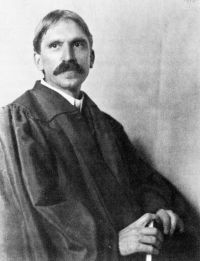
Portrait of John Dewey John Dewey Outlines of a Critical Theory of Ethics

This knowledge of self has taken, indeed, a more circuitous and a more painful path, than Socrates anticipated. Man has had, during two thousand years of science, to go around through nature to find himself, and as yet he has not wholly come back to himself—he oftentimes seems still lost in the wilderness of an outer world. But when man does get back to himself it will be as a victor laden with the spoils of subdued nature. Having secured, in theory and invention, his unity with nature, his knowledge of himself will rest on a wide and certain basis.
Source: Gutenberg

Portrait of John Dewey John Dewey Outlines of a Critical Theory of Ethics

To have an interest, then, is to be alert, to have an object, and to find satisfaction in an activity which brings this object home to self.
Not every interest carries with it complete satisfaction. But no interest can be wholly thwarted. The purer the interest, the more the interest is in the object for its own sake, and not for that of some ulterior consequence, the more the interest fulfills itself. "It is better to have loved and lost than never to have loved at all", and love is simply the highest power of interest—interest freed from all extrinsic stuff.
Source: Gutenberg

Portrait of John Dewey John Dewey Outlines of a Critical Theory of Ethics

To imagine the abolition of these laws is to imagine the abolition of society; and to ask for the law of individual conduct apart from all relationship, actual or ideal, to society, is to ask in what morality consists when moral conditions are destroyed. A society in which the social bond we call justice does not obtain to some degree in the relations of man to man, is not society; and, on the other hand, wherever some law of justice actually obtains, there the law is for every individual who is a member of the society.
Source: Gutenberg

Get perspective with Kwize: daily news enlightened by great literature