Summary

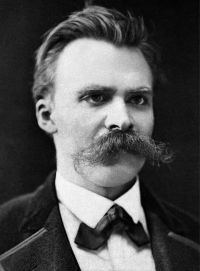
Portrait of Friedrich Wilhelm Nietzsche Friedrich Wilhelm Nietzsche Human, All Too Human: A Book for Free Spirits

Non-Responsibility and Non-Guilt.—The absolute irresponsibility of man for his acts and his nature is the bitterest drop in the cup of him who has knowledge, if he be accustomed to behold in responsibility and duty the patent of nobility of his human nature. All his estimates, preferences, dislikes are thus made worthless and false. His deepest sentiment, with which he honored the sufferer, the hero, sprang from an error. He may no longer praise, no longer blame, for it is irrational to blame and praise nature and necessity.
Source: Gutenberg

Portrait of Friedrich Wilhelm Nietzsche Friedrich Wilhelm Nietzsche Human, All Too Human: A Book for Free Spirits

Wherever the Olympian gods receded into the background, there even Greek life became gloomier and more perturbed.—Christianity, on the other hand, oppressed and degraded humanity completely and sank it into deepest mire: into the feeling of utter abasement it suddenly flashed the gleam of divine compassion, so that the amazed and grace-dazzled stupefied one gave a cry of delight and for a moment believed that the whole of heaven was within him.
Source: Gutenberg

Portrait of Friedrich Wilhelm Nietzsche Friedrich Wilhelm Nietzsche Human, All Too Human: A Book for Free Spirits

Well-Wishing.—Among the small, but infinitely plentiful and therefore very potent things to which science must pay more attention than to the great, uncommon things, well-wishing21 must be reckoned; I mean those manifestations of friendly disposition in intercourse, that laughter of the eye, every hand pressure, every courtesy from which, in general, every human act gets its quality. Every teacher, every functionary adds this element as a gratuity to whatever he does as a duty; it is the perpetual well spring of humanity, like the waves of light in which everything grows
Source: Gutenberg

Get perspective with Kwize: daily news enlightened by great literature