Summary

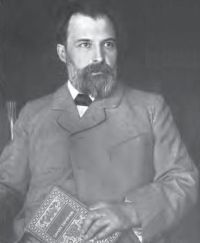
Portrait of Paul Carus Paul Carus Nietzsche and Other Exponents of Individualism

FRIEDRICH NIETZSCHE
IN THE PRIME OF LIFE.
Zarathustra preaches to a crowd in the market:
"I teach you the overman. Man is a something that shall be surpassed. What have ye done to surpass him?
"All beings hitherto have created something beyond themselves: and are ye going to be the ebb of this great tide and rather revert to the animal than surpass man?
"What with man is the ape? A joke or a sore shame. Man shall be the same for the overman, a joke or a sore shame.
"Behold, I teach you the overman!
"The overman is the significance of the earth.
Source: Gutenberg

Portrait of Paul Carus Paul Carus Nietzsche and Other Exponents of Individualism

Nietzsche's love of Slavism manifested itself in his childhood, for when the news of the fall of Sebastopol became known, Nietzsche, at that time a mere boy, was so dejected that he could not eat and gave expression to his chagrin in mournful strains of verse.
He who has faith in truth accepts truth as authority; he who accepts truth as authority recognizes duty; he who recognizes duty beholds a goal of life. He has found a purpose for which life appears worth living, and reaches out beyond the bounds of his narrow individuality into the limitless cosmos.
Source: Gutenberg

Portrait of Paul Carus Paul Carus Nietzsche and Other Exponents of Individualism

Men of Stirner's type do not fare well in a world where the ego has come into its own. They will be trampled under foot, they will be bruised and starved, and they will die by the wayside. No, men of Stirner's type had better live in the protective shadow of a state; the worst and most despotic state will be better than none, for no state means mob rule or the tyranny of the bulldozer, the ruffian, the brutal and unprincipled self-seeker.
Here Friedrich Nietzsche comes in. Like Stirner, Nietzsche was a peaceful man; but unlike Stirner, Nietzsche had a hankering for power.
Source: Gutenberg

Get perspective with Kwize: daily news enlightened by great literature