Max Stirner

Definition and stakes

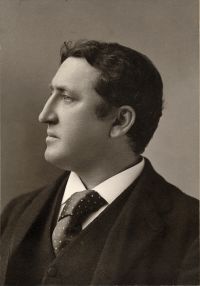
Portrait of James Huneker James Huneker,  Egoists, A Book of Supermen

“ Nevertheless, there is an honesty in the words of Max Stirner. We are weary of the crying in the market-place, "Lo! Christ is risen," only to find an old nostrum tricked out in socialistic phrases; and fine phrases make fine feathers for these gentlemen who offer the millennium in one hand and perfect peace in the other. Stirner is the frankest thinker of his century. He does not soften his propositions, harsh ones for most of us, with promises, but pursues his thought with ferocious logic to its covert. ”
Source: Gutenberg

Georgi Valentinovich Plekhanov,  Anarchism and Socialism (1906)

“ Thus Feuerbach. Max Stirner is quite at one with him, but wishes to deduce what he believes to be the final, the most radical consequences of his theory. He reasons in this fashion. God is only the product of phantasy, is only a spook. Agreed. But what is this humanity the love of which you prescribe to me? Is not this also a spook, an abstract thing, a creature of the imagination? Where is this humanity of yours? Where does it exist but in the minds of men, in the minds of individuals? The only reality, therefore, is the individual, with his wants, his tendencies, his will. ”
Source: Wikisource

Portrait of George Santayana George Santayana,  Egotism in German Philosophy

“ Max Stirner, while deprecating all subordination of the individual to society, expected people, even after they were emancipated, to form voluntary unions for specific purposes, such as playing games. Did he think that such companionship and co-operation would go without gregarious feelings and ideal interests? Would not a player wish his side to win? Would he not impose a rather painful strain upon himself at times for the sake of that "spook," victory? All the sacrifices that society or religion imposes on a man, when they are legitimate, are based on the same principle. ”
Source: Gutenberg

Get perspective with Kwize: daily news enlightened by great literature