Mary MacLane, I, Mary MacLane (1917)
“ And both are Egotists equally with me. Egotist, not egoist, is my word: it and not the idealized one is the 'winged word.' It is made of glow and gleam and splendor, that Ego. I would be its votary. ”
Mary MacLane, I, Mary MacLane (1917)
“ And both are Egotists equally with me. Egotist, not egoist, is my word: it and not the idealized one is the 'winged word.' It is made of glow and gleam and splendor, that Ego. I would be its votary. ”
 George Meredith,
The Egoist: A Comedy in Narrative
George Meredith,
The Egoist: A Comedy in Narrative
“ You know the many paintings of man transformed to rageing beast by the curse: and this, the fieriest trial of our egoism, worked in the Egoist to produce division of himself from himself, a concentration of his thoughts upon another object, still himself, but in another breast, which had to be looked at and into for the discovery of him. By the gaping jaw-chasm of his greed we may gather comprehension of his insatiate force of jealousy. ”
 Robert Hichens,
A Spirit in Prison
Robert Hichens,
A Spirit in Prison
“ Perhaps—perhaps sometimes you have thought I had forgotten that evening. I may be an egoist. I expect most men are egoists. And perhaps I am the egoist you say I am. Often one doesn’t know what one is. ”
 Max Stirner,
The Ego and Its Own
Max Stirner,
The Ego and Its Own
“ What is not supposed to be my concern! [2] First and foremost, the good cause [3] , then God's cause, the cause of mankind, of truth, of freedom, of humanity, of justice; further, the cause of my people, my prince, my fatherland; finally, even the cause of Mind, and a thousand other causes. Only my cause is never to be my concern. "Shame on the egoist who thinks only of himself!" ”
 Lucas Malet,
Adrian Savage: A Novel
Lucas Malet,
Adrian Savage: A Novel
“ But I am guiltless of the weakness of altruism—contemptible word, under which the modern mind tries to conceal its cowardice and absence of all sound philosophy. I am an egoist, dear Madame, believe me, an egoist pure and simple. ”
Max Stirner,
The Ego and Its Own
“ You despise the egoist because he puts the spiritual in the background as compared with the personal, and has his eyes on himself where you would like to see him act to favour an idea. The distinction between you is that he makes himself the central point, but you the spirit ”
Giovanni Gentile, The Reform of Education
“ This then is the world: an infinity of things all of which have however their root in us. Not in “us” as we are represented ordinarily in the midst of things; not in the empirical and abstract “us” which feeds the vanity of the empty-headed egoist, of him who has not the faintest notion of what he really is, who can therefore think of himself only as enclosed within the tight husk of his own flesh and of his particular passions. ”
 George Edward Moore,
Principia Ethica — Chapter III
(1903)
George Edward Moore,
Principia Ethica — Chapter III
(1903)
“ The conception which is, perhaps, most closely associated with Egoism is that denoted by the words ‘my own interest.’ The Egoist is the man who holds that a tendency to promote his own interest is the sole possible, and sufficient, justification of all his actions. But this conception of ‘my own interest’ plainly includes, in general, very much more than my own pleasure. It is, indeed, only because and in so far as ‘my own interest’ has been thought to consist solely in my own pleasure, that Egoists have been led to hold that my own pleasure is the sole good. ”
Max Stirner,
The Ego and His Own
“ Nothing at all, because the egoist is to himself the warder of the human, and has nothing to say to the State except "Get out of my sunshine." ”
 George Stuart Fullerton,
A Handbook of Ethical Theory
George Stuart Fullerton,
A Handbook of Ethical Theory
“ But it is too much to say that the professional moralist and the plain man normally regard pure egoism with favor and find it natural. In spite of our cynical maxims and our inclination to seek for ulterior motives for apparently altruistic acts, we abhor the thorough-going egoist, and we are not inclined to look upon the phenomena, let us say, of the family life, as manifestations of self-seeking. ”
George Stuart Fullerton,
A Handbook of Ethical Theory
“ It implies the multiplication of desires and their satisfaction. On what ground shall we persuade the contented egoist, who has but a handful of commonplace desires and finds it possible to satisfy most of them, that it is better to call into being a multitude of wants many of which will probably remain unrealized? ”
Edmond Holmes, What Is and What Might Be
“ If arrested growth is the chief source of [279] malignant egoism, there is an obvious remedy for the deadly malady. The egoist must re-enter the path of self-realisation. His great enemy is his lower self ”
Boyd Henry Bode, Creative Intelligence: Essays in the Pragmatic Attitude
“ The egocentric predicament in this aspect purports to compel the admission by the "altruist" that since whatever he chooses to do must be his act and is obviously done because he wishes, for good and sufficient reasons of his own, to do it, therefore he is an egoist after all—perhaps in spite of himself and then again perhaps not. ”
 Aurobindo Ghose,
Essays On The Gita
(1922)
Aurobindo Ghose,
Essays On The Gita
(1922)
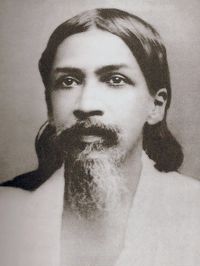
“ He is egoistic like other men, but with the purer or sattwic egoism which regards the moral law and society and the claims of others and not only or predominantly his own interests, desires and passions. ”
 G. K. Chesterton,
Orthodoxy
(1908)
G. K. Chesterton,
Orthodoxy
(1908)
“ First, the egoist calls life a war without mercy, and then he takes the greatest possible trouble to drill his enemies in war. To preach egoism is to practise altruism. ”
Max Stirner,
The Ego and His Own
“ Just recognize yourselves again, just recognize what you really are, and let go your hypocritical endeavors, your foolish mania to be something else than you are. Hypocritical I call them because you have yet remained egoists all these thousands of years, but sleeping, self-deceiving, crazy egoists, you Heautontimorumenoses, you self-tormentors. ”
 Friedrich Nietzsche,
HUMAN, ALL TOO HUMAN, 'A Book For Free Spirits' Part I
(1909)
Friedrich Nietzsche,
HUMAN, ALL TOO HUMAN, 'A Book For Free Spirits' Part I
(1909)
“ And even if his egoism suffers more thereby than our egoism, inasmuch as it has to bear more of the bad consequences of his fault, the un-egoistic in us—this word is not to be taken too seriously, but only as a modification of the expression—is more deeply wounded by his guilt than is the un-egoistic in him. ”
Max Stirner,
The Ego and His Own
“ Now, because the egoistic always keeps peeping through, people have inquired for a more perfect concept which should really wholly express what you are, and which, because it is your true nature, should contain all the laws of your activity. ”
 Abu Hamid al-Ghazālī,
“Riza” Or Joyous Submission to His Will
(1921)
Abu Hamid al-Ghazālī,
“Riza” Or Joyous Submission to His Will
(1921)
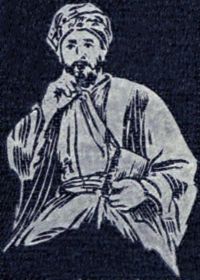
“ Our egoistic tendencies impede the progress of our souls towards higher virtues, and hence some of us go the length of denying the possiblity of their existence. Let the lives of the true lovers of God be our guide. ”
 Gilbert Keith Chesterton,
The Defendant
(1904 [second impression])
Gilbert Keith Chesterton,
The Defendant
(1904 [second impression])
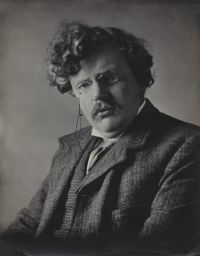
“ If the grounds of humility are found only in social convenience, they may be quite trivial and temporary. The egoists may be the martyrs of a nobler dispensation, agonizing for a more arduous ideal. To judge from the comparative lack of ease in their social manner, this seems a reasonable suggestion. ”
Th. Ribot, The Psychology of the Emotions (1897)
“ In primitive societies there has been a long struggle between the strongest egoistic tendencies, with their dissolvent action, and the weaker and intermittent altruistic tendencies, which have progressed through the agency of some more enlightened individuals, and also with the help of force, of which we still have to speak. ”
 Friedrich Wilhelm Nietzsche,
The Dawn of Day
Friedrich Wilhelm Nietzsche,
The Dawn of Day
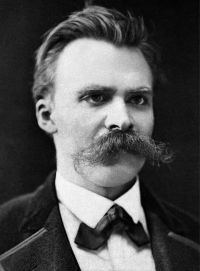
“ They belong to a different type of egoists from the compassionate men,—but to call them, in a distinct sense, evil and the compassionate ones good, is merely a moral fashion which has had its innings, just as the reverse fashion had also its innings, and a long innings, too. ”
Wilfrid Lay, A Plea for Monogamy
“ The direct expression of the egoistic-social impulse is the inevitable comparison made by himself between the individual and others. He compares himself unconsciously, if not consciously, with other men in health, strength, wealth, position, and in every other respect ”
Cora May Williams, A Review of the Systems of Ethics Founded on the Theory of Evolution
“ But our analysis goes further; for the egoistic virtues are evidently not purely egoistic; and society will come with time to insist on this fact, and to render these virtues still more advantageous and their neglect still more disadvantageous; while the growth of the altruistic feelings will infuse the individual with the desire to perform his duty to others in this respect also. The purely egoistic character of so-called personal virtues, for the assertion of which so [Pg 429] much has been written, is a myth. ”
Max Stirner,
The Ego and Its Own
“ - Now it is clear, God cares only for what is his, busies himself only with himself, thinks only of himself, and has only himself before his eyes; woe to all that is not well pleasing to him. He serves no higher person, and satisfies only himself. His cause is - a purely egoistic cause. ”
 Marcel Proust,
The Guermantes Way
(1925)
Marcel Proust,
The Guermantes Way
(1925)
“ thus it is that egoists have always the last word; ”
Max Stirner,
The Ego and His Own
“ Not till one has fallen in love with his corporeal self, and takes a pleasure in himself as a living flesh-and-blood person,—but it is in mature years, in the man, that we find it so,—not till then has one a personal or egoistic interest, i. e. an interest not only of our spirit, for instance, but of total satisfaction, satisfaction of the whole chap, a selfish interest. ”
báró József Eötvös, The Village Notary: A Romance of Hungarian Life
“ You are free from egotism and selfishness: but, after all, you are human. The expression of our features may vary; but we are all formed of the same clay, and our feelings and instincts are very much the same, however varying their expression may be. ”
Friedrich Wilhelm Nietzsche,
Ecce Homo
“ Expressed morally, to love one's neighbour and to live for others and for other things may be the means of protection employed to maintain the hardest kind of egoism. This is the exceptional case in which I, contrary to my principle and conviction, take the side of the altruistic instincts; for here they are concerned in subserving selfishness and self-discipline. The whole surface of consciousness—for consciousness is a surface—must be kept free from any one of the great imperatives. Beware even of every striking word, of every striking attitude! ”
 Romain Rolland,
Pierre and Luce
Romain Rolland,
Pierre and Luce
“ They have often told me that I'm an egotist; and as for me, I sometimes say to myself: What has one a right to? When one sees so many wretchednesses, so much pain about one, you hardly dare to ask.... ”
 Jean Paul,
Flower, Fruit, and Thorn Pieces…
Jean Paul,
Flower, Fruit, and Thorn Pieces…
“ In the warmth of our discussion we were losing sight altogether of one of the two concave mirrors which distort other people’s moral distortions for us even more wildly than they are distorted to begin with—I mean, our own egotism. ”
 Paul Carus,
Gospel of Buddha
(1917)
Paul Carus,
Gospel of Buddha
(1917)
“ How much confusion of thought comes from our interest in self, and from our vanity when thinking 'I am so great,' or 'I have done this wonderful deed?' The thought of thine ego stands between thy rational nature and truth; banish it, and then wilt thou see things as they are. He who thinks correctly will rid himself of ignorance and acquire wisdom. ”
William James, The Varieties of Religious Experience (1902)
“ That unsharable feeling which each one of us has of the pinch of his individual destiny as he privately feels it rolling out on fortune's wheel may be disparaged for its egotism, may be sneered at as unscientific, but it is the one thing that fills up the measure of our concrete actuality, and any would-be existent that should lack such a feeling, or its analogue, would be a piece of reality only half made up. ”
S. D. Gordon, Quiet Talks on Power
“ The third fact:—There will be a gradual bringing back to their normal condition of those facilities which have been dwarfed, or warped, or abnormally developed through sin and selfishness. Sometimes these moral twists and quirks in our mental faculties are an inheritance through one or more generations. The man with excessive egotism often carries the evidence of it in the very shape of his head. But as he yields to the new Spirit dominant within, a spirit of humility, of modesty will gradually displace so much of the other as is abnormal. ”
Anton Pavlovich Chekhov, The Lady with the Dog and Other Stories
“ You will be just to father. He is so good.""He is not good; he is just good-natured. Burlesque old uncles like your father, with well-fed, good-natured faces, extraordinarily hospitable and queer, at one time used to touch me and amuse me in novels and in farces and in life; now I dislike them. They are egoists to the marrow of their bones. What disgusts me most of all is their being so well-fed, and that purely bovine, purely hoggish optimism of a full stomach."Tanya sat down on the bed and laid her head on the pillow. ”
Friedrich Wilhelm Nietzsche,
The Will to Power: An Attempted Transvaluation of All Values…
“ The great egoism of our dominating will insists on our completely shutting our eyes to ourselves, and on our appearing "impersonal," "disinterested"!—Oh to what a ridiculous degree we are the reverse of this! ”
John Wilson, Recreations of Christopher North…
“ Or rather to admire One's Self as he was, without consciousness of the mean vice of egotism, because of the pity almost bordering on contempt with which One regards One's Self as he is, shrivelled up into a sort of shrimp of a man—or blown out into a flounder. ”
 William Blake,
Facsimile of the original outlines before colouring of the songs of innocence and of experience…
(1893)
William Blake,
Facsimile of the original outlines before colouring of the songs of innocence and of experience…
(1893)
“ From the body springs egotism of all kinds, for this is born with the limited personality, and must die with it. Conscience, as a restrainer of this personality, and law and all that belongs to the Fall,—which was a fall from the eternal into the temporal state,—die with the phase of life with which they deal. ”
 Frances Theresa Russell,
Satire in the Victorian novel
(1920)
Frances Theresa Russell,
Satire in the Victorian novel
(1920)
“ On this assertive side sentimentality is related to egoism. But the relation is difficult to express, for egoism is another complexity that baffles analysis. Self-respect and attention to one’s own affairs are basic and indispensable virtues; while conversely, altruism is often but egoism in disguise and of all things the most sentimental. We may conclude, however, that it is egoism pushed to its two extremes, vanity on the one side and selfishness on the other, that is the satirizible sort. ”
Sir R. Phillips, A Morning's Walk from London to Kew
“ What a lesson do these considerations afford to the pride of man, whose egotism represents him to himself as the most important object of the infinite creation; for whose use, he asserts, all things were made, and to whom all things are subservient! It is, however, natural that the nearest object should fill the largest angle, whether viewed by the mind or the eye; though it is the business of wisdom and philosophy to correct such illusions of our intellectual or sensitive powers. ”
 David Graham Phillips,
The Husband's Story: A Novel
(1910)
David Graham Phillips,
The Husband's Story: A Novel
(1910)
“ How can people, all whose faculties are trained to work in upon themselves—how can they have charm? An egotist, one who talks only of himself, may have charm because he gives you the impression that he is trying to please you, that he thinks you so important that he wishes you to be sensible of his importance. But the egotist who, whatever he talks, thinks only of himself—he is not only dull and bored but also a diffuser of dullness and boredom. ”
 Victor Hugo,
Les Misérables, v. 4/5: The Idyll and the Epic
Victor Hugo,
Les Misérables, v. 4/5: The Idyll and the Epic
“ In the egotist we trace prejudices, the cloudiness of a caste education, appetite growing with intoxication, and prosperity that stuns, a fear of suffering which in some goes so far as an aversion from the sufferers, an implacable satisfaction, and the feeling of self so swollen that it closes the soul. In the wretched we find covetousness, envy, the hatred of seeing others successful, the great bounds of the human beast toward gorging, hearts full of mist, sorrow, want, fatality, and foul and common ignorance. ”
George Henry Lane Fox Pitt-Rivers, Conscience & Fanaticism: An Essay on Moral Values
“ How infinitely preferable is the spirit of enlightened egoism to the blind altruism of the fanatic! The egoism that enhances rather than dims the love of others. It is only through the realization of community of interests and aims that like thought will result in like conduct. ”
Friedrich Nietzsche,
Twilight of the Idols
(1889)
“ The Natural Value of Egoism.—Selfishness has as much value as the physiological value of him who practises it: its worth may be great, or it may be worthless and contemptible. Every individual may be classified according to whether he represents the ascending or the descending line of life. ”
“ Standing on the bare ground,—my head bathed by the blithe air, and uplifted into infinite space,—all mean egotism vanishes. I become a transparent eye-ball; I am nothing; I see all; the currents of the Universal Being circulate through me ”
 Clarence Darrow,
A Persian Pearl, and Other Essays
Clarence Darrow,
A Persian Pearl, and Other Essays
“ This is not the boasting of the ignorant egotist who vaunts himself above his fellow man, but the calm, conscious serenity of a great soul, who has learned the patient philosophy of life.50There is an egotism that is cheap and vulgar and born of ignorance alone. There is an egotism that comes from the knowledge that after all what we are depends not upon the estimate of the world, but upon the integrity and character of ourselves. This consciousness of individual worth brings that peace of soul, “which the world can neither give nor take away.” ”

