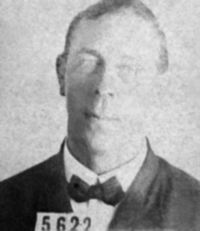
Robert Hichens

Robert Hichens

Summary

Portrait of Robert Hichens Robert Hichens A Spirit in Prison

Hermione’s lips trembled.
“Sometimes,” she said, in a low voice, “I think Vere knows far more than I do. But—but I often feel that I am very blind, very stupid. You called me an impulsive—I suppose I am one. But if I don’t follow my impulses, what am I to follow? One must have a guide.”
“Yes, and reason is often such a dull one, like a verger throwing one over a cathedral and destroying its mystery and its beauty with every word he speaks. When one is young one does not feel that one needs a guide at all.”
Source: Gutenberg

Portrait of Robert Hichens Robert Hichens A Spirit in Prison

But Vere’s was the reverence of understanding, not of a dim amazement—more beautiful than Maurice’s. When he had been with Hermione under the brooding rock Artois had been impregnated with the passionate despair of humanity, and had seen for a moment the world with out-stretched hands, seeking, surely, for the nonexistent, striving to hold fast the mirage. Now he was impregnated with humanity’s passionate hope. He saw life light-footed in a sweet chase for things ideal. And all the blackness of the rock and of the silent sea was irradiated with the light that streamed from a growing soul.
Source: Gutenberg

Portrait of Robert Hichens Robert Hichens A Spirit in Prison

Just then Artois felt as if in the night he was walking with the Eternities, as if that song, now fading away across the sea, came even from them. We do not die. For in that song to which Hermione bent down—the dead man lived when that boy’s voice sang it. In that boat, now vanishing upon the sea, the dead man held an oar. In that warm young heart of Ruffo the dead man moved, and spoke—spoke to his child, Vere, whom he had never seen, spoke to his wife, Hermione, whom he had deceived, yet whom he had loved.
Source: Gutenberg

Get perspective with Kwize: daily news enlightened by great literature