“ The sinless Eden still was fair. They, they alone, whose light of grace But late made Paradise look dim, Stood now, a blot upon its face, Before their God; nor gazed on Him. They glanced not up; or they had seen In that severe, death-dooming eye Unutterable depths serene Of sadly-piercing sympathy. Not them alone that Eye beheld, But, by their side, that other Twain, In whom the race whose doom was knelled Once more should rise; once more should reign. {10} It saw that Infant crowned with blood;— And her from whose predestined breast That Infant ruled the worlds. ”
Vere
Definition and stakes
The theme of "Vere" encompasses both a personal name and a symbolic idea, examined through spiritual contemplation, interpersonal connections, and literary craftsmanship. Authors such as Aubrey De Vere explore divine and existential subjects, merging sacred imagery with human vulnerability, as seen in his reflections on grace and sacrifice. In contrast, Mrs. Alex.
McVeigh Miller employs "Vere" as a familial and emotional foundation, illustrating its impact on personal struggles and affection. George MacDonald emphasizes De Vere’s poetic richness, presenting his work as a link between celestial truth and human yearning. Through these diverse perspectives, "Vere" appears as a complex symbol, connecting the individual to broader spiritual and emotional forces.
Quotes about “Vere”
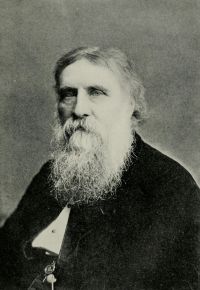 George MacDonald,
England's Antiphon
George MacDonald,
England's Antiphon
“ Sir Aubrey de Vere is a poet profound in feeling, and gracefully tender in utterance. I give one short poem and one sonnet. REALITY. Love thy God, and love Him only: And thy breast will ne'er be lonely. In that one great Spirit meet All things mighty, grave, and sweet. Vainly strives the soul to mingle With a being of our kind: Vainly hearts with hearts are twined: For the deepest still is single. ”
Henry S. King, A Classified Catalogue of Henry S. King & Co…
“ De Vere’s versification in his earlier poems is characterised by great sweetness and simplicity. He is master of his instrument, and rarely offends the ear with false notes. Poems such as these scarcely admit of quotation, for their charm is not, and ought not to be, found in isolated passages; but we can promise the patient and thoughtful reader much pleasure in the perusal of this volume.”—Pall Mall Gazette. ”