Summary

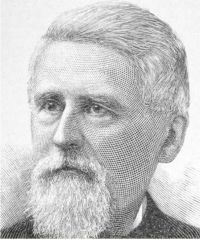
Portrait of Henry Charles Lea Henry Charles Lea A History of the Inquisition of the Middle Ages…

As for his recantation, his judges had promised him kindly treatment if he would throw himself on the mercy of the council. He was but a man, with a human dread of a dreadful death by fire; he had weakly yielded to persuasion, he had abjured, he had written to Bohemia as required, he had condemned the teaching of John Huss. Here he rose to the full height of his manly and self-devoted eloquence. Huss was a just and holy man, to whom he would cleave to the last; no sin that he had ever committed so weighed upon his conscience as his cowardly abjuration, which now he solemnly revoked.
Source: Gutenberg

Portrait of Henry Charles Lea Henry Charles Lea A History of the Inquisition of the Middle Ages…

Thus in a foray of 1429, which cut a swath through Franconia, Saxony, and the Vogtland, over a hundred castles and fortified towns were captured, and an immense booty was carried back to Bohemia. Misnia, Lusatia, Silesia, Bavaria, Austria, and Hungary in turn felt the weight of the Hussite sword, while the prompt retirement of the invaders in every case showed that retaliation and not conquest was their object. It was no wonder that a general cry for peace went up among those who bore the brunt of the effort to reassert the papal supremacy.
Source: Gutenberg

Portrait of Henry Charles Lea Henry Charles Lea A History of the Inquisition of the Middle Ages…

To allow a heresiarch who had become conspicuous to all Christendom, like Huss, to evade the punishment due to his crimes on so flimsy a pretext as that of his having confided himself to them on a promise of safety to which the public faith was pledged, would have seemed to the most conscientious jurists of the council the most absurd of solecisms. In point of fact, the best men who were there—the Gersons, the Peter d’Aillys, the Zabarellas—were as unflinching as the worst creatures of the curia.
Source: Gutenberg

Get perspective with Kwize: daily news enlightened by great literature