Summary

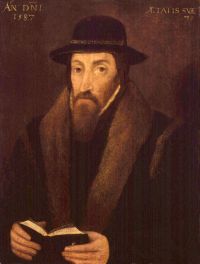
Portrait of John Foxe John Foxe The Acts and Monuments of John Foxe (1837)

Angelo, and the Pope's Ambassador into Germany, wrote marvellous boldly and freely unto Eugene, Bishop of Rome, for that he went about to dissolve the Council of Basil.
Most blessed father! after the devout kisses of your blessed feet.
Now shall the whole world understaud aud know, whether your holiness have in you the bowels of fatherly love and charity, and the zeal of the house of God; whether you be sent to make peace or discord, to congregate or disperse; or whether you be that good shepherd that giveth his life for his sheep.
Source: Wikisource

Portrait of John Foxe John Foxe The Acts and Monuments of John Foxe (1837)

O most godly and loving Christians! what faithful devout man is there, who beholding and seeing the great ruin and decay of the church, would not be provoked unto tears? What good conscience is there that can refrain weeping, because that contention and strife are poured upon the ecclesiastical rulers, who have made us to err in the way, because they have not found, or rather would not find, the way of unity and concord? whereupon so many heresies and so great confusion are sprung up, and grown in the flock of Peter, and the fold of the Lord!
Source: Wikisource

Portrait of John Foxe John Foxe The Acts and Monuments of John Foxe (1837)

It is a marvellous matter: pope Martin gave me authority, by the advice of the council, to root out heresies, to pacify kingdoms, to reform the manners of every state of Christendom, and yet they will say that I cannot cite them. Power is given me to judge and to condemn, and have I not also power to cite? The law doth say; unto whom any power or jurisdiction is committed, all things seem to be committed unto him, without which he cannot exercise his jurisdiction; for how could all the premises be done, if the prelates or others should not come hither?
Source: Wikisource

Get perspective with Kwize: daily news enlightened by great literature