Ecclesiastical authority

Definition and stakes

The Divine Right of Church Government

“ If spiritual and ecclesiastical power be in the church or community of the faithful, the church doth not only call, but make officers out of virtue and power received into herself, and then should the church have a true lordlike power in regard of her ministers. For, as he that will derive authority to the church, maketh himself lord of the church, so, if the church derive authority to the ministers of Christ, she maketh herself lady or mistress over them, in the exercise of that lordlike authority; for, as all men know, it is the property of the lord and master to impart authority. ”
Source: Gutenberg

Alexander F. Mitchell,  The Scottish Reformation

“ Nothing can be more perfect than the analysis by which the two ruling powers are separated from each other, and the ecclesiastical set above the secular." [263] If this is not quite borne out, one can hardly help feeling that more care should have been taken to mark out the limits of ecclesiastical authority, and to show that the power of ministers and elders was as distinctly limited by the laws of Christ as that of kings and magistrates ought to be by the laws of the land ”
Source: Gutenberg

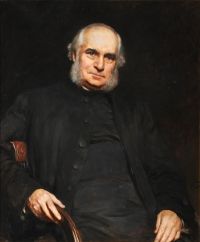
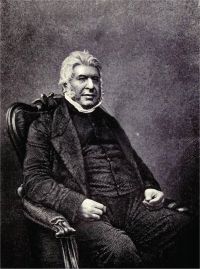
Portrait of Walter Farquhar Hook Walter Farquhar Hook,  A church dictionary

“ If we regard the Constitutions as a production of the third century, (containing remnants of earlier compositions,) the work possesses a certain kind of value. It contributes to give us an insight into the state of Christian faith, the condition of the clergy and inferior ecclesiastical officers, the worship and discipline of the Church, and other particulars, at the period to which the composition is referred. The growth of episcopal power and influence, and the derivation of the episcopal authority from the apostles, is here clearly shown. ”
Source: Gutenberg

Get perspective with Kwize: daily news enlightened by great literature