Episcopate

Definition and stakes

Arthur Cushman McGiffert, Albert Hauck, and Walter Alison Phillips,  1911 Encyclopædia Britannica, Volume 6… (1911)

“ At the council of Nicaea, and at the ecumenical councils which followed, the idea of an infallible episcopate giving authoritative and permanent utterance to apostolic and therefore divine truth, found clear expression, and has been handed down as a part of the faith of the Catholic Church both East and West. The infallibility of the episcopate guarantees the infallibility of a general council in which not the laity and not the clergy in general, but the bishops as successors of the apostles, speak officially and collectively. ”
Source: Wikisource

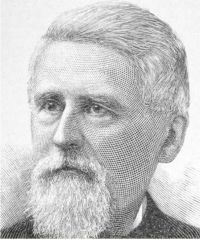
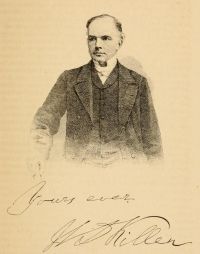
Portrait of W. D. Killen W. D. Killen,  The Ancient Church: Its History…

“ It was alleged that the whole episcopacy should be regarded as one, and that each bishop constituted an integral part of the grand unit. "The episcopacy is one," says Cyprian, "it is a whole in which each enjoys full possession." [654:3] "There is one Church from Christ throughout the whole world divided into many members, and one episcopate diffused throughout an harmonious multitude of many bishops." ”
Source: Gutenberg

Various,  The Quarterly Review, Volume 162…

“ Let nothing be done without thy consent, and do thou nothing without the consent of God;' 'Give heed (ye Smyrnæans) to your bishop, that God also may give heed to you;' 'Let no man do anything pertaining to the Church without the bishop.' Further, the extension of the episcopate in the time of Ignatius is quite clear. He is himself the bishop 'belonging to Syria.' He salutes and names the Bishops of Ephesus, of Magnesia, and Tralles. In those parts of Asia Minor and Syria, with which he is brought into contact, the episcopate properly so called is an established and recognized institution. ”
Source: Gutenberg

Get perspective with Kwize: daily news enlightened by great literature