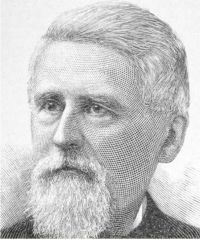
Henry Charles Lea

Henry Charles Lea

Summary

Portrait of Henry Charles Lea Henry Charles Lea Superstition and Force

Then Gregory, referring to the crimes imputed to himself by the emperor’s partisans, said that he could easily refute them by abundant witnesses; “but lest I should seem to rely rather on human than on divine testimony, and that I may remove from the minds of all, by immediate satisfaction, every scruple, behold this body of our Lord which I am about to take. Let it be to me this day a test of my innocence, and may the Omnipotent God this day by his judgment absolve me of the accusations if I am innocent, or let me perish by sudden death if guilty!”
Source: Gutenberg

Portrait of Henry Charles Lea Henry Charles Lea Superstition and Force

As the criminal could defend himself with the sword against the faida or feud of his adversary, or could compound for his guilt with money, the suggestion of torturing him to extort a confession would seem an absurd violation of all his rights. Crimes were regarded solely as injuries to individuals, and the idea that society at large was interested in their discovery, punishment, and prevention, was entirely too abstract to have any influence on the legislation of so barbarous an age.
Source: Gutenberg

Portrait of Henry Charles Lea Henry Charles Lea Superstition and Force

We have seen above how certain forms of the ordeal, such as bier-right and the trial by cold water, have lingered virtually to our own times, though long since displaced from the statute-book; and we should err if we deemed the prohibition of the system by lawgivers to be either the effect or the cause of a change in the constitution of the human mind. The mysterious attraction of the unknown, the striving for the unattainable, the yearning to connect our mortal nature with some supernal power—all these mixed motives assist in maintaining the superstitions which we have thus passed in review.
Source: Gutenberg

Get perspective with Kwize: daily news enlightened by great literature