Summary

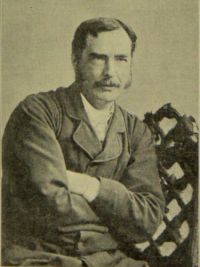
Portrait of Howard Williams Howard Williams The Superstitions of Witchcraft

Faust—"Oft have I thought to have done so; but the devil threatened to tear me in pieces if I named God; to fetch me body and soul if I once gave ear to divinity. And now it is too late."' As the fearful moment fast approaches, Dr. Faustus, orthodox on the subject of the duration of future punishment, exclaims in agony—
'Oh! if my soul must suffer for my sin,
Impose some end to my incessant pain.
Let Faustus live in hell a thousand years—
A hundred thousand, and at the last be saved:
No end is limited to damned souls.
Why wert thou not a creature wanting soul?
Source: Gutenberg

Portrait of Howard Williams Howard Williams The Superstitions of Witchcraft

Superstition, the product of ignorance of causes, of the proneness to seek the solution of phenomena out of and beyond nature, and of the consequent natural but unreasoning dread of the Unknown and Invisible (ignorantly termed the supernatural) , is at once universal in the extent, and various in the kinds, of its despotism. Experience and reason seem to prove that, inherent to and apparently coexistent with the human mind, it naturally originates in the constitution of humanity: in ignorance and uncertainty, in an instinctive doubt and fear of the Unknown.
Source: Gutenberg

Portrait of Howard Williams Howard Williams The Superstitions of Witchcraft

In the annals of black magic, the silent tribunals of the Inquisition in Southern Europe which has consigned so many thousands of heretics to the torture room and to the flames, do not reveal so many trials for the simple crime of witchcraft as the tribunals of the more northern peoples: there all dissent from Catholic and priestly dogma was believed to be inspired by the powers of hell, deserving a common punishment, whether in the form of denial of transubstantiation, infallibility, of skill in magic, or of the vulgar practice of sorcery.
Source: Gutenberg

Get perspective with Kwize: daily news enlightened by great literature