Summary

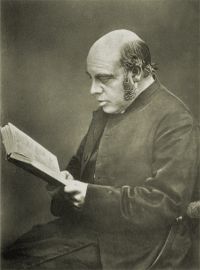
Portrait of J. B. Lightfoot J. B. Lightfoot Essays on the work entitled "Supernatural Religion"

No heathen contemporary shows such a power of memory or so wide an acquaintance with the classical literature of Greece in all its branches as Clement of Alexandria. No heathen contemporary deserves to be named in the same day with Origen for patience and accuracy in textual criticism, to say nothing of other intellectual capacities, which, notwithstanding all his faults, distinguish him as the foremost writer of his age.
Source: Gutenberg

Portrait of J. B. Lightfoot J. B. Lightfoot Essays on the work entitled "Supernatural Religion"

How is it that ecclesiastical writers far and wide receive it without misgiving at this epoch—Irenæus in Gaul, Tertullian in Africa, Clement in Alexandria, Theophilus at Antioch, the anonymous Muratorian writer perhaps in Rome? that they not only receive it, but assume its reception from the beginning? that they never betray a consciousness that any Church or Churchman had ever questioned it? The history of the first three-quarters of the second century is necessarily obscure owing to the paucity of remains. A flood of light is suddenly poured in during the remaining years of the century.
Source: Gutenberg

Portrait of J. B. Lightfoot J. B. Lightfoot Essays on the work entitled "Supernatural Religion"

I have proved that, as regards the four Gospels, Eusebius only pledges himself to give, and (as a matter of fact) only does give, traditions of interest respecting them. I have proved also that it is not consistent either with his principles or with his practice to refer to mere quotations, however numerous, even though they are given by name. Papias therefore might have quoted the Third Gospel any number of times as written by Luke the companion of Paul, and the Fourth Gospel not less frequently as written by John the Apostle; and Eusebius would not have cared to record the fact.
Source: Gutenberg

Get perspective with Kwize: daily news enlightened by great literature