Diatessaron

Definition and stakes

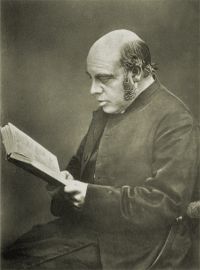
Leighton Pullan,  The Books of the New Testament

“ A great Syrian father, Ephraim, who died in 373, wrote a commentary on the Diatessaron. This was preserved in an Armenian translation which was made known to the world in 1876. The discovery proved that the Diatessaron had been drawn from our four Gospels. In 1886 an Arabic version of the Diatessaron itself was found, and it {12} proved conclusively that Tatian's Diatessaron was simply a combination of our four canonical Gospels. About the same date as Tatian, a famous Gnostic writer named Heracleon wrote commentaries on Luke and John, and it can also be shown that he was acquainted with Matt. ”
Source: Gutenberg

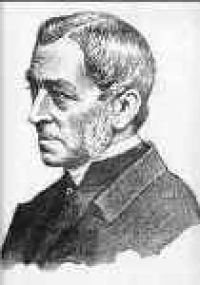
Portrait of John William Burgon John William Burgon,  The Traditional Text of the Holy Gospels

“ What was the origin of the mass of floating readings, of which some were transferred into the text of these two Codexes, will be considered in the next section. Students should be cautioned against inferring that the Diatessaron was read in service throughout Syria. There is no evidence to warrant such a conclusion. The mention of Edessa and Cyrrhus point to the country near the upper Euphrates; and the expression of Theodoret, relating to the Diatessaron being used “in churches of our parts,” seems to hint at a circumscribed region. ”
Source: Gutenberg

Get perspective with Kwize: daily news enlightened by great literature