Ephrem the Syrian

Definition and stakes

Garrett Chatfield Pier,  Hanit the Enchantress

“ Verily, said I not that thou hadst learned [205] some potent charm, some mighty hekau, known but to the blessed gods alone?
“Breath of Hathor! ’Tis the work of Ptah, nay, of Khnum himself, Fashioner of Mankind! None but a god could thus turn stone to flesh, put breath in the nostrils, life in the eye!
“Ah Syrian! if this be Syrian art, my heated arguments were but wasted breath! Compared to our Egyptian figures, shackled, mummified, as lifeless as the granite they are carved in, here stands grace and freedom, life itself!
”
Source: Gutenberg

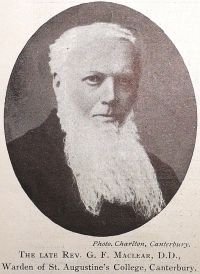
Thompson Cooper,  Dictionary of National Biography… (1886)

“ His principal works are: 1. A translation from the Syriac language of the ‘Metrical Hymns and Homilies of St. Ephrem Syrus, with Philological Notes and Dissertations on the Syrian Metrical Church Literature,' 2 vols. 1835. 2. 'The Country Miscellany,' 2 vols. 1836-7. 3. 'Poems,' 1850, dedicated to the Marchioness of Bute. 4. Translation of the 'Festal Letters of St. Athanasius,' 1852, a work which, after being long lost in the original Greek, was recovered in an ancient Syriac version, and edited for the Oxford 'Library of the Fathers' by the Rev. H.G. Williams. 5. ”
Source: Wikisource

G. Maspero,  History of Egypt, Chaldæa, Syria…

“ An armed force entering Syria by way of the Euphrates could hardly fail to overcome any opposition that might be offered to it, if not at the first onset, at any rate after a very brief struggle; none of the minor states to be met upon its way, such as Damascus or Israel, much less those of Hamath or Hadrach, were any longer capable of barring its progress, as Ben-hadad and Hazael had arrested that of the Assyrians in the time of Shalmaneser III. The efforts then made by the Syrian kings to secure their independence had exhausted their resources and worn out the spirit of their peoples ”
Source: Gutenberg

Get perspective with Kwize: daily news enlightened by great literature