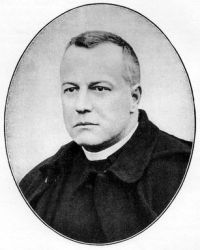
Adrian Henry Timothy Knottesford Fortescue

Adrian Henry Timothy Knottesford Fortescue

Summary

Portrait of Adrian Henry Timothy Knottesford Fortescue Adrian Henry Timothy Knottesford Fortescue The Lesser Eastern Churches (1913)

They do not care. They lead their unknown life, follow their own immemorial customs, while far above over their heads empires crash together and shatter. To a child of the people the only law is the custom of his tribe, the only authority the village headman and village priest. What does it matter to him whether the booty torn from his people's fields is sent West to Rome or East to Persia; whether the soldiers he eyes with terror as they plunder his home, march under the eagles of Rome or the equally strange standard of the Great King?
Source: Wikisource

Portrait of Adrian Henry Timothy Knottesford Fortescue Adrian Henry Timothy Knottesford Fortescue The Lesser Eastern Churches (1913)

Shapur II spent his life fighting Rome; could he allow his own subjects to profess the Roman religion? The cross was the Roman standard; could he let it stand on his side of the frontier? These Christians prayed with his enemies, no doubt they prayed for them. How could he tolerate such disloyalty behind him when he went out to war? It is the tragic situation often repeated in history: Christianity was treason against the State. Without any particular wish to trouble people's consciences, a country at war can hardly allow what seems treason at home.
Source: Wikisource

Portrait of Adrian Henry Timothy Knottesford Fortescue Adrian Henry Timothy Knottesford Fortescue The Lesser Eastern Churches (1913)

The only reason for giving the name of a race or a nation to a religious body is that the religion is or has been that of the race or nation. The Assyrian Empire came to an end centuries before Christ. No doubt the Nestorians have some of the blood of its old subjects, but so have equally all the other sects which abound in Mesopotamia. Why should this one little sect in its remote corner inherit the name of the whole mighty and long-vanished Empire? And, of course, "Assyrian Church" is emphatically not its old, accepted, or common name.
Source: Wikisource

Get perspective with Kwize: daily news enlightened by great literature