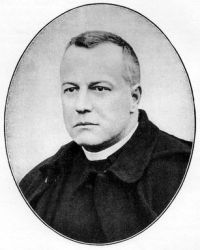
Adrian Henry Timothy Knottesford Fortescue

Adrian Henry Timothy Knottesford Fortescue

Summary

Portrait of Adrian Henry Timothy Knottesford Fortescue Adrian Henry Timothy Knottesford Fortescue The Uniate Eastern Churches (1923)

It is really as absurd for us Latins to think our own Patriarchate the whole Church as it would be for a Melkite to think us imperfect Catholics because we do not use the Byzantine rite.
And from every point of view we Latins owe all possible honour to our brothers the Uniates. They not only save the situation canonically, they are the most splendid example of Catholic loyalty in the world. For the Pope's cause is in some measure our cause. He is a Western bishop, a Latin as we are, and our own Patriarch. It is not difficult for us to be loyal.
Source: Wikisource

Portrait of Adrian Henry Timothy Knottesford Fortescue Adrian Henry Timothy Knottesford Fortescue The Uniate Eastern Churches (1923)

They think it better to be Byzantine than Roman; but they think it atrocious to be a schismatic. It would be a great pity if what is left of so ancient a tradition as the Byzantine rite in Italy were ever to disappear. The Roman rite, extended over vast continents in unquestioned predominance, cannot fear the rivalry of this little remnant; no Latin could possibly be jealous of any other rite. May the Byzantine rite remain ever in this ancient home, and may it flourish always as the memory of so great a past.
Source: Wikisource

Portrait of Adrian Henry Timothy Knottesford Fortescue Adrian Henry Timothy Knottesford Fortescue The Uniate Eastern Churches (1923)

It is an unpardonable error, which ought never to be made by educated people, to imagine that all Catholics are Latins, or that there is any inherent reason why a Catholic should use the Roman rite. Nor is there any superiority, any more Catholic quality in the use of the Roman rite than in the use of any other. In this matter we stand exactly where we always have stood.
Source: Wikisource

Get perspective with Kwize: daily news enlightened by great literature