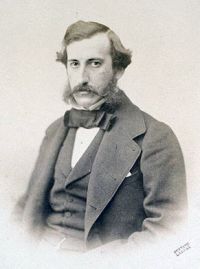
Albert Farley Heard

Albert Farley Heard

Summary

Portrait of Albert Farley Heard Albert Farley Heard The Russian Church and Russian Dissent (1887)

The ever-changing manifestations of the spirit of unrest pervading the Russian people present a dreary spectacle, as monotonous in its general character as it is diversified in its special aspects. They are as evanescent as clouds flitting over a landscape; scarcely more persistent or more definite. Every important crisis, every national event, evokes a corresponding spiritual movement to satisfy the aspirations or emotions of the moment.
Source: Wikisource

Portrait of Albert Farley Heard Albert Farley Heard The Russian Church and Russian Dissent (1887)

Ivan, consumed by remorse at the murder of his son, his anxiety about foreign invasion allayed, his youthful energy dulled by excesses and indulgence, felt no kindling ambition for a shadowy empire in the East. He ridiculed the Orthodoxy of Western Christians, who shaved their beards, and the pretensions of the pope to sit on a throne above kings, and give them his toe to kiss. "We earthly sovereigns," said he, "alone wear crowns. The heir of the apostles should be meek and lowly in spirit.
Source: Wikisource

Portrait of Albert Farley Heard Albert Farley Heard The Russian Church and Russian Dissent (1887)

Ivan's throne trembled in the balance; he faltered and feared to risk all upon a single battle, but, as in every great crisis of Russian history, the Church was strong on the side of nationality and independence. The clergy, by the voice of its prelates, urged him to combat. Vassian, the aged archbishop of Rostov, rebuked his timidity. "Dost thou dread death? Death is the lot of all; of man, beast, and bird alike; none can avoid it. I am old, borne down by weight of years, but give these warriors into my hands and I will brave the Tatar sword and never turn my back."
Source: Wikisource

Get perspective with Kwize: daily news enlightened by great literature