L. W. King

Biographical details

L. W. King,  A History of Babylon, from the Foundation of the Monarchy to the Persian Conquest

“ When a king built a palace for himself or a temple for his god, he did not consciously aim at making it graceful or beautiful. What he always boasts of having done is that he has made it "like a mountain." He delighted to raise the level of his artificial mound or building-platform, and the modern excavator owes much to this continual filling in of the remains of earlier structures. ”
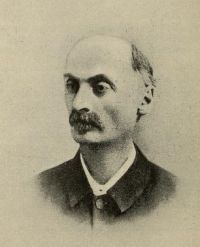
Source: Gutenberg

L. W. King,  A History of Sumer and Akkad

“ The simplicity, which characterized the patesi's household at a time when he was little more than a chief among his fellows, was gradually exchanged for the elaborate organization of a powerful court. When the army returned laden with booty from distant regions, and the tribute of conquered cities kept the granaries of Ningirsu filled, it was but natural that the rulers of Lagash should surround themselves with greater luxury, and should enrich their city by the erection of palaces for themselves and sumptuous temples for the gods. ”
Source: Gutenberg

L. W. King,  Legends of Babylon and Egypt in Relation to Hebrew Tradition

“ Possibly in an earlier period the long narrow valley, or even a section of it, may have suggested the figure of a man lying prone upon his back. Such was Keb, the Earth-god, whose counterpart in the sky was the goddess Nut, her feet and hands resting at the limits of the world and her curved body forming the vault of heaven. Perhaps still more primitive, and dating from a pastoral age, may be the notion that the sky was a great cow, her body, speckled with stars, alone visible from the earth beneath. ”
Source: Gutenberg

Get perspective with Kwize: daily news enlightened by great literature