Nippur

Definition and stakes

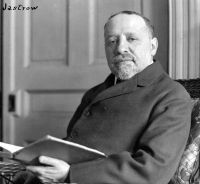
Portrait of A. H. Sayce A. H. Sayce,  Babylonians and Assyrians, Life and Customs

“ He had given man all the elements of civilization; rising each morning out of his palace under the waters of the deep, he taught them the arts and sciences, the industries and manners, of civilized life. El-lil of Nippur, on the contrary, was the lord of the underworld; magical spells and incantations were his gifts to mankind, and his kingdom was over the dead rather than the living. The culture which emanated from Eridu and Nippur was thus of a wholly different kind. ”
Source: Gutenberg

1911 Encyclopædia Britannica (1910)

“ En-lil is associated with the ancient city of Nippur, and since En-lil with the determinative for “land” or “district” is a common method of writing the name of the city, it follows, apart from other evidence, that En-lil was originally the patron deity of Nippur. At a very early period—prior to 3000 B.C.—Nippur had become the centre of a political district of considerable extent, and it is to this early period that the designation of En-lil as Bel or “the lord” reverts. ”
Source: Wikisource

Sumerian Hymns from Cuneiform Texts in the British Museum

“ The seat of Bêl’s cult was Nippur, a city lying between the Euphrates and Tigris, a little below Babylon, and located, as it were, in the midway favorable to receiving homage from kings of either the north or the south of Babylonia. We find it mentioned as early as the time of Entemena, who in one of his inscriptions, in speaking of something presented to Bêl, says: “To Bêl of Nippur by Entemena it was presented”. [12] In the bilingual legend of the Creation, Nippur seems to be regarded as a very old city. ”
Source: Gutenberg

Get perspective with Kwize: daily news enlightened by great literature