Kur

Definition and stakes

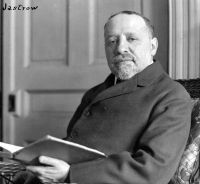
Portrait of Morris Jastrow Morris Jastrow,  The Religion of Babylonia and Assyria

“ Nebuchadnezzar, so devoted to Marduk and Nabu, appears to have regarded E-Kur as a serious rival to E-Sagila and E-Zida. Some traces of building operations at E-Kur appear to date from the Persian period, but, practically, the history of E-Kur comes to an end at the close of the seventh century. The sanctity of the place, however, remained; a portion of the old city becomes a favorite burial site, while other parts continue to be inhabited till the twelfth century of our era. ”
Source: Gutenberg

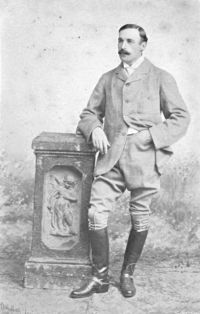
Portrait of H. F. B. Lynch H. F. B. Lynch,  Armenia, Travels and Studies (Volume 1 of 2…

“ Our course for the rest of the day lay on this bank of the river; the road leaves the plain and dives into the narrows, where walls of rock enclose the swirling stream. The Kur is following the base of the border ranges, piercing the spurs where they meet the outskirts of the Dochus Punar. In places it has a width of some 50 yards or more, and the eye cannot penetrate the dull depths; but more often it is a narrow and shallow torrent, wreathing and foaming over the rocks. ”
Source: Gutenberg

Portrait of Morris Jastrow Morris Jastrow,  The Religion of Babylonia and Assyria

“ Climatic conditions necessitated frequent repairs. The temple also suffered occasionally through political tumults, but with each century the religious importance of E-Kur was increased. Ur-Bau, we have seen, about 2700 B.C., erected a zikkurat in the temple area. Some centuries later we find Bur-Sin repairing the zikkurat and adding a shrine near the main structure. As the political fortunes of Nippur varied, so E-Kur had its ups and downs. Under the Cassitic rule, an attempt was made to recover for Nippur the position which it formerly occupied, but which had now passed over to Babylon. ”
Source: Gutenberg

Get perspective with Kwize: daily news enlightened by great literature