Summary

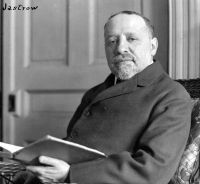
Portrait of Morris Jastrow Morris Jastrow The Religion of Babylonia and Assyria

The Book of Genesis passes rapidly over the creation of stars, plants, and animals, as though anxious to reach the history of man, and when it comes to the traditions regarding the ancestors of the Hebrews, the details are dwelt upon at length and pictured with a loving hand. Similarly among the Babylonians, there is a freshness about the story of the adventures of a great hero of the past that presents a contrast to the rather abstruse speculations embodied in the creation epic.
Source: Gutenberg

Portrait of Morris Jastrow Morris Jastrow The Religion of Babylonia and Assyria

Everything connected with death is gloomy. The grave is as dark as Aralû; the funeral rites consist of dirges that lament not so much the loss sustained by the living as the sad fate in store for the dead. Not a ray of sunshine [Pg 606] illumines the darkness that surrounds these rites. All that is hoped for is to protect the dead against the attack of demons greedy for human flesh, to secure rest for the body, and to guard the dead against hunger and thirst.
Source: Gutenberg

Portrait of Morris Jastrow Morris Jastrow The Religion of Babylonia and Assyria

Man can reach old age; he may be snatched for a time from the grasp of death, as Gilgamesh was through the efforts of Parnapishtim, but he only deludes himself by indulging in hopes of immortal life. 'Man must die' is the refrain that rings in our ears. The plant of 'eternal youth' slips out of one's hand at the very moment that one believes to have secured it.
The Gilgamesh epic, as we have it, thus turns out to be a composite production. Gilgamesh, a popular hero of antiquity, becomes a medium for the perpetuation of various popular traditions and myths.
Source: Gutenberg

Get perspective with Kwize: daily news enlightened by great literature