Summary

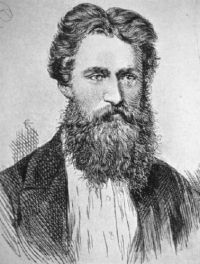
Portrait of George Smith George Smith The Chaldean Account of Genesis (1876)

Heabani, the friend of Izdubar, is now killed, and Izdubar, mourning his double affliction, abandons his kingdom and wanders into the desert to seek the advice of Hasisadra his ancestor, who had been translated for his piety and now dwelt with the gods.
Izdubar now had a dream, and after this wandered to the region where gigantic composite monsters held and controlled the rising and setting sun, from these learned the road to the region of the blessed, and, passing across a great waste of sand, he arrived at a region where splendid trees were laden with jewels instead of fruit.
Source: Wikisource

Portrait of George Smith George Smith The Chaldean Account of Genesis

He therefore enjoined him to write a history of the beginning, progress, and conclusion of all things, down to the present term, and to bury it in Sippara, the city of the Sun; and to build a vessel, and take with him into it his friends and relations; and to convey on board every thing necessary to sustain life, together with all the different animals, both birds and quadrupeds, and trust himself fearlessly to the deep. Having asked the Deity whither he was to sail, he was answered, ‘To the Gods;’ upon which he offered up a prayer for the good of mankind.
Source: Gutenberg

Portrait of George Smith George Smith The Chaldean Account of Genesis (1876)

The word Adam used in these legends for the first human being is evidently not a proper name, but is only used as a term for mankind. Adam appears as a proper name in Genesis, but certainly in some passages is only used in the same sense as the Assyrian word, and we are told on the creation of human beings (Genesis, v. 1) : "In the day that God created man, in the likeness of God made he him; male and female created he them; and blessed them, and called their name Adam, in the day when they were created."
Source: Wikisource

Get perspective with Kwize: daily news enlightened by great literature