
“ It is, we fully admit, an industrious compilation, but it is not an anthology, it is not a selection of the best, for it lacks the discrimination and good taste which is the essence of selection, and for the want of which no amount of industry can atone. The child-poems of our literature have still to be edited. ”
Compilation
Definition and stakes
A compilation, in literary terms, refers to a work formed by gathering preexisting texts, data, or materials into a unified whole. This practice, common prior to modern copyright laws, spans from anthologies to edited collections, often reflecting the compiler's choices and organization.
Authors like Oscar Wilde criticized such works for lacking judgment, while Thomas Paine analyzed biblical compilations for blending distinct sources. The U.S. Copyright Office defines compilations as original works when materials are selected and arranged with creative intent, emphasizing the subtle balance between collection and authorship that defines this lasting literary form.
Quotes about “compilation”
by William Swainson, Zoological Illustrations — Preface… (1820)
“ Unfortunately, however, the exceptions are so few, that the whole may be termed a loose compilation, the descriptions being mostly given in as few words as possible, and the figures not only copied from wretched representations found in old authors, but often coloured from their descriptions only! ”
 Thomas Paine,
The Writings of Thomas Paine, Complete
Thomas Paine,
The Writings of Thomas Paine, Complete
“ I have already shown, in the instance of the last two verses of 2 Chronicles, and the first three in Ezra, that the compilers of the Bible mixed and confounded the writings of different authors with each other; which alone, were there no other cause, is sufficient to destroy the authenticity of an compilation, because it is more than presumptive evidence that the compilers are ignorant who the authors were. ”
US Copyright Office, Compendium of US Copyright Office Practices… (1984)
“ A compilation is a work formed by the collection and assembling of preexisting materials or of data that are selected, coordinated, or arranged in such a way that the resulting work as a whole constitutes an original work of authorship. ”
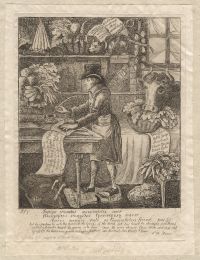 Joseph Ritson,
The Office of Bailiff of a Liberty
Joseph Ritson,
The Office of Bailiff of a Liberty
“ Little can, and less need be said in favour of a work which has no obligations either to genius or to judgement: some labour, however, has undoubtedly been exerted in the compilation, which, should it have the good fortune to prove so far serviceable to those whom it most concerns, as to render the discharge of an ancient and honorable office an object of less difficulty or hazard, the 'compiler' will not have reason to regret. ”
 John Fletcher,
Studies on Slavery, in Easy Lessons
John Fletcher,
Studies on Slavery, in Easy Lessons
“ In some instances, men of learning have undertaken their compilation without using their ability to fathom the depths of language, or to discover the sources of its streams, or describe the qualities of their combinations. ”
W. A. L. Elmslie, The books of Chronicles (1916)
“ In dealing with any work which is chiefly a compilation of older material, it is necessary clearly to distinguish between the dates of the various sources which can be recognised or surmised and the dates of the writer or writers who have effected the compilation. ”
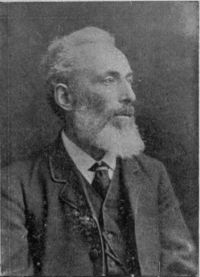 Alfred Webb,
A Compendium of Irish Biography
(1878)
Alfred Webb,
A Compendium of Irish Biography
(1878)
“ In the selection and rejection of names, and in the proportionate length of the sketches, it is probable that many readers may consider that sufficient judgment has not been exhibited. In such a compilation much depends on the materials available: there can be little doubt that, owing to the existence of full and well-written memoirs, several of the persons introduced have received notices out of proportion to their merits, while others of higher claims, owing to lack of material, have been dealt with very imperfectly, or perhaps not at all. ”
 Jacob Grimm,
Grimm's Household Tales
(1884)
Jacob Grimm,
Grimm's Household Tales
(1884)
“ But to bring together popular narratives merely to divert the reader is an aim which permits the collector to alter and adorn his materials almost as much as he pleases. Consequently the old compilations we have named, however delightful as literature, must be used with great caution for purposes of comparative science. ”
James L. Harner, Literary Research Guide — Literature-Related Topics and Sources (2017)
“ Although the original compilation is limited to American films, the continuations include foreign ones exhibited in the United States and extend coverage to novelizations. Organized by film title, each entry consists of a brief note on the source of the script, screenplay, or idea. Indexed by authors. Although many entries fail to record exact publication details or are frustratingly vague in identifying a source merely as “a story by” someone, no other work covers so many kinds of sources or as many movies. ”
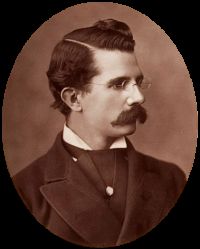
“ It is the interest of the one to allow as little for writing, and of the other to write as much as possible. Accordingly, tedious compilations and periodical magazines are the result of their joint endeavours. ”
 Herbert Spencer,
Popular Science Monthly
(1879)
Herbert Spencer,
Popular Science Monthly
(1879)
“ The cost of compilation I expect to get back if I live to be over a hundred. Q. (Mr. Daldy) . You spoke of the circulation in England and America. May I ask, do you send stereotype-plates to America? A. I did at first send stereotype-plates to America, but, the thing having proved to be so great a loss, I now send a portion of the printed edition. Q. (Chairman) . May I ask why do you expect repayment of the cost of compilation to be so slow as you stated in your answer to my last question? A. The reason is, that I made a promise to the compilers entailing that. ”
Thomas Widlok, Oral Literature in the Digital Age…
“ Having said that, this of course is also true for many, if not all, data compilations that field researchers have hitherto come up with, be it text, audio, video or other. Context can never been exhausted, and there is always a selection of context. ”
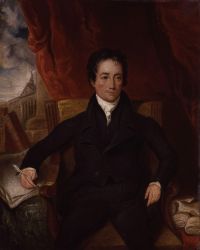 Charles Lamb,
The Works of Charles and Mary Lamb…
Charles Lamb,
The Works of Charles and Mary Lamb…
“ A presentation copy, reader—if haply you are yet innocent of such favours—is a copy of a book which does not sell, sent you by the author, with his foolish autograph at the beginning of it; for which, if a stranger, he only demands your friendship; if a brother author, he expects from you a book of yours which does sell, in return. We can speak to experience, having by us a tolerable assortment of these gift-horses. Not to ride a metaphor to death—we are willing to acknowledge, that in some gifts there is sense. ”
Jessie L. Weston, The Legend of Sir Lancelot du Lac
“ Is the form in which we possess it practically the original form, or are we to postulate a series of successive redactions? I think that every one who has carefully [Pg 189] studied the variants given above must have been struck by the fact that in no case is the question one involving a variety of incident or even an alteration in sequence. It is the same story in every case, told in the same order, in the same words, only certain copies give a fuller and more coherent version than others. In fact, as I said above, the variations are the variations of the copyist, not of the compiler. ”
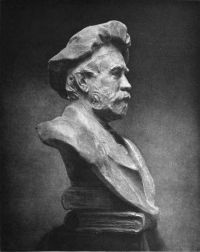 Theodore Low De Vinne,
Correct Composition
(1901)
Theodore Low De Vinne,
Correct Composition
(1901)
“ The writer's experience of more than fifty years as middleman between the author on the one side and the printer on the other warrants his belief that the methods here advised are those that have been sanctioned by usage, and that they are enough to prevent the common errors of book composition. The compositor who heeds these suggestions will prevent the wasting of labor in avoidable alterations, and the inexperienced writer who follows directions about acceptable copy will save the expense of changes that must be made in proof. ”
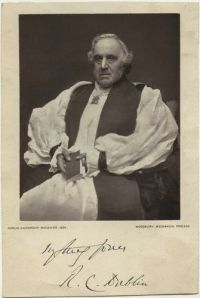 Richard Chenevix Trench,
English Past and Present
Richard Chenevix Trench,
English Past and Present
“ Let me urge here the advantage of a complete collection, or one as nearly complete as the industry of the collectors would allow, of all the notices in our literature, which mark, and would serve as dates for, the first incoming of new words into the language. These notices are of the most various kinds. Sometimes they are protests and remonstrances, as that just quoted, against a new word’s introduction; sometimes they are gratulations at the same; while many hold themselves neuter as to approval or disapproval, and merely state, or allow us to gather, the fact of a word’s recent appearance. ”
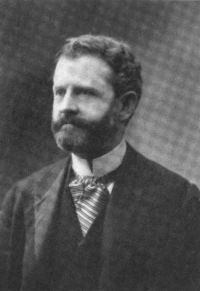 Francis Whiting Halsey,
The Literary Digest History of the World War…
(1920)
Francis Whiting Halsey,
The Literary Digest History of the World War…
(1920)
“ Ephemeral as much of the compiler's source material essentially was, fated to perish with the day for which it was written, it is a pleasing thought that, by reviving in book form the vital substance of so much of it, he may have done something to secure a longer life and deeper appreciation for the industry and fine spirit so conspicuously shown by those who produced it. In frequent instances writers, working under great difficulties, in the midst of the events they described, produced, not alone journalistic “stories” but literature. ”
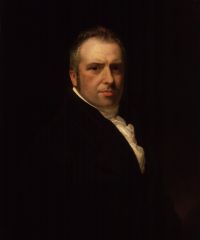 William Hone,
The Every-day Book and Table Book…
William Hone,
The Every-day Book and Table Book…
“ Hard work, with compositors, is copy badly written and difficult; [such as they too frequently receive from the Editor of the Every-Day Book, who alters, and interlines, and never makes a fair copy,] hard work, with pressmen, is small letter and a large form. ”
 Wilkie Collins,
My Miscellanies, Vol. 1 (of 2)
Wilkie Collins,
My Miscellanies, Vol. 1 (of 2)
“ If I had found the smallest promise in the style, in the dialogue, in the presentation of character, in the arrangement of incident, in any of the five specimens of cheap fiction before me, each one of which extended, on the average, to ten columns of small print, I should have gone on gladly to the next number. But I discovered nothing of the kind; and I put down my weekly sample, just as an editor, under similar circumstances, puts down a manuscript, after getting through a certain number of pages—or a reader a book. ”
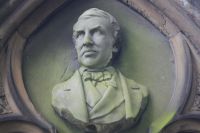 John Hill Burton,
The Book-Hunter
John Hill Burton,
The Book-Hunter
“ This high development of the desirable book is the result of an arrangement to print so many copies of a volume on paper of larger size than that of the bulk of the impression. The tall copy is the result of careful cutting by the binder, or of no cutting at all. In this primitive shape a book has separate charms for a distinct class of collectors who esteem rough edges, and are willing, for the sake of this excellence, to endure the martyrdom of consulting books in that condition. ”
Michael Sadleir, Excursions in Victorian Bibliography
“ Freak copies, copies containing catalogues of earlier date, copies in earlier varieties of binding—of such things is the sport of bibliography composed. No individual can be sure that one particular issue of any book is the earliest; comparative certainty comes only from cooperation. ”
Geo. A. Stephen, Three Centuries of a City Library
“ This appointment was made in the days when it was the common fashion to regard the work of compiling a library catalogue as within the capacity of any intelligent person; whereas there are, in fact, many rules to be observed, and much practical experience is necessary if the p. 50thousand and one pitfalls which beset the path of the cataloguer are to be avoided. The catalogue [50a] was on much more ambitious lines than its predecessors, and the compiler claimed to “have carefully copied the title pages, retaining their abbreviations, antique spelling, inaccuracies, or other peculiarities.” ”
 John Cowper Powys,
One Hundred Best Books
John Cowper Powys,
One Hundred Best Books
“ The compiler holds the view that in expressing his own predilection, he is also supplying the need of kindred minds; minds that read purely for the pleasure of reading, and have no sinister wish to transform themselves by that process into what are called "cultivated persons." The compiler feels that any one who succeeds in reading, with reasonable receptivity, the books in this list, must become, at the end, a person with whom it would be a delight to share that most classic of all pleasurable arts—the art of intelligent conversation. ”
John Henry Hessels, John Southward, and Hugh Munro Ross, 1911 Encyclopædia Britannica (1911)
“ That art means the multiplication of books or documents by means of an adequate quantity of single types for composing a whole page of text, and capable of being taken asunder and used again for a second, a third and a multitude of other pages, and so produce a number of copies of a book in the same or a shorter time than a scribe with his pen could produce one copy. ”
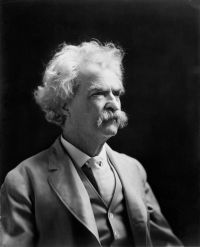 Mark Twain,
A Tramp Abroad
(1880)
Mark Twain,
A Tramp Abroad
(1880)
“ The copy is to the original as the pallid, smart, inane new wax work-group is to the vigorous, earnest, dignified group of living men and women whom it professes to duplicate. There is a mellow richness, a subdued color, in the old pictures, which is to the eye what muffled and mellowed sound is to the ear. That is the merit which is most loudly praised in the old picture, and is the one which the copy most conspicuously lacks, and which the copyist must not hope to compass. ”
Perry Wayland Sinks, The Reign of the Manuscript
“ This deep concern which a copyist felt for his work—for he had a solicitude that his copy might endure both time and use and long remain as a monument to himself—lent an artistic taste and, often, a religious devotion to the creditable transcription of a book, especially to the copying of the Bible or a part of the Bible. ”
Oral Literature in the Digital Age… (2013)
“ Field reminds us that it is essential for researchers to bear in mind the relationship between the recording, publication, and archiving of oral literature, community preferences regarding these aspects of research, and considerations relating to language revitalisation. ”
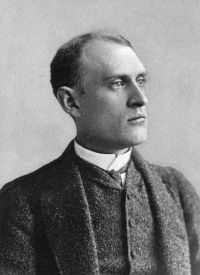 Eugene Field,
The Love Affairs of a Bibliomaniac
Eugene Field,
The Love Affairs of a Bibliomaniac
“ I myself have been a famous reader of catalogues, and I can testify that the habit has possessed me of remarkable delusions, the most conspicuous of which is that which produces within me the conviction that a book is as good as mine as soon as I have met with its title in a catalogue, and set an X over against it in pencil. ”
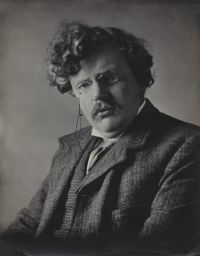 Gilbert Keith Chesterton,
Charles Dickens — IX: Later Life and Works
(1906)
Gilbert Keith Chesterton,
Charles Dickens — IX: Later Life and Works
(1906)
“ No catalogue, of course, can contain all the facts even of five minutes; every catalogue, however long and learned, must be not only a bold, but, one may say, an audacious selection. Bat if a great many facts are given, the reader gains a blurred belief that all the facts are being given. In a professedly personal judgment it is therefore clearer and more honest to give only a few illustrative facts, leaving the other obtainable facts to balance them. ”
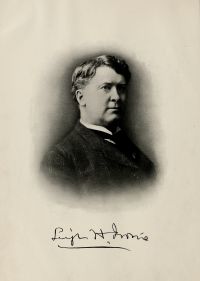 Leigh H. Irvine,
The Magazine Style-Code
Leigh H. Irvine,
The Magazine Style-Code
“ Some editors make it a rule to quote the general style of the clipping, holding that the style of the clipping is as much a part of the author’s personality as are his words and sentences. Unfortunately there are usually so many contradictions and inaccuracies, so many evidences of no style whatever, that it is not a sensible plan to follow reprint copy. The best system is for the compositor to follow the code of his office, and the code should be so well known to him that to follow it would be a pleasure. ”
Anonymous, Celebrated Claimants from Perkin Warbeck to Arthur Orton
“ The compiler of the present collection has endeavoured to disinter the most noteworthy claims which have been made either to honours or property, at home or abroad, and, while he has passed over those which present few remarkable features, has spared no research to render his work as perfect as possible, and to supply a reliable history of those which are entitled to rank as causes célèbres. ”
James Duff Brown, The Small Library (1907)
“ If any one is sufficiently curious and patient to study the catalogues of the average small British public or subscription library, he will be surprised at the numerous evidences of bad judgment in book-selection, the lack of proportion between class and class, author and author, subject and subject, and an entire absence of proper classification and intelligence in cataloguing. ”
 Fanny Kemble,
Records of a Girlhood
Fanny Kemble,
Records of a Girlhood
“ Seeing lately a copy of my play of "Francis the First," with (to my infinite astonishment) "tenth edition" upon it, I said to a friend, "I suppose this was a bit of bookseller's puffery; or did each edition consist of three copies?" He replied, "Oh, no, I think not; you have forgotten the furor there was about you when this came out." At twenty I believed it all; at sixty-eight I find it difficult to believe any of it. ”
 J. M. Barrie,
When a Man's Single: A Tale of Literary Life
J. M. Barrie,
When a Man's Single: A Tale of Literary Life
“ There is copy in every man you meet, and, as a journalist on this stair says, when you do meet him you feel inclined to tear it out of him and use it yourself.''What sort of copy?' asked Rob.'They should write of the things they have seen. Newspaper readers have an insatiable appetite for knowing how that part of the world lives with which they are not familiar. ”
Mark Twain,
Mark Twain's Library of Humor…
(1888)
“ For example, the reader accustomed to the cheap artifices of other editors will be surprised to meet, first, a selection from the chief compiler's own work, which he would naturally have expected to find in the small print of an appendix ”
William Carew Hazlitt, The Book-Collector
“ It is, anyhow, perfectly undeniable that of the miscellaneous early literature of all countries, the proportion which exists is in very numerous instances no more than a simple voucher for the work having passed the press. A single copy has formerly occurred or occurs fortuitously, and no duplicate can be cited. This is the position of thousands of volumes, and of many it is the chief merit. ”
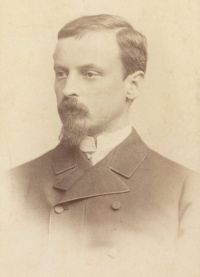 Henryk Sienkiewicz,
Quo Vadis
(1897)
Henryk Sienkiewicz,
Quo Vadis
(1897)
“ Meanwhile every man is searching in the book,—for himself with alarm, for his acquaintances with delight. At the bookshop of Avirnus a hundred copyists are writing at dictation, and its success is assured. ”
