“ The waves, a multitude, together run To the great breast of the receiving sea: Nothing but hath its kind, its company, Oh God! save I alone! then, let me come, Good Father! to thy feet, when even as now, Tears, that no human hand is near to wipe, O’erbrim my eyes, oh wipe them, thou, my Father! When in my heart the stores of its affections, Piled up unused, locked fast, are like to burst The fleshly casket, that may not contain them, Let me come nigh to thee;—accept thou them, Dear Father!—Fount of Love! Compassionate God! ”
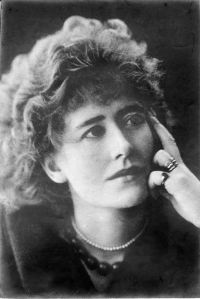
Fanny Kemble
Biographical details

Frances Anne Kemble (1809–1893), an English actress, writer, and abolitionist, rose to prominence in 19th-century literature and theater. Celebrated for her Shakespearean recitations and plays such as Francis the First, she also recorded her experiences in the United States, especially her time on a Georgian plantation, in the seminal Journal of a Residence on a Georgian Plantation (1863).
Her writings, combining memoir, critique of slavery, and poetic insight, demonstrate a profound commitment to social justice, personal identity, and the intricacies of transatlantic life. Kemble’s influence persists through her vivid portrayal of the moral dilemmas of slavery and her lasting impact on literary and theatrical heritage.
Quotes by Fanny Kemble
 Fanny Kemble,
Journal of a Residence in America
Fanny Kemble,
Journal of a Residence in America
“ Venus—"The star of love, all stars above,"—threw a silver column down the sea, like the younger sister of the moon's reflection. By the by, I saw to-day, and with delight, an American sunset. The glorious god strode down heaven's hill, without a cloud to dim his downward path;—as his golden disk touched the panting sea, I turned my head away, and in less than a minute he had fallen beneath the horizon—leapt down into the warm waves, and left one glow of amber round half the sky; upon whose verge, where the violet curtain of twilight came spreading down to meet its golden fringe ”
Fanny Kemble,
Records of a Girlhood
“ The sun's rays fell perpendicularly on our heads, the short, close grass which clothed the burning, stony soil was as slippery as glass with the heat, and I have seldom had a harder piece of exercise than climbing that rock, from the summit of which one wide expanse of dazzling water and glaring white cliffs, that scorched one's eyeballs, was all we had for our reward. To be sure, exertion is a pleasure in itself, and when one's strength serves one's courage, the greater the exertion the greater the pleasure. ”
Fanny Kemble,
Records of Later Life
“ Every flower in the garden has bloomed itself away; the trees loll their heads to the hot gusts of the sirocco, mocking one with the enchanting beckoning gesture of a breeze, while the air is in truth like a blast from an oven or the draught at the mouth of a furnace.I walk before breakfast, and steep myself in perspiration; and get into the fountain in the garden afterwards, and steep myself in cold water; and by dint of the double process, live in tolerable comfort the rest of the day. And I have no right to complain, for this is temperate to the summer climate of Philadelphia. ”
“ All the fond visions Time’s dark wing effaces, But very dreams! but morning buds, that fall Withered and blighted, long before the night: Strewing the paths they should have made more bright, With mournful wreaths, whose light hath past away, That can return to life and beauty never, And yet, of whom it was but yesterday, We deemed they’d bloom as fresh and fair for ever. Oh then, when hopes, that to thy heart are dearest, Over the future shed their sunniest beam, When round thy path their bright wings hover nearest, Trust not too fondly!—for ’tis but a dream! ”
Fanny Kemble,
Journal of a Residence on a Georgian Plantation…
“ Amphibious creatures, alligators, serpents, and wild fowl, haunt these yet but half-formed regions, where land and water are of the consistency of hasty-pudding—the one seeming too unstable to walk on, the other almost too thick to float in. But then, the sky, if no human chisel ever yet cut breath, neither did any human pen ever write light; if it did, mine should spread out before you the unspeakable glories of these southern heavens, the saffron brightness of morning, the blue intense brilliancy of noon, the golden splendour and the rosy softness of sunset. ”
Fanny Kemble,
Journal of a Residence in America
“ But for free Americans! why should they not walk crooked, in the defence of their country, if they don't like to walk straight? why should they not carry their guns on their shoulders instead of upright, if they please? and why, since they chose to defend their lives and liberties by becoming volunteers, should they not stick any feathers, of any colours that they like in their caps—black, white, or green? Is the noble occupation of war incompatible with the still nobler possession of freedom? Heaven forbid! and long live the American militia, to prove their entire compatibility. ”
Fanny Kemble,
Records of a Girlhood
“ With my scheme of going to America, I think I can look the future courageously in the face. It is something to hold one's fortune in one's own hands; if the worst comes to the worst it is but another year's drudgery, and the whereabouts really matters little.... We hear that the cholera is in Edinburgh. I cannot help thinking with the deepest anxiety of those I love there, and I imagine with sorrow that beautiful, noble city, those breezy hills, those fresh, sea-weedy shores and coasts breathed upon by that dire pestilence. ”
Fanny Kemble,
Records of Later Life
“ Queen's Hotel, Birmingham, Saturday, May 29th.My dear Hal, How did you get through that dreary time after we parted? I did so repent not having left some of my "good angels," my flowers, with you; for though you do not care for them as I do, I love them so much that I think they would have seemed part of myself to you. What a vision remained to me of your lonely stay in that horrid room! But the day passed, and its sorrow, as they all do; and when this reaches you, you will be comfortable and rested, and among your own people again. ”
Fanny Kemble,
Journal of a Residence on a Georgian Plantation…
“ Ask the thousands of ragged destitutes who yearly land upon these shores to seek the means of existence—ask the friendless, penniless foreign emigrant, if he will give up his present misery, his future uncertainty, his doubtful and difficult struggle for life, at once, for the secure, and as it is called, fortunate dependance of the slave: the indignation with which he would spurn the offer will prove that he possesses one good beyond all others, and that his birthright as a man is more precious to him yet than the mess of pottage for which he is told to exchange it because he is starving. ”
“ Of many a giant oak is sleeping; The tangled copse, the sunny meadow, Through which the summer rills run weeping. Oh, land of flowers! while sinking here Beneath the dog-star of the West, The music of the waves I hear That cradle thee upon their breast. Fresh o’er thy rippling corn-fields fly The wild-winged breezes of the sea, While from thy smiling, summer sky, The ripening sun looks tenderly. And thou—to whom through all this heat My parboiled thoughts will fondly turn, Oh! in what “shady blest retreat” Art thou ensconced, while here I burn? ”
Fanny Kemble,
Journal of a Residence in America
“ Indeed, the young American leaves so soon the shelter of his home, the world so early becomes to him a home, that the happy and powerful influences and associations of that word to him are hardly known. Sent forth to earn his existence at the very opening time of mind and heart, like a young green-house plant just budding that should be thrust out into the colder air, the blight of worldliness, of coldness, and of care, drive in the coming blossoms; and if the tree lives, half its loveliness and half its usefulness are shorn from it. ”
Fanny Kemble,
Records of a Girlhood
“ I am not sure that the love she describes does not affect me more even than Shakespeare's delineation of the passion in "Romeo and Juliet." There is a nerveless despondency about it that seems to me more intolerable than all the vivid palpitating anguish of the tragedy of Verona; it is like dying of slow poison, or malarial fever, compared with being shot or stabbed or even bleeding to death, which is life pouring out from one, instead of drying up in one's brains. I think the lines beginning— "I have seen the last look of her heavenly eyes,"some of the most poignantly pathetic I know. ”
Fanny Kemble,
Records of Later Life
“ OTHELLO'S AGONY. Did it ever occur to you what a witness to Othello's agony in murdering his wretched wife his inefficient clumsiness in the process was—his half smothering, his half stabbing her? That man not to be able to kill that woman outright, with one hand on her throat, or one stroke of his dagger, how tortured he must have been, to have bungled so at his work!I wish I was with you and Dorothy at St. Leonard's, instead of struggling here for my life—livelihood, at any rate—with Macready; but that's foolish. He can't touch me to-night, that's one comfort, for I am Queen Katharine. ”
“ But from thy lips banish those falsest words; While life remains that which was thine before Again may be thine; in Time’s storehouse lie Days, hours, and moments, that have unknown hoards Of joy, as well as sorrow: passing by, Smiles, come with tears; therefore with hopeful eye Look thou on dear things, though they turn away, For thou and they, perchance, some future day Shall meet again, and the gone bliss return; For its departure then make thou no mourn, But with stout heart bid what thou lov’st farewell; That which the past hath given the future gives as well. ”
Fanny Kemble,
Journal of a Residence on a Georgian Plantation…
“ I sit at the receipt of custom (involuntarily enough) from morning till night—no time, no place, affords me a respite from my innumerable petitioners, and whether I be asleep or awake, reading, eating, or walking; in the kitchen, my bed-room, or the parlour, they flock in with urgent entreaties, and pitiful stories, and my conscience forbids my ever postponing their business for any other matter; for, with shame and grief of heart I say it, by their unpaid labour I live—their nakedness clothes me, and their heavy toil maintains me in luxurious idleness. ”
Fanny Kemble,
Journal of a Residence in America
“ At eight o'clock, we went down to breakfast. Nobody, who has not seen it, can conceive the strange aspect of the long room of one of these fine boats at meal-time. The crowd, the hurry, the confusion of tongues, like the sound of many waters, the enormous consumption of eatables, the mingled demands for more, the cloud of black waiters hovering down the sides of the immense tables, the hungry eager faces seated at them, form altogether a most amusing subject of contemplation, and a caricaturist would find ample matter for his vein in almost every other devouring countenance. ”
Fanny Kemble,
Records of a Girlhood
“ The lights of heaven shine more glowingly here than through the misty veils that curtain our islands. The moon and stars are wonderfully bright, and there is an intensity, an earnestness, and a translucent purity in the sky here that delights me.... Four months are already gone out of the two years we are to pass out of England. Dear England! My heart dwells with affectionate pride upon the beauty and greatness and goodness of my own country—that wonderful little land, that mere morsel of earth as it seems on the map—so full of power, of wealth, of intellectual vigor and moral worth!... ”
Fanny Kemble,
Records of Later Life
“ Night suggests the vastness of creation, as day can never do; and darkness, silence, the absence of human fellowship, and the suspension of human activity, interests, and occupations, leave us a less disturbed opportunity of meditating on our Creator's inconceivable power. The day and the day's beauty make me feel as if God were very near me; the night and the night's beauty, as if I were very far off from Him.But, dear Harriet, do not, I entreat you, challenge me to put into words those thoughts which, in us all, must be unutterable. ”
“ Could ye foresee your spirit’s broken wings, Earth’s brightest triumphs what despisëd things, Friendship how feeble, love how fierce a flame, Your joy half sorrow, half your glory shame, Hollowness, weariness, and, worst of all, Self-scorn that pities not its own deep fall, Fast gathering darkness, and fast waning light,— Oh could ye see it all, ye might, ye might Cower in the dust, unequal to the strife, And die, but in beholding what is life.Life is before ye—from the fated road Ye cannot turn: then take ye up your load. ”
Fanny Kemble,
Journal of a Residence on a Georgian Plantation…
“ Harriet Beecher Stowe's work as an exaggerated picture of the evils of slavery, I beg to assure you that you do her serious injustice:—of the merits of her book as a work of art, I have no desire to speak,—to its power as a most interesting and pathetic story, all England and America can bear witness,—but of its truth and moderation as a representation of the slave system in the United States, I can testify with the experience of an eye witness, having been a resident in the Southern States, and had opportunities of observation such as no one who has not lived on a slave estate can have. ”
Fanny Kemble,
Journal of a Residence in America
“ There are generally a dozen young human beings, some naughty, sick, and squalling, others happy, romping, and riotous; and what with the vibratory motion of the rocking-chairs and their contents, the women's shrill jabber, the children's shriller wailing and shouting, the heat and closeness of the air, a ladies' cabin on board an American steam-boat is one of the most overpowering things to sense and soul that can well be imagined. ”
Fanny Kemble,
Records of a Girlhood
“ In the great temple raised by his genius to his own undying glory, one narrow door opens into a secret, silent crypt, where his image, blurred and indistinct, is hardly discernible through the gloomy atmosphere, heavy and dim as if with sighs and tears. Here is no clew, no issue, and we return to the shrine filled with light and life and warmth and melody; with knowledge and love of man, and worship of God and nature. There is our benefactor and friend, simplest and most lovable, though most wonderful of his kind ”
Fanny Kemble,
Records of Later Life
“ How can you ask me if I despise, as great gossip, Emily's telling you that I am writing another tragedy! Why, my dear, I shouldn't consider it despicable gossip if Emily were to tell you what colored gloves I had on the last time she saw me. Do we not all three love each other dearly? and is not everything, no matter how trifling, of interest in that case? But Mrs. John Kemble does not pretend to love me dearly, I flatter myself, and therefore her writing to inquire into my proceedings, and for minute details of my presentation at Court, did seem to me contemptible gossip. ”
“ Oh! let but these dark days be once gone by, And thou, unwilling captive, that dost strain, With tiptoe longing, vainly, towards the sky, O’er the whole kingdom of my life shalt reign. But, while I’m doomed beneath the yoke to bow, Of sordid toiling in these caverns drear, Oh, look upon me sometimes with thy brow Of shining brightness; sometimes let me hear Thy blessed voice, singing the songs of Heaven, Whence thou and I, together have been driven; Give me assurance that thou still art nigh, Lest I sink down beneath my load, and die! ”
Fanny Kemble,
Journal of a Residence in America
“ After breakfast, went over to rehearsal; at half-past eleven, went out to ride: the day was heavenly, bright, and mild, with a full, soft, sweet spring breeze blowing life and health over one. The golden willow-trees were all in flower, and the air, as we rode by them, was rich with their fragrance. The sky was as glorious as the sky of Paradise: the whole world was full of loveliness; and my spirits were in most harmonious tune with all its beauty. We rode along the chiming beach, talking gravely of many matters, temporal and spiritual ”
Fanny Kemble,
Records of Later Life
“ Of the human picturesqueness of this place and people no American scenery or population have an atom; and isolated, ugly, mean, matter-of-fact farm-houses, or whitewashed, clap-boarded, stiff, staring villages, alike without antiquity to make them venerable or picturesqueness to make them tolerable, are all that there represent the exquisitely grouped and colored masses of building, or solitary specimens of noble time-tinted masonry and architecture, that every half-fortress farmhouse in the plain, or hamlet or convent on the hill-side, present in this paradise of painters. ”
Fanny Kemble,
Records of a Girlhood
“ I think you will be pleased with Bianca. I was surprised when I came to act it at finding how terribly it affected me, for I am not naturally at all jealous, and in this play, while feigning to be so, it seemed to me that it must be really the most horrible suffering conceivable; I am almost sorry that I can imagine it well enough to represent it well.You say that we love intellect, but I do not agree with you; I do not think intellect excites love. I do not even think that it increases our love for those we do love, though it adds admiration to our affection. ”
Fanny Kemble,
Journal of a Residence in America
“ The day was still and grey—a pleasant day; there was no sunshine, but neither were there any dark shadows. My horse had been ill ridden by somebody or another, and was mighty disagreeable. Our ride was pleasant enough: there was not much variety in the country we passed through. Masses of granite and greenish basalt, wild underwood, and vivid bright-looking cedar bushes. The Hudson lay leaden and sullen under the wings of the restless wind. We stood to hear the delicious music of the water plashing against the rocky shore, which is the pleasantest sound in all the world. ”
“ In one crystal sheet, like the summer’s sky bright! Oh let it be where the sun, when retreating, May throw the last glance of his vanishing light. Lay me there! lay me there! and upon my lone pillow Let the emerald moss in soft starry wreaths swell; Be my dirge the faint sob of the murmuring billow, And the burthen it sings to me, nought but “farewell!”Oh let it be where soft slumber enticing, The cypress and myrtle have mingled their shade: Oh let it be where the moon at her rising, May throw the first night-glance that silvers the glade. p. 39Lay me there! lay me there! ”
Fanny Kemble,
Records of Later Life
“ NATURE OF THE COUNTRY. Between five and six miles of hideous and execrable turnpike road, without shade, and aridly detestable in the glare, heat, and dust of summer, and almost dangerously impassable in winter, made driving into Philadelphia an undertaking that neither love, friendship, nor pleasure—nothing but inexorable business or duty—reconciled one to. The cross roads in every direction were a mere succession of heavy, dusty, sandy pitfalls, or muddy quagmires, where, on foot or on horseback, rapid progress was equally impossible. ”
Fanny Kemble,
Records of a Girlhood
“ It is not for me to praise those whom all English-speaking folk delight to honor; but in thinking of that bright band of very noble young spirits, of my brother's love and admiration for them, of their affection for him, of our pleasant intercourse in those far-off early days,—in spite of the faithful, life-long regard which still subsists between myself and the few survivors of that goodly company, my heart sinks with a heavy sense of loss, and the world from which so much light has departed seems dark and dismal enough. ”
Fanny Kemble,
Journal of a Residence in America
“ A brig was standing some four miles off us, which, by the by, I was the first to see, except our mate, in my morning watch, which began at five o'clock, when I saw the moon set and the sun rise, and feel more than ever convinced that absolute reality is away from the purpose of works of art. The sky this morning was as like the sea shore as ever sand and shingle were, the clouds lying along the horizon in pale dusky yellow layers, and higher up, floating in light brown ribbed masses, like the sands which grow wrinkled under the eternal smiling of the sea. ”
Fanny Kemble,
Records of Later Life
“ I never have any other emotion on first hearing of a good man's death. I have an instantaneous sense of relief, as it were, for such a one, of freer breathing, of expanded powers; of infirmity, pain, sorrow, trouble, fleshly hinderance, and earthly suffering for ever laid in the grave and left behind; and that glorious creature, a noble human soul, soaring into a purer atmosphere proper to it, and promoted to such higher duties as may well be deemed rewards for duties well fulfilled on earth. ”